
Discovering King Tut's Bizarre Life
Mind-Blowing Facts About the Boy King That Will Leave You Speechless

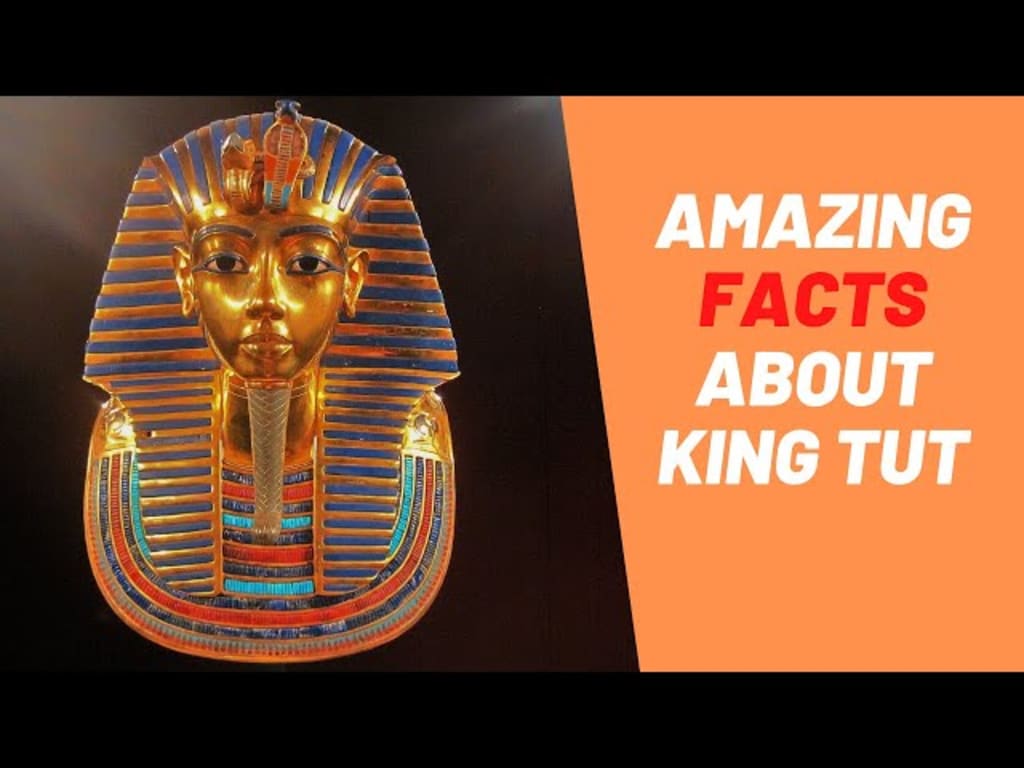
King Tutankhamun's name stands alongside historical giants like Julius Caesar, Genghis Khan, and Alexander the Great. However, thanks to meticulous historical research and advances in DNA analysis, researchers have found that the actual person behind the name isn't as well-known as once believed. But who was the young man we call King Tut? How did he live? How did he die? And what kind of ruler was he? Let's uncover some weird and fascinating facts about King Tutankhamun
Early Life and Ascension to the Throne
Born around 1341 BCE, Tutankhamun was the son of the powerful Pharaoh Akhenaten. Akhenaten is a figure shrouded in mystery and controversy, known for his radical departure from traditional Egyptian polytheism to establish Atenism, a monotheistic religion worshiping the sun disc Aten. This theological upheaval significantly disrupted Egyptian society.
After Akhenaten's death in 1334 BCE, the throne briefly passed to two minor kings, Smenkhkare and Neferneferuaten, before Tutankhamun ascended to the throne in 1332 BCE. Tutankhamun was around nine years old when he became pharaoh, ruling for the next eight or nine years. Due to his youth, he required strong advisors to guide his reign. Among his most influential advisors were Horemheb, the Commander in Chief of the Egyptian army, and Grand Vizier Ay, an experienced soldier and counselor who many believe was the true power behind the throne.
Restoring Religious Practices
One of Tutankhamun's most significant achievements was restoring the polytheistic worship of Amun, the chief deity of Egyptian mythology, thereby reversing his father's establishment of Atenism. This restoration involved moving the capital from Amarna back to Thebes and rebuilding temples and shrines dedicated to Amun that had been neglected or destroyed during Akhenaten's reign. This return to traditional religious practices helped stabilize the nation and restore the favor of the powerful priesthood, which had been sidelined under Akhenaten.
Physical Afflictions and Daily Life
Contrary to the virile boy immortalized in his famous death mask, the real Tutankhamun suffered from numerous physical disfigurements. The royal family's practice of incest to maintain pure bloodlines resulted in severe genetic disorders for Tut. Recent DNA studies reveal that Tutankhamun had a severe overbite, a curved spine, a disfigured foot, slim hips, a skewed face, and epilepsy. His skeletal remains indicate he had pronounced breasts and suffered from Köhler disease, a rare bone disorder that leads to the death of bone tissue. These conditions likely caused him significant pain and mobility issues throughout his life.
Tutankhamun's severe clubfoot necessitated the use of walking sticks and canes, over 100 of which were found in his tomb, along with special stools for shooting with a bow and arrow. These artifacts underscore the daily struggles he faced due to his physical ailments. Despite his disabilities, he was still depicted in tomb paintings as a warrior and hunter, likely an idealized image rather than a reflection of his true capabilities.
Tutankhamun's Death and Burial
Tutankhamun died in 1323 BCE at only 19 years old. Theories regarding his death range from genetic abnormalities and diseases to murder. A 2010 study suggested he likely died from a malarial infection after breaking his leg. Genetic factors may have weakened his immune system, making him especially vulnerable. The leg fracture, compounded by a severe infection, could have proved fatal in an era lacking advanced medical treatments.
His burial was as hastily conducted as his life was brief. Tutankhamun was interred in a tomb in the Valley of the Kings that was far less grand than those of other pharaohs. However, it was still ornately decorated, reflecting his royal status. The tomb's hurried construction and modest size suggest that his death was unexpected, leaving little time to prepare a more elaborate resting place.
Rediscovery and Legacy
In 1922, British archaeologist Howard Carter rediscovered Tutankhamun's tomb, a landmark moment in the field of Egyptology. The treasures found inside made the obscure young pharaoh one of the most famous rulers in history. Tutankhamun's tomb contained over 5,000 artifacts, including the iconic gold funerary mask, jewelry, chariots, weapons, and everyday items meant to accompany him into the afterlife. The sheer volume and preservation of these items provided an unprecedented glimpse into ancient Egyptian culture and burial practices.
The discovery of Tutankhamun's tomb sparked a global sensation, often referred to as "Tutmania." The media frenzy and public fascination with the Boy King were unparalleled, leading to exhibitions and tours of the tomb's treasures worldwide. This fascination extended into popular culture, inspiring works of art, literature, and even fashion.
The Curse of the Pharaoh
The idea that disturbing an Egyptian tomb brings a curse became famous with Tutankhamun's tomb. Although many of Carter's team members died within a few years of the tomb's opening, skeptics point out that most of those who died were older or in high-risk professions. However, the myth of the curse persists, adding to the mystique of King Tut. The most famous supposed victim of the curse was Lord Carnarvon, the financial backer of Carter's expedition, who died shortly after the tomb's opening. Despite this, many of those involved in the discovery lived long lives, including Carter himself, who died of natural causes in 1939.
Cultural Impact
The discovery of Tutankhamun's tomb and the story of a young boy ascending to power captivated the world. This fascination led to the creation of the novelty song "King Tut" by Steve Martin, which became a hit in the late 1970s. Martin's comedic performance of the song on Saturday Night Live, complete with Egyptian-themed costumes and choreography, further cemented Tutankhamun's place in popular culture.
King Tut also inspired the buffoonish villain in the 1966 Batman series, played by Victor Buono. This version of Tut was an adult Egyptologist who, after a head injury, became convinced he was the ancient ruler and attempted to take over Gotham City. The character's absurd antics and exaggerated persona added a humorous twist to the fascination with ancient Egypt.
Continuing Mysteries
Despite the wealth of information gleaned from his tomb, many mysteries about Tutankhamun remain. The identity of his mother is still uncertain, although DNA evidence suggests she was a sister of Akhenaten, known only as "The Younger Lady." Some scholars speculate she might have been the famous Queen Nefertiti, Akhenaten's chief wife, but definitive proof is lacking.
The exact circumstances of Tutankhamun's death also remain a topic of debate. While the malarial infection theory is widely accepted, other possibilities, including an assassination, have not been entirely ruled out. Theories about his death continue to evolve as new technologies and methods of analysis are developed.
Closing
King Tutankhamun's life and legacy continue to intrigue and inspire, revealing the complexities of ancient Egyptian royalty and the power of modern archaeology in uncovering the past. His brief reign, marked by physical afflictions and significant religious reforms, has left an indelible mark on history. The rediscovery of his tomb not only provided invaluable insights into ancient Egyptian civilization but also captivated the imagination of people around the world.
About the Creator
Horace Wasland
Research analyst, writer & mystical healer. Exploring the edge where science meets mystery. From mystery/the mystical, to facts, news & psychology. Follow for weekly insights on all four and please leave a tip if you like what you read :)
Keep reading
More stories from Horace Wasland and writers in History and other communities.
The Salem Witch Trials
If you’ve ever visited Salem, Massachusetts, you might have experienced its quaint charm, picturesque streets, and a nod to its eerie past with wiccan shops and Halloween festivities. But lurking behind this modern facade is a darker history—the Salem Witch Trials of 1692. What really happened in Salem three centuries ago? Let’s take a closer look at this chilling chapter in American history.
By Horace Waslandabout a year ago in History
Where the Pulse Ends
© 2026 Sai Marie Johnson The humidity in the city didn’t just hang; it leaned. It was a thick, stagnant soup of diesel exhaust, ozone, and the metallic tang of blood that drifted from the "Compliance Zones." Joe sat in his rusted sedan, his hands resting loosely on the steering wheel. He wasn't gripping it. He wasn't angry. Anger was a chemical spike, a biological inefficiency. Joe was simply... focused.
By Sai Marie Johnsona day ago in History



Comments (2)
Thanks for sharing
Brilliant