
Diamonds Around the World: The Countries That Live and Breathe Baseball
A Journey Through the Countries Where Every Pitch Carries the Weight of Dreams
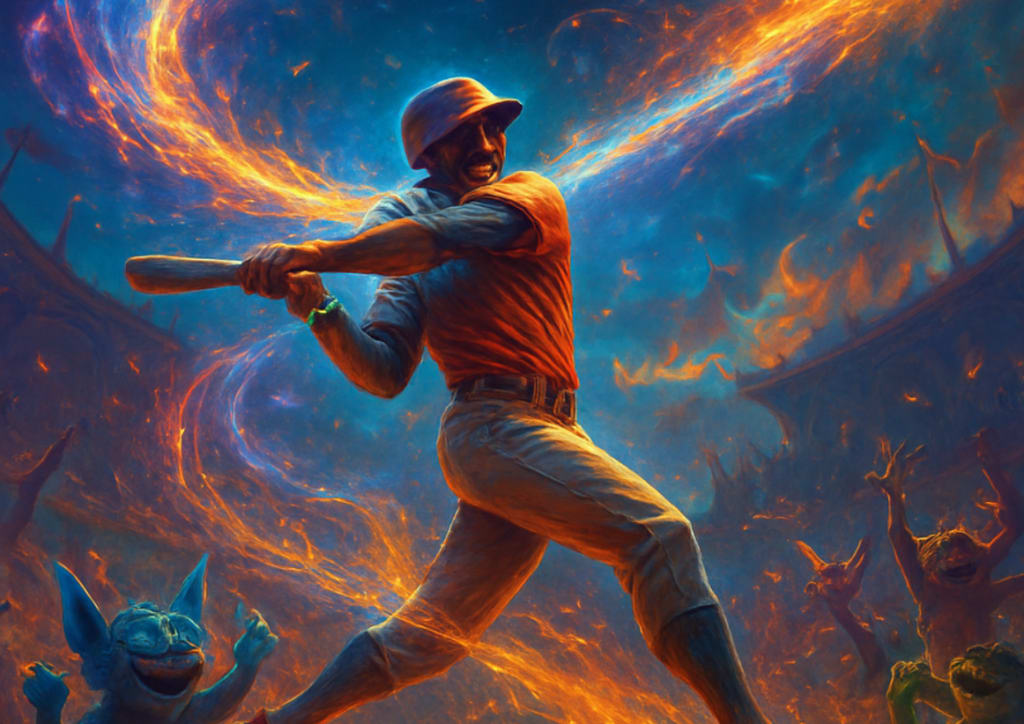
There's something almost mystical about the crack of a bat connecting with a fastball. In certain corners of the globe, that sound carries the weight of history, identity, and dreams passed down through generations. While soccer may dominate the world's sporting consciousness, baseball has carved out its own sacred territories—places where the sport transcends mere entertainment and becomes woven into the very fabric of culture.
The United States: Where It All Began
Let's start with the obvious. America invented baseball, nurtured it, and turned it into a multi-billion dollar industry. But beyond the commerce lies something deeper. Walk through any small town in the Midwest during summer, and you'll find fathers teaching sons the same grip their grandfathers taught them. The smell of hot dogs and freshly cut grass at a ballpark triggers memories spanning decades. Major League Baseball remains the pinnacle of the sport, drawing elite talent from across the planet.
Yet here's the irony: while America may have birthed baseball, it doesn't love the game with the same desperate intensity you'll find elsewhere. For that kind of devotion, you need to look beyond U.S. borders.
Japan: Where Baseball Became a Way of Life
When American educator Horace Wilson introduced baseball to Japan in 1872, he couldn't have imagined what would unfold. The Japanese didn't just adopt the game—they transformed it into something unmistakably their own.
Walk into any Nippon Professional Baseball stadium and you'll witness something extraordinary. Fans don't simply watch; they participate. Each player has a personalized chant. Organized cheering sections pound taiko drums and blast brass instruments throughout all nine innings, win or lose. The energy never dips. When their team scores, fans release thousands of colorful balloons into the sky in unison—a choreographed celebration that makes American "seventh-inning stretches" look quaint.
Nearly half of all Japanese people cite baseball as their favorite sport. High school baseball, particularly the annual Koshien tournament, draws television audiences that dwarf the Super Bowl's viewership numbers. Losing teams collect dirt from the sacred Koshien field as a memento—a poignant ritual acknowledging that for most young players, this is where the dream ends.
Icons like Ichiro Suzuki and Shohei Ohtani aren't just athletes in Japan; they're revered figures who transcend the sport entirely. Ohtani's recent exploits with the Los Angeles Dodgers have only intensified Japan's collective obsession, with entire stadiums packed for MLB games broadcast live in the middle of the night.
The Dominican Republic: Baseball as Salvation
In this Caribbean nation of roughly 11 million people, baseball isn't just the national pastime—it's a national obsession and, for many families, the only visible path out of poverty. The moment a baby boy is born, fathers whisper hopes of baseball stardom. It's not exaggeration; it's simply how things work.
The numbers are staggering. At any given time, roughly 10-11% of all Major League Baseball players hail from this small island nation. That's more than any country outside the United States. The Dominican Republic produces MLB talent at a rate approximately five times greater than America, despite having a fraction of the resources, coaching infrastructure, and population.
How? The answer lies in culture, necessity, and obsession. Children here don't wait for organized leagues; they play constantly, anywhere, with whatever equipment they can find. Every town has its own team. Every kid knows which neighborhoods produced which major leaguers. Names like David Ortiz, Pedro Martínez, and Juan Soto aren't distant celebrities—they're proof that escape is possible.
All 30 MLB teams maintain training academies on the island, scouting boys as young as 16, hoping to discover the next superstar. The winter league, LIDOM, transforms the country every October through January, with passionate rivalries between teams like Tigres del Licey and Leones del Escogido turning stadiums into cauldrons of noise and emotion.
Cuba: Where Revolution Couldn't Kill the Love
Baseball arrived in Cuba before it even caught fire in most of America, brought by students returning from U.S. colleges in the 1860s. Spanish colonial rulers, threatened by anything American, actually banned the sport—which only made Cubans love it more. The game became synonymous with rebellion, with independence fighters reportedly using baseball matches as cover for plotting against their occupiers.
After Fidel Castro's revolution in 1959, professional sports were abolished, but baseball itself couldn't be touched. Castro understood that removing baseball would be political suicide. Instead, he rebranded it—béisbol revolucionario—using the national team's international dominance as propaganda, proof of socialist superiority.
For decades, Cuba dominated amateur international competition, winning 25 Baseball World Cups. The Serie Nacional, an amateur league featuring teams representing provinces rather than corporations, became the heart of Cuban sporting life. Players earned state salaries barely above average Cuban wages. Tickets cost pennies. There were no luxury boxes, no corporate sponsorships—just the purest expression of community baseball imaginable.
Of course, this system created a pressure cooker. The lure of MLB millions proved irresistible for many elite players, leading to dangerous defections involving smugglers, perilous sea crossings, and family separations. Stars like Yasiel Puig and Aroldis Chapman risked everything to reach American diamonds. It's a complicated legacy—baseball as both national pride and escape route.
Today, you can still witness passionate debates at Havana's "esquina caliente" (hot corner) in Central Park, where fans argue statistics and strategies for hours on end, the game living in their conversations even when no ball is being thrown.
Venezuela: The Heroes of '41
The origin of Venezuelan baseball madness can be traced to a single moment: October 22, 1941. That day, the Venezuelan national team defeated heavily favored Cuba to win the Amateur World Series. When the team returned home, over 100,000 people—more than a third of the population at the time—lined a twenty-mile stretch from the airport to Caracas. Schools closed. Government offices shut down. The players became "Los Héroes del 41."
That victory cemented baseball as Venezuela's national sport. Today, Venezuelan players represent the second-highest number of foreign-born MLB players behind only Dominicans. Legends like Luis Aparicio (the only Venezuelan in the Baseball Hall of Fame), Miguel Cabrera, and José Altuve have kept the talent pipeline flowing.
The Venezuelan Professional Baseball League draws millions of spectators annually to its winter season games. The sport has become so embedded in the culture that common Venezuelan expressions reflect it: when you're in a tough spot, you're "en tres y dos" (three balls, two strikes). When you hit something out of the park, "la botamos de jonrón."
Even amid the country's recent economic and political turmoil, baseball remains a constant—a source of pride and temporary escape when other aspects of life feel unbearable.
South Korea: The Youngest Giant
Baseball arrived in Korea around 1905, introduced by American missionaries. But the Korea Baseball Organization wasn't established until 1982—making it relatively young compared to other baseball powerhouses. What the Koreans have accomplished in four decades is remarkable.
In 2024, the KBO set attendance records with over 10.9 million spectators—in a country of just 51 million people. Perhaps most surprisingly, women accounted for more than half of ticket buyers, with women in their twenties driving much of the growth. This isn't your grandfather's baseball demographic.
Korean baseball culture is its own spectacular beast. Professional cheerleaders with elaborate stage setups perform throughout games. Every player has a dedicated fight song, often adapted from K-pop hits. Thunder sticks clap in unison. Human waves ripple endlessly. It's part concert, part sporting event, part community festival. Normally reserved office workers transform into screaming, jumping superfans the moment they enter the stadium.
The food culture alone merits attention—instead of hot dogs and nachos, expect Korean fried chicken, spicy rice cakes, and unique stadium-exclusive items that fans travel specifically to try. Baseball games have become social events where the sport itself sometimes feels secondary to the experience surrounding it.
Why These Countries, Why This Sport?
There's a pattern worth noting: baseball tends to take deepest root in countries with significant historical ties to American influence—whether through military presence, economic relationships, or cultural exchange. But that only explains the introduction, not the obsession.
Perhaps it's the nature of the game itself. Baseball rewards patience, strategy, and hope. There's no clock ticking down. A team can trail by five runs with two outs in the ninth inning and still win. Each pitch carries possibility. In countries where life has often been difficult, where opportunities have been scarce, baseball offers a metaphor people can believe in: the game isn't over until it's over.
Or maybe it's simpler than that. Maybe it's the way a father teaching a child to throw creates a bond that transcends language and circumstance. Maybe it's how a stadium full of strangers can transform into a unified community through shared devotion to nine players on a field.
Whatever the explanation, these countries have taken America's game and made it their own—often with more passion, creativity, and devotion than it receives in the land of its birth. The diamond belongs to the world now, and the world has no intention of giving it back.
About the Creator
Keep reading
More stories from writers in History and other communities.
Dow Jones
The Dow Jones Industrial Average, often simply called the Dow, is one of the most recognized stock market indexes in the world. When people hear headlines like “Dow today jumps 200 points” or “DJIA today slides amid economic uncertainty,” they are witnessing a snapshot of investor confidence, economic expectations, and market psychology all rolled into one number. But behind those daily movements lies a much deeper story about how the modern U.S. economy operates. What Is the Dow Jones Industrial Average? The Dow Jones Industrial Average (DJIA) is a stock market index that tracks 30 major publicly traded companies in the United States. These companies are considered leaders in their respective industries and collectively represent a broad view of American corporate strength. Despite its name, the DJIA is no longer limited to industrial companies. Today, it includes businesses from sectors such as technology, healthcare, finance, and consumer goods. Unlike many modern indexes that are weighted by market capitalization, the Dow Jones is price-weighted. This means companies with higher stock prices have a greater influence on the index’s movement, regardless of their overall size. While this methodology is sometimes criticized, it has remained unchanged for over a century, preserving the index’s historical continuity. Why the Dow Still Matters In an era dominated by broader indexes like the S&P 500 and tech-heavy benchmarks, some investors question the relevance of the Dow. Yet the Dow continues to hold symbolic and practical importance. It is often the first index cited in market news, making it a key reference point for both seasoned investors and casual observers. When analysts discuss dow today, they are often speaking about more than just numbers. Daily movements in the DJIA reflect investor reactions to inflation data, interest rate decisions, corporate earnings, geopolitical tensions, and even consumer sentiment. Because its components are established blue-chip companies, the Dow offers insight into how major corporations are navigating economic conditions. How the DJIA Is Calculated The DJIA’s calculation is straightforward but unique. The prices of all 30 component stocks are added together and then divided by a figure known as the Dow Divisor. This divisor is adjusted over time to account for stock splits, dividends, and corporate restructuring, ensuring continuity in the index’s value. This structure means that a sharp move in one high-priced stock can significantly influence djia today, even if other companies remain stable. While this can create volatility, it also highlights shifts in investor sentiment toward specific market leaders. Interpreting Dow Jones Movements Understanding what drives the dow jones on any given day requires context. A rising Dow often signals optimism about economic growth, stable inflation, or strong corporate earnings. Conversely, a falling Dow may indicate concerns over recession risks, tighter monetary policy, or global instability. However, it’s important to look beyond daily fluctuations. Short-term moves in dow today can be influenced by news cycles or emotional reactions, while long-term trends often reflect deeper economic fundamentals. Investors who focus solely on daily point changes risk missing the broader narrative shaping the market. The Role of the Dow in Long-Term Investing While traders may focus on intraday movements, long-term investors often view the Dow as a historical benchmark. Over decades, the Dow Jones Industrial Average has demonstrated the power of compounding growth, despite periods of downturn, crashes, and uncertainty. Major events such as financial crises, pandemics, and political upheaval have all left their mark on the DJIA. Yet the index has consistently recovered over time, reflecting the resilience of the U.S. economy and its largest corporations. This long-term perspective is why many retirement portfolios and investment strategies still use the Dow as a reference point. Dow Today in a Changing Market Landscape The modern market environment is vastly different from when the Dow was first created. Technology now plays a dominant role, global markets are deeply interconnected, and information travels instantly. As a result, djia today often reacts quickly to developments far beyond U.S. borders. Interest rate policies from central banks, supply chain disruptions, and shifts in consumer behavior can all impact the Dow within minutes. This fast-moving environment underscores the importance of staying informed and understanding the forces that influence market behavior rather than reacting emotionally to daily swings. Limitations of the Dow Jones Despite its prominence, the Dow Jones has limitations. With only 30 companies, it does not represent the full diversity of the U.S. stock market. Smaller companies and emerging sectors are largely absent, which can sometimes make the index less reflective of broader economic trends. Additionally, its price-weighted structure can distort perception, giving outsized influence to higher-priced stocks. For this reason, many investors use the Dow alongside other indexes to gain a more balanced market view. A Symbol That Endures Even with its imperfections, the Dow remains a powerful symbol of market performance. It serves as a bridge between financial professionals and the general public, offering a familiar metric to gauge economic confidence. When headlines discuss dow today, they capture attention because the index represents more than stocks—it reflects hopes, fears, and expectations about the future. Final Thoughts The Dow Jones Industrial Average is more than just a number flashing across a screen. It is a living record of American business history, shaped by innovation, crisis, and recovery. Whether you are tracking djia today for investment decisions or simply to understand market sentiment, the Dow offers valuable insight into how the world’s largest economy is performing. By viewing the Dow with context and patience, readers and investors alike can appreciate its role not just as a market index, but as a long-standing indicator of economic momentum and resilience.
By Saboor Brohi about 11 hours ago in History
Self Help: Grifters' Gospel
On Self-Help, Snake Oil, and the Illusion of Change Psychology professionals and students can be imagined on two opposite sides of a line called self-help books: likely a larger group opposes pop-science and step-by-step manuals filled with talk of success, journaling, and not giving a f**k; others love them, but they aren’t many.
By Avocado Nunzella BSc (Psych) -- M.A.P 5 days ago in BookClub


Comments
There are no comments for this story
Be the first to respond and start the conversation.