
Derawar Fort: Legacy of Pakistan
majestic fortress standing tall in Pakistan’s Cholistan Desert.
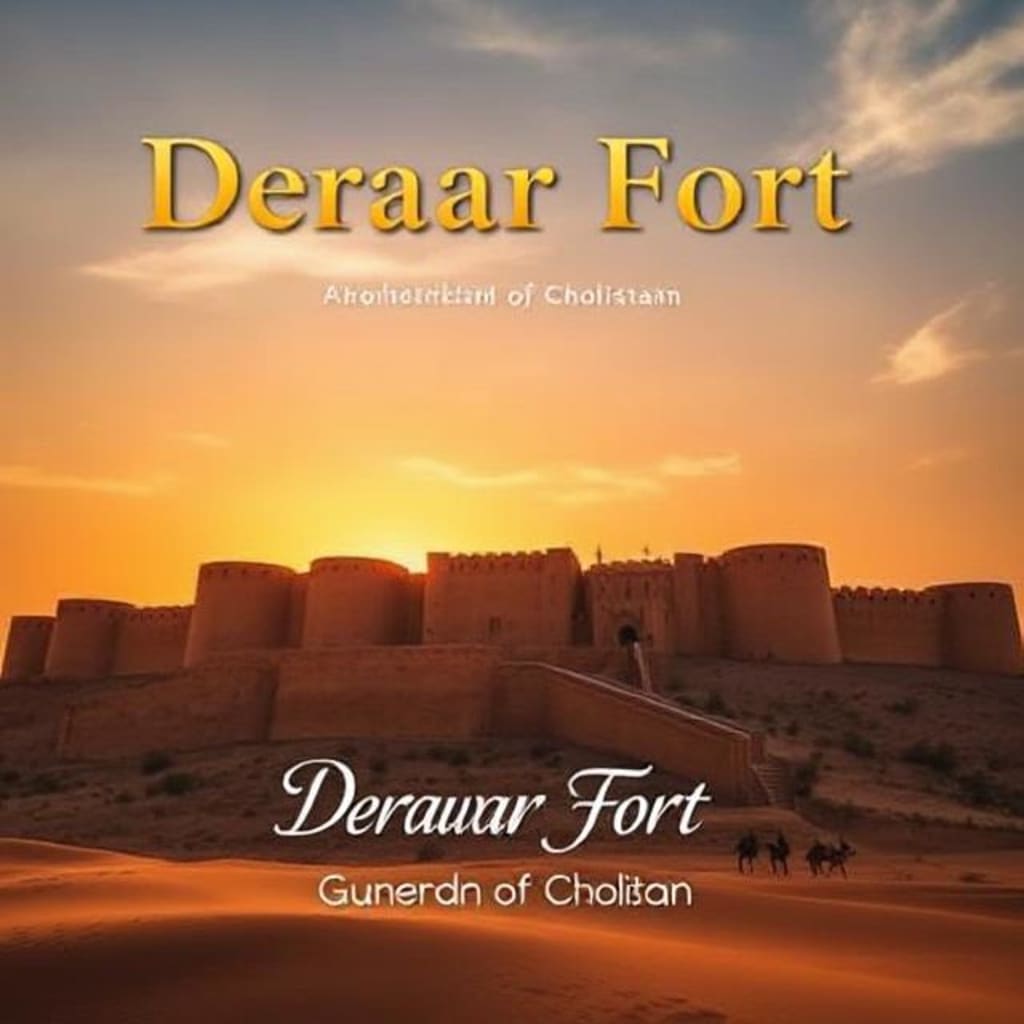
Rising like a giant from the golden sands of Pakistan's Cholistan Desert, Derawar Fort stands as a silent sentinel of history, power, and forgotten grandeur. With its massive walls visible from miles away, the fort not only showcases the architectural brilliance of bygone eras but also symbolizes the rich cultural and historical fabric of the region. A true marvel in the heart of Punjab, Derawar Fort is one of Pakistan’s most majestic and historically significant monuments.
A Fortress Through the Sands of Time
Originally built in the 9th century by Rai Jajja Bhatti, a Hindu Rajput ruler from the Bhatti clan, the fort was initially known as Dera Rawal, named after Rawal Deoraj, a Bhatti king. However, it wasn't until the 18th century that the fort gained its present form when it was taken over and renovated by Nawab Sadeq Mohammad Khan I of the Abbasi family of Bahawalpur.
The fort was rebuilt using clay bricks and later reinforced with baked bricks to create the 40-meter-high bastions that now dominate the skyline. The current structure—with its 40 massive circular bastions, towering walls, and commanding presence—is a product of both Rajput origins and Islamic influences, blending the artistry of two powerful traditions.
Strategic Importance and Power
Derawar Fort was more than a military installation. Its strategic location made it a vital point of control in the desert trade routes linking the Indian subcontinent to Central Asia. It served as a checkpoint and refuge for caravans, as well as a defense post for the Bahawalpur State.
It also functioned as a seat of power for the Nawabs of Bahawalpur, who used it to project authority across their realm. Inside the fort, traces of barracks, royal quarters, and storage areas still whisper stories of military readiness and royal life.
Architectural Majesty
The most striking feature of Derawar Fort is its circular bastions—each of the 40 stands firm and majestic, forming a nearly perfect square. The bastions are about 30 meters in height and give the structure a symmetrical, imposing appearance. These walls were designed not only to defend but to impress.
The inner sections of the fort, now largely in ruins, once housed royal quarters, mosques, and stables, with intricately designed archways and corridors. Though time and neglect have taken their toll, the remnants of ornamental tile work, calligraphy, and Mughal-style arches are still visible.
Nearby, the Abbasi family cemetery showcases beautiful marble graves adorned with Islamic calligraphy—another testament to the region’s rich cultural legacy.
Cultural Significance
Derawar Fort is more than just a relic of stone and mortar; it is deeply entwined with the history of the Bahawalpur State, the heritage of Punjab, and the identity of the Cholistan Desert. For the people of the region, it represents resilience, pride, and the grandeur of their ancestors.
Each year, the area comes alive during the Cholistan Desert Jeep Rally, an event that attracts thousands of visitors and motorsport enthusiasts. The fort becomes a backdrop for festivities, celebrating both modern adventure and ancient glory.
Present Condition and Challenges
Despite its grandeur, Derawar Fort faces a host of challenges. Years of neglect, erosion by desert winds, and lack of proper conservation efforts have left parts of the fort in a dilapidated state. While some efforts have been made to restore sections, much more needs to be done to preserve this heritage site for future generations.
Heritage activists and historians have called for urgent restoration and protection under UNESCO World Heritage status. Without significant intervention, the fort may lose even more of its irreplaceable historical fabric.
A Call to Preservation
Derawar Fort is not just a part of Pakistan’s history; it is a treasure for all humanity. It is a reminder of how civilizations rose and fell, how architectural mastery once stood firm in the face of time, and how history can be forgotten if not protected.
In an age where concrete jungles are replacing cultural landmarks, Derawar Fort is a call to remember—a call to honor the stories etched in its walls, the battles fought in its shadows, and the generations that passed through its gates.
Visiting Derawar Fort
For those who seek adventure, history, or photography, Derawar Fort offers a one-of-a-kind experience. It is located about 130 kilometers south of Bahawalpur, accessible via jeep or four-wheel drive through the Cholistan Desert. While facilities are basic, the journey offers unforgettable views of desert landscapes and an up-close encounter with one of Pakistan’s grandest forts.
Travelers are encouraged to visit during the cooler months (November to February) and ideally during the Jeep Rally season, when local culture, food, and folklore are on full display.
Conclusion
Derawar Fort stands not only as a monument of stone but as a beacon of history, culture, and identity. It embodies the soul of Cholistan, the spirit of Bahawalpur, and the grandeur of Pakistan’s forgotten architectural wonders. As it guards the sands of time, it reminds us that heritage, once lost, cannot be rebuilt—but if preserved, can inspire generations to come.
About the Creator
Keep reading
More stories from Mukhtiar Ahmad and writers in History and other communities.
Timeless Citadel of Aleppo Stands Strong"
Citadel of Aleppo – A Timeless Guardian of Syrian Heritage Perched on a prominent hill in the center of Aleppo’s ancient city, the Citadel of Aleppo is a majestic symbol of Syria’s historical legacy, architectural brilliance, and cultural resilience. One of the oldest and largest castles in the world, this UNESCO World Heritage Site has witnessed the rise and fall of empires, brutal wars, and the enduring spirit of a city and its people.
By Mukhtiar Ahmad9 months ago in History
Discovery of a Massive Void Inside Khufu’s Pyramid Stuns Archaeologists
The ancient world continues to reveal its secrets, and one of the most remarkable discoveries in recent years has emerged from the heart of Egypt’s most famous monument—the Great Pyramid of Giza. Scientists and archaeologists have confirmed the presence of a large previously unknown void inside the pyramid of Pharaoh Khufu, sparking global excitement and renewed curiosity about how and why this monumental structure was built more than 4,500 years ago.
By Irshad Abbasi 3 days ago in History


Comments
There are no comments for this story
Be the first to respond and start the conversation.