
Deadly Cures and Sacred Poisons: A Walk Through the Apothecary of Horror
By Kim Murray

In the half-light of a stone-walled room, behind shelves of dried roots, glass vials, and handwritten scrolls, the apothecary waits.
Not a doctor. Not a priest. Not a witch — at least, not in name.
She listens to the coughs of the sick, the sobs of the desperate, and the whispers of plants that promise relief… or ruin. Because long before the white coats and beeping machines, medicine came from the wild. And nature, in her infinite mystery, does not give her gifts freely.
These were the tools of her trade — plants that healed and killed, revered in ritual and reviled in courtrooms. And every dose was a gamble.
Welcome to the darker side of medicine.
🥀 1. Belladonna — The Beautiful Killer
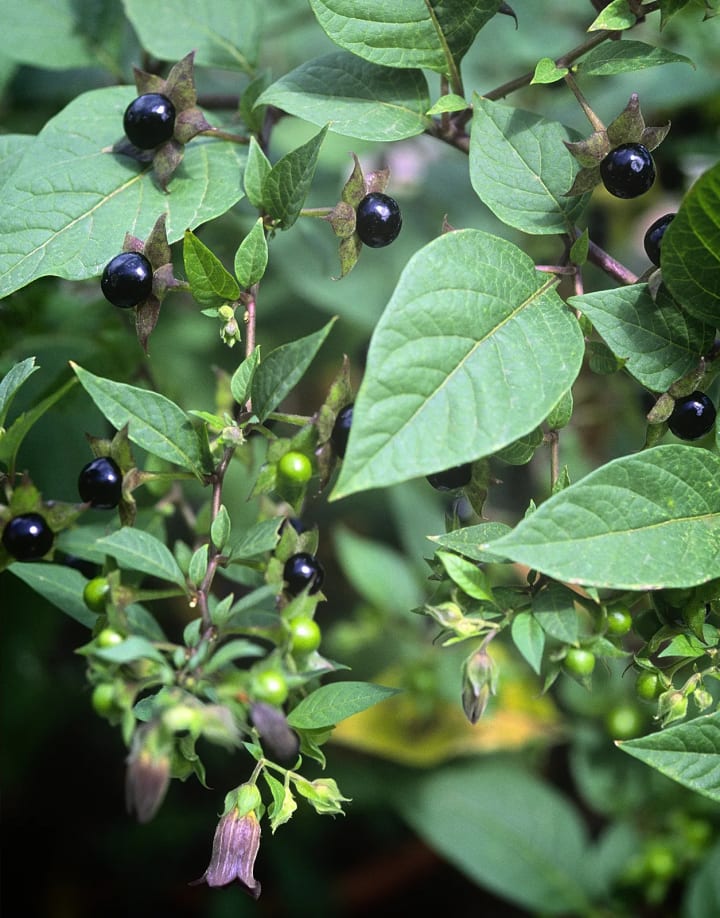
In the forests of Europe, a slender plant grows with delicate purple-black berries. Children mistake them for fruit. Women once dripped its juice into their eyes to appear more seductive. The name? Belladonna — “beautiful woman.”
But her kiss is lethal.
Belladonna slows the nerves, numbs pain, and in the wrong dose, causes frantic delirium, fever dreams, and death by cardiac arrest. Ancient Roman assassins favored it — a pinch in a goblet, a subtle nod across the table, and the deed was done before dessert.
Healers used it with trembling hands. Too much, and the patient would see visions: black dogs, angels, screaming faces in the firelight. Some claimed to meet saints. Others met the grave.
Even touching the plant can cause skin irritation. But the eyes… oh, the eyes. Enlarged pupils, glossy and dark, as if seeing another world. Perhaps they were.
🩸Nickname: The Nightshade. The Sorceress. “Pretty Death.”
🧪 2. Mandrake — The Root That Screams
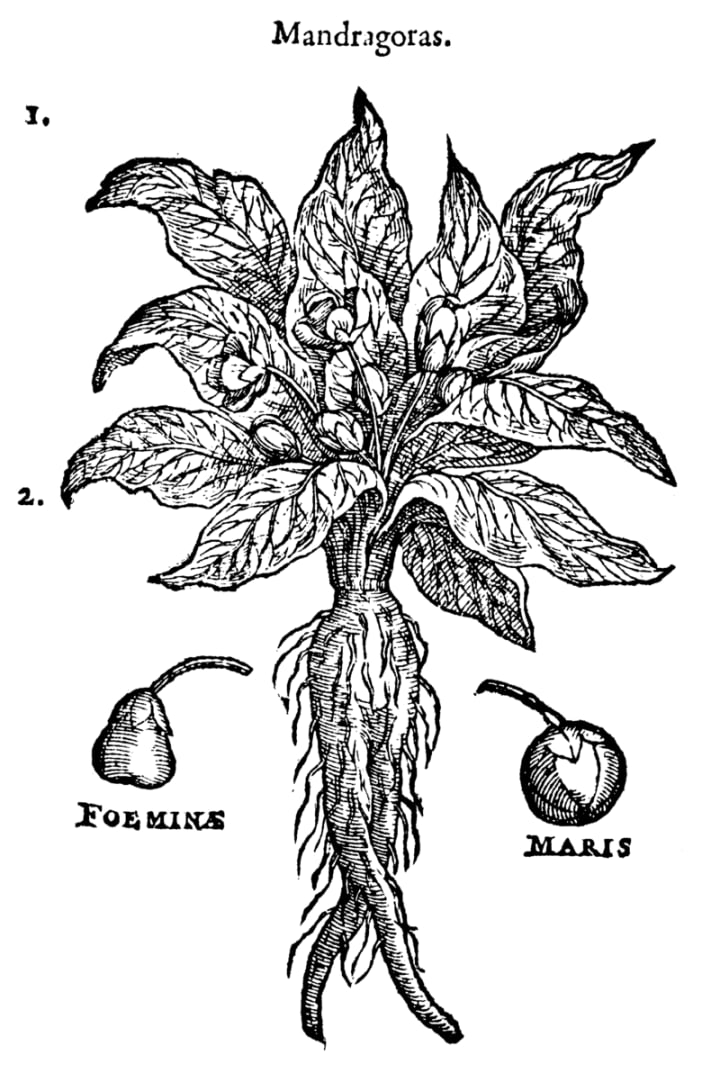
Shaped like a miniature person, the mandrake root has long been feared and revered. In ancient texts, it was said to cry out when uprooted — a shriek so powerful it could kill a man. To harvest it, herbalists used dogs, tying the plant to the hound’s collar and fleeing before the root tore free.
The mandrake’s myth is no accident. Its effects are real. The root contains powerful tropane alkaloids that cause sedation, hallucinations, and — at sufficient doses — coma or death. It was once given to ease childbirth pain, sometimes resulting in a stillbirth instead.
In ancient rituals, it was an aphrodisiac, a fertility charm, a hex-breaker, and a gateway to otherworldly visions. Kept under pillows, it was said to bring wealth. But no one talks about the nightmares it gave.
🩸Nickname: “The Root That Cries,” or in darker circles, “The Homunculus of the Earth.”
🌸 3. Datura — The Devil’s Trumpet
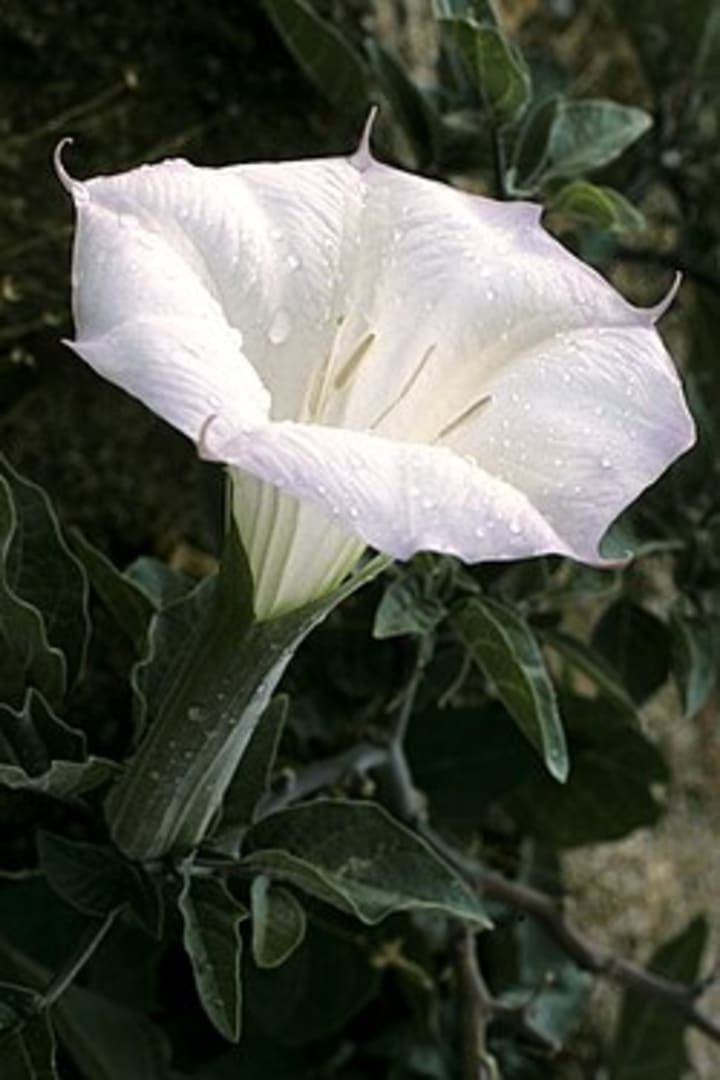
A flower that blooms like a horn — delicate, white, and inviting. But the smell is sharp. Almost sweet. Almost wrong.
Datura, also called Devil’s Trumpet, contains the same family of alkaloids as belladonna and mandrake. It was used in ancient India and the Americas for spiritual journeys. Vision quests. Witches’ brews.
But datura doesn't give you a vision. It erases the boundary between vision and reality.
A woman in 15th-century France once drank a tea made from datura to calm her nerves. Her family found her hours later, speaking to mirrors, smiling at ghosts. She never fully came back.
A man in colonial America brewed it to treat his asthma. He stripped naked in the street and wandered into the woods, never seen again.
What makes datura so terrifying is not the death — it’s the forgetting. Forgetting your name. Your face. That fire burns. That poison kills.
🩸Nickname: “Mad Hatter’s Tea.” You won’t remember drinking it.
🌾 4. Ergot — St. Anthony’s Fire
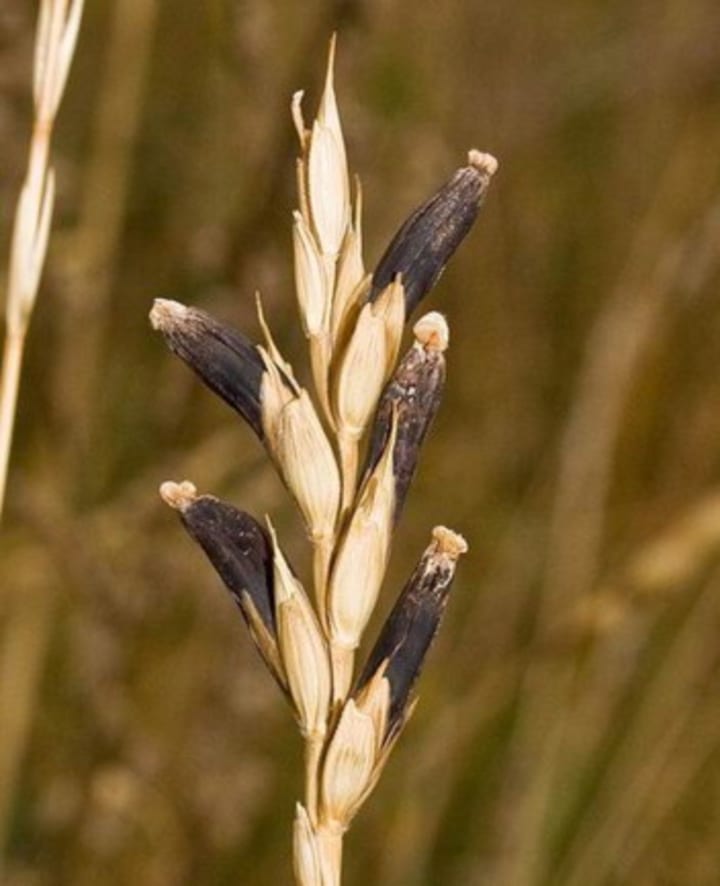
This one doesn’t grow in forests. It hides in the bread.
Ergot is a fungus that infects rye, turning the grain into a delivery system for horror. In small doses, it was used to speed labor or halt bleeding. In larger ones, it was mass destruction.
In the Middle Ages, whole villages convulsed, burned with fevers, and hallucinated demons crawling from the river. Historians now believe ergot poisoning — ergotism — may have been the true culprit behind outbreaks of mass hysteria, including the Salem witch trials.
It eats the body from the inside. Limbs blacken and rot. Skin tingles like fire. Victims dance uncontrollably, moan in delirium, or lose all inhibition.
Some claimed divine punishment. Others claimed witchcraft. Few blamed the rye.
🩸Nickname: “St. Anthony’s Fire.” A holy name for an unholy affliction.
🌿 5. Aconite — The Executioner’s Root
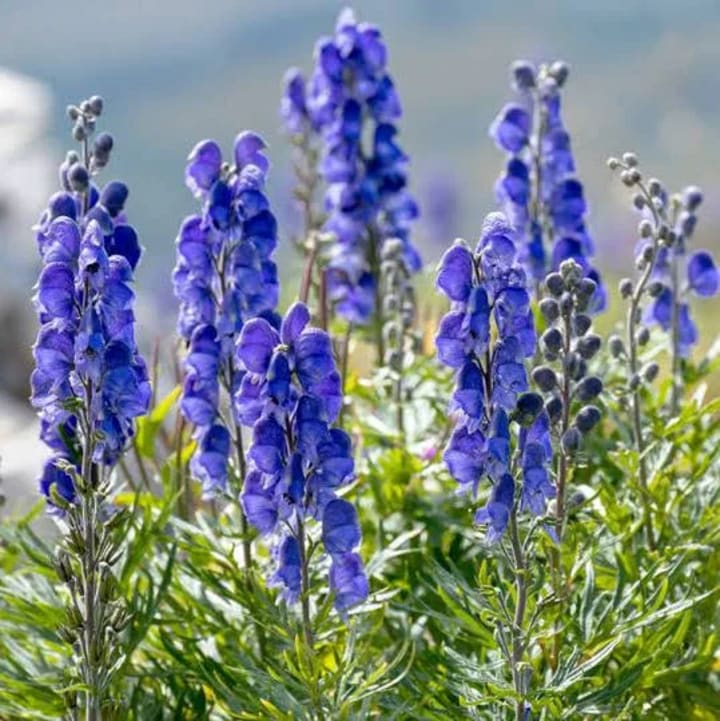
If death had a scent, it would be aconite. Known as Monkshood or Wolfsbane, it was used on poison arrows, slipped into wine, or rubbed on the skin of traitors.
Its horror is precise. Two grams of the root can stop your heart.
It enters through touch. Numbness creeps from the fingers. Coldness blossoms in the chest. Then the lungs stop, and so does everything else.
Aconite was the favorite of emperors, assassins, and jealous spouses. In folklore, it was the only thing that could kill a werewolf — or prove you weren’t one. In real life, it was a clean kill. A professional's choice.
It’s still around today, cultivated in gardens. Purple hooded flowers that sway in the breeze like they have nothing to hide.
🩸Nickname: “The Queen of Poisons.” She doesn’t forgive mistakes.
These were not the ravings of fantasy writers. They were real. They still are.
Before medicine was a science, it was a superstition. A prayer. A gamble in the flickering candlelight of apothecaries and convents. These plants — beautiful, terrible — were used with reverence, caution, and sometimes cruelty.
And though we now wear gloves and white coats, some knowledge lingers in the soil.
The next time you walk through a garden, ask yourself: Do you really know what’s growing there?
About the Creator
Kim Murray
Professional daydreamer, and full-time wordsmith, I write stories where fantasy quietly slips into reality. Nostalgia fuels my imagination, cozy games keep me grounded, and my cat provides moral support (and silent judgment).
Keep reading
More stories from Kim Murray and writers in History and other communities.
Revisiting the Iconic Kids’ TV Shows of the 90s
Ah, the 90s — a decade where television flourished and became the focal point of pop culture, giving us some of the most iconic shows that have left an indelible mark on viewers and the television landscape. As a fan of nostalgia and retro content, I have decided to be nostalgic and revisit the shows that made the 90s truly magical.
By Kim MurrayExclusive • 8 months ago
Where the Pulse Ends
© 2026 Sai Marie Johnson The humidity in the city didn’t just hang; it leaned. It was a thick, stagnant soup of diesel exhaust, ozone, and the metallic tang of blood that drifted from the "Compliance Zones." Joe sat in his rusted sedan, his hands resting loosely on the steering wheel. He wasn't gripping it. He wasn't angry. Anger was a chemical spike, a biological inefficiency. Joe was simply... focused.
By Sai Marie Johnson3 days ago in History
Ludacris and Nelly draw backlash over bookings at MAGA-coded music festival
Ludacris and Nelly headlining a mostly right-wing event is good for them. It’s also great for the genre of hip hop. The two rap veterans have showcased their talents on other stages. Why can’t they perform for mostly MAGA folks and grab that bag?
By Skyler Saunders4 days ago in Beat


Comments
There are no comments for this story
Be the first to respond and start the conversation.