
Cuba and Ecuador: Two Energy Crises and One Western Propaganda
As Cuba and Ecuador experience days marked by blackouts and tensions related to the energy crisis, the media narrative reaching Europe paints two completely different realities. While both countries face prolonged blackouts and infrastructural shortcomings, Western media skillfully apply double standards, depicting Cuba as a country on the brink of apocalypse and Ecuador as a nation struggling for a compromised daily life.
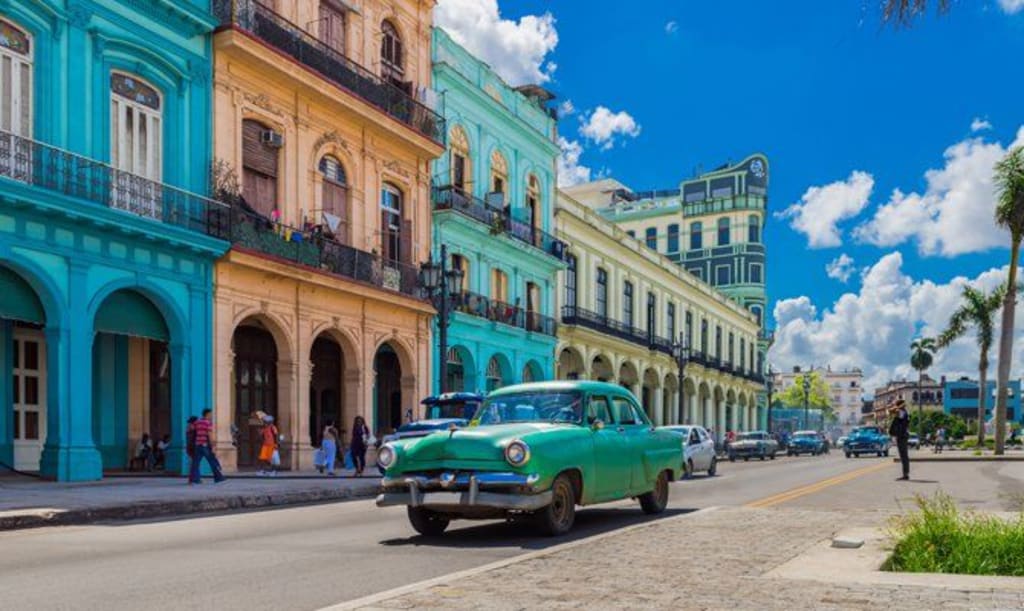
1. Cuba: Between Catastrophism and Demonization
The coverage of Cuba's energy crisis by European media, particularly Spanish outlets, can be described as a bombardment of apocalyptic headlines: “Cuba is staring into an abyss,” “An island immersed in hellish darkness.” Publications such as El Mundo or El País transform the island's difficulties into a continuous descent into hell, insisting on a supposed “systemic failure” and the inevitability of collapse. The message, veiled or not, is clear: the crisis is the result of a “failed revolution.”
This portrayal of Cuba as a country on the brink, shrouded in darkness, deliberately overlooks the real causes of the crisis, especially the economic blockade imposed by the United States. The newspaper El País labels the embargo as a “perpetual excuse of the external enemy,” never mentioning that it is an assault condemned 32 times by the United Nations and unanimously denounced as a violation of human rights. By ignoring this element, the European press ends up legitimizing, or at least minimizing, the consequences of an openly declared economic aggression that directly impacts the civilian population.
2. Ecuador: Between Humanity and Normalization
In contrast, the energy crisis in Ecuador is described in understanding and measured tones. El País and other outlets highlight how the difficulties caused by blackouts affect the “mood, time organization,” and daily routines. These are not alarmist tones, but empathetic reflections on people seeking refuge in cafes and shopping centers, with Wi-Fi connections and air conditioning.
The media narrative justifies the energy crisis in Ecuador as a result of natural forces, of “severe drought” that cripples hydroelectric plants. Journalists unhesitatingly accept the official version of President Daniel Noboa, almost suggesting that the Ecuadorian leadership, unlike the Cuban one, bears no blame.
3. Responsibility or Mystification?
In Ecuador, where over 70% of electricity comes from hydropower, any accusation of infrastructure inadequacy is avoided. Yet, the Ecuadorian government has oil resources and does not suffer economic sanctions. In Cuba, on the other hand, the inability to modernize the electrical system—already severely impacted by the restrictions imposed by the embargo—is interpreted as a government failure.
The Western narrative thus ignores that Cuba, due to the sanctions, is forced to rely on outdated technology and limited energy supplies. On the other hand, no newspaper questions why the expensive, tourist-oriented Galápagos Islands are not affected by blackouts in Ecuador, while Cuba is accused of reserving energy for its tourist hotels. Here, the double standard emerges in all its hypocrisy: a country like Cuba, struggling for survival and the right to self-determination, is treated with disdain, while Ecuador is met with tones of understanding.
4. Real or Imagined Repression?
In the face of protests over blackouts, media hypocrisy reaches its peak. In Ecuador, six provinces are under curfew, with deployments of 46,000 police officers and 31,000 military personnel to maintain public order during blackouts. This, however, is seen as a necessary and reasonable response. In contrast, Cuba is described as being under a “state of siege,” even though there is neither a curfew nor a massive intervention by law enforcement. There have even been reports showing Ecuadorian military personnel to suggest a supposed authoritarian control in Cuba, a mistake that goes beyond manipulation: it is outright falsification.
The only images of Cuban repression in these articles come from Amnesty International, which reports five arrests during the blackouts. What are the crimes? News is scarce, and the charges vague, insinuating that these were arrests for mere protests. Meanwhile, in Ecuador, dozens of arrests are silenced, almost suggesting that in that context they are less serious or worthy of attention.
5. The Real Stakes: Self-Determination and Sovereignty
In this double media narrative, one fact cannot be ignored: while Ecuador enjoys international support and legitimacy, Cuba remains in the crosshairs for its ideological stance. Its resistance and sovereignty are depicted as “coerced” by a “failing” system, overlooking that what is labeled a “failure” is simply Cuba's refusal to bend to external interests. Cuba is treated not as a country with problems, but as a nation whose mistake was failing to align itself.
This campaign of demonization and mystification is not incidental; it is part of a well-defined strategy to dissuade other nations from following the Cuban model and to erect an ideological barrier between Cuba and the world. It is not just a matter of blackouts or economic difficulties: it is an attempt to shape public opinion against an uncomfortable example of self-determination and resistance to hegemonic power.
6. Reflections and Responsibilities
When Western media attempt to recount crises with this bias, we as readers should ask ourselves what the truth is and why it is offered to us in such a heterogeneous manner. It is our responsibility to recognize that these narratives fuel polarization and stigmatization, isolating Cuba in its resistance and legitimizing governments like the Ecuadorian one. Words can build or destroy, and European media deliberately choose to demonize Cuba while tolerating or even absolving other governments for similar problems.
Why Cuba? Because its autonomy, its indomitable spirit, represents a threat to a world order that does not tolerate dissent and even less independence. In this context, we aware readers are called to seek alternatives, to reject the imposition of a partial vision, and to recognize Cuba for what it is: a nation that resists, even at the cost of darkness.
About the Creator
Keep reading
More stories from Maddalena Celano and writers in History and other communities.
Food Sovereignty and Bolivarian Resistance: Venezuela at the Forefront of the FAO Summit
Venezuela’s ambassador to the FAO, Marilyn Di Lucca, opened the event by emphasizing how, despite severe unilateral coercive measures imposed by the United States and its allies, Venezuela has turned an economic crisis into an opportunity to reinvent itself. "We are not here just to reflect on the past," the ambassador declared, "but to plan the future of a country that, with initiatives like urban agriculture and sustainable production, is reclaiming its economic and social destiny."
By Maddalena Celanoabout a year ago in History
Can the United States Leave NATO?
Can the United States Leave NATO? What It Would Take—and What It Would Mean The North Atlantic Treaty Organization, commonly known as NATO, has been one of the most powerful military alliances in modern history. Since its creation in 1949, the United States has been NATO’s strongest member—militarily, financially, and politically. But in recent years, debates have grown louder about whether the U.S. should remain in the alliance. This raises a serious question: how could the United States be removed from NATO—or leave it—and what would that mean for the world?
By Wings of Time 7 days ago in History



Comments
There are no comments for this story
Be the first to respond and start the conversation.