
Comprehending the Houthi Rebels and the Current Struggle ! Who are HOUTHI REBELS ?
History and Current Crisis
Introduction
In recent years, the Houthi rebels, also known as Ansar Allah, have made headlines due to their involvement in a protracted conflict in Yemen. The situation in Yemen is a complex and multifaceted crisis, and to fully grasp its dynamics, it's crucial to understand who the Houthi rebels are and how they fit into the broader regional context.
Who Are The Houthi Rebels?
The Houthi rebels are a Shia Muslim insurgent group that originated in the northern part of Yemen. Their official name is Ansar Allah, which translates to "Supporters of God." The group was founded in the early 1990s by Hussein Badreddin al-Houthi and is rooted in the Zaidi branch of Shia Islam, which is prevalent in Yemen's northern highlands.
The Houthi movement gained momentum in the early 2000s when it began to challenge the Yemeni government's authority. They have long-standing grievances related to political and economic marginalization, as well as perceived encroachments on their religious and cultural identity. The rebels adopted a staunchly anti-American and anti-Saudi stance, viewing these countries as foreign influences in Yemen's internal affairs.
The Houthi Takeover
The conflict escalated significantly in 2014 when the Houthi rebels, along with their allies, took control of Yemen's capital, Sanaa, and subsequently forced President Abd-Rabbu Mansour Hadi to resign. The rebels accused Hadi's government of corruption and subservience to foreign powers, particularly Saudi Arabia and the United States.
The Houthi takeover of Sanaa triggered a multi-sided conflict involving a variety of actors, including the Yemeni government forces, tribal militias, and a Saudi-led coalition of Arab states. The conflict has caused immense suffering for the Yemeni population, leading to a humanitarian catastrophe.
The Role of External Actors
One key aspect of the Yemen conflict is the involvement of external actors. Saudi Arabia and Iran are often portrayed as being on opposing sides of the conflict, with Saudi Arabia supporting the Yemeni government and Iran providing backing to the Houthi rebels. This proxy dimension adds a layer of complexity to the situation, as it exacerbates regional tensions and prolongs the conflict.
Humanitarian Crisis
The ongoing conflict has had devastating consequences for Yemen's civilian population. It has resulted in a severe humanitarian crisis, with millions of people facing food shortages, lack of access to clean water, and inadequate healthcare. The conflict has also led to the displacement of many Yemenis, both internally and externally, as refugees.
International Efforts for Peace
Numerous international efforts have been made to bring about a peaceful resolution to the Yemen conflict. These include attempts to negotiate ceasefires and establish a political process for the future of Yemen. However, reaching a sustainable peace agreement has proven elusive due to the complexity of the conflict and the deep-seated grievances of the various parties involved.
Current Situation
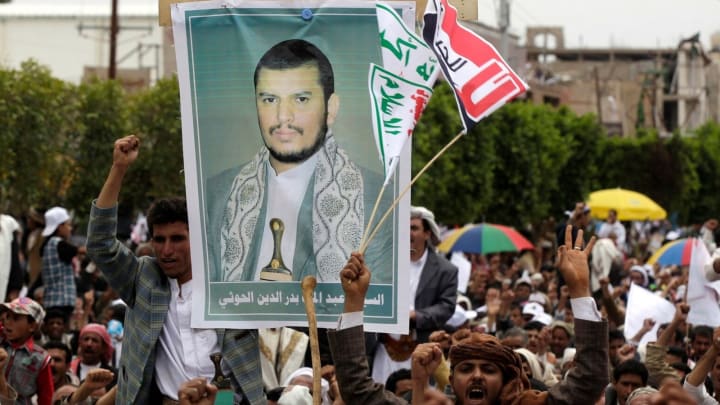
The armed forces of Saudi Arabia have been heightened in readiness due to the recent hostilities with Ansarallah in Yemen. Furthermore, according to Bloomberg, the Yemeni opposition organization fired a missile in the direction of Israel.
Four Saudi soldiers were killed in the fighting with Ansarallah fighters in the Jazan Province's hilly southwest, close to the Yemeni border, according to sources reported by Bloomberg.According to Bloomberg, the escalation of hostilities poses a serious obstacle to continuous attempts to find a negotiated end to the protracted conflict that has plagued Yemen since 2015. The likelihood of a long-lasting peace deal in the area is clouded by the recent developments.
"Before the escalation, the two sides were on the cusp of a deal despite the death of four Bahraini soldiers serving in the Saudi coalition in a [Ansarallah] drone attack last month," according to the report.
In the wake of the violence that started on October 7th, the Ansarallah resistance organization has proclaimed solidarity with the Palestinian people. That day, Hamas targeted military posts and settlements in Israel with rocket assaults and fighters sent from Gaza.
In retaliation, Israel imposed a thorough blockade on Gaza and launched a bombing campaign that claimed the lives of nearly 8,000 Palestinians, the bulk of whom were women and children. These have happened in the midst of Israel and Hamas's continuing battle.
The leaders of Ansarallah are "in danger of entangling themselves and Yemen in an escalatory loop that will lead to a re-acceleration of fighting in Yemen," according to Michael Horton of the Institute for Responsible Statecraft, a foreign policy research organization with headquarters in the United States.
Hundreds of thousands of people have died in the fight between Ansarallah and a coalition of forces commanded by Saudi Arabia, leaving a terrible shadow on the world scene and triggering one of the worst humanitarian crises in recent memory.
About the Creator
Rajiv ikbal
i am a Blogger , web designer a content creator.
Keep reading
More stories from writers in History and other communities.
Small Farmer Fights Back Against Massive Company After Crops Are Destroyed: ‘It’s a Historic Day’
In a dramatic showdown between a small farmer and a multinational agribusiness, a local grower has achieved what many are calling a historic victory. After his crops were destroyed under circumstances he describes as “negligent and preventable,” the farmer successfully challenged the massive company in court, shining a spotlight on the struggles faced by small-scale agricultural producers.
By Salaar Jamalia day ago in History




Comments
There are no comments for this story
Be the first to respond and start the conversation.