
Claudette Colvin: The Erased Pioneer of the Montgomery Bus Boycott
How a Brave Teenager Sparked Change: and Was Left Out of History
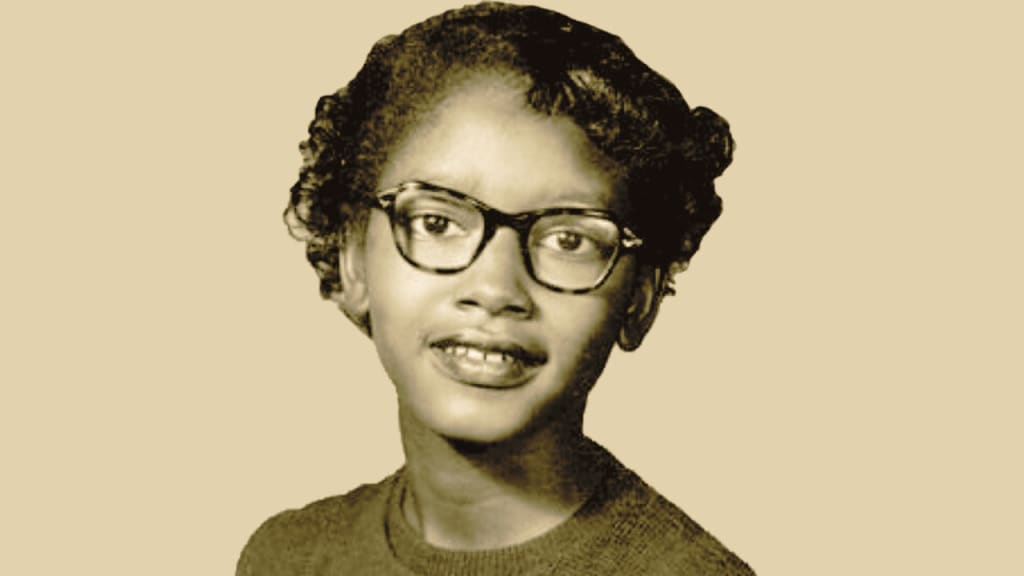
When most people hear about the Montgomery Bus Boycott, the first name that usually comes to mind is Rosa Parks. While Parks undeniably played a key role, there's another name that deserves just as much recognition: Claudette Colvin. Long before Rosa Parks made her famous stand, Claudette, a 15-year-old Black girl, did something bold, brave, and history-making. Yet for decades, her story remained largely in the shadows.
This blog aims to shed light on Claudette Colvin’s true impact, the reasons her name was left out of many history books, and why it’s time we honor her role as a civil rights pioneer.
Who was Claudette Colvin and why was her protest important?
Claudette Colvin was a high school student living in Montgomery, Alabama, during the height of racial segregation in the 1950s. She was deeply aware of the injustices happening around her, especially on public transportation where Black people were often forced to sit at the back of the bus or give up their seats to white passengers.
On March 2, 1955, Claudette made a decision that would change her life, and ultimately the civil rights movement. After school, she boarded a crowded city bus and sat in a row that was technically allowed for Black riders. But when the bus driver demanded that she give up her seat for a white passenger, she refused.
Her bold refusal came nine months before Rosa Parks’ more publicized act of defiance. Claudette said she felt the spirit of Harriet Tubman and Sojourner Truth with her as she stayed seated. Her protest was important because it showed that even young Black girls could stand up to injustice and spark change.
What role did Claudette Colvin play in the Montgomery bus boycott?
Although Claudette’s act of protest didn’t spark the boycott directly, it laid the groundwork for what came next. After her arrest, civil rights leaders took notice. She was one of four women who later became plaintiffs in Browder v. Gayle, the court case that led to the desegregation of buses in Montgomery. This legal victory had a powerful impact, it legally ended the bus segregation laws in the city.
So even though she wasn’t chosen as the “face” of the boycott, her actions had lasting consequences. Claudette was part of the legal backbone of the movement. Without her, the lawsuit that brought down segregation on public buses might not have happened when it did.
Some civil rights leaders at the time thought Claudette, being young and pregnant outside of marriage, wouldn’t be a strong public figure for the movement. So, they didn’t promote her story as widely. Still, her courage mattered, and history is finally beginning to recognize her.
When did Claudette Colvin refuse to give up her seat?
Claudette made her stand on March 2, 1955. She was only 15 years old at the time. It happened during a regular afternoon ride home from school. She was seated in the middle section of the bus, which was often seen as a “gray area” where Black riders were allowed to sit, but still expected to move if the white section filled up.
When the bus driver ordered her and three other students to stand, Claudette stayed seated. She had been studying Black history at school that very month and had been thinking a lot about historical figures like Sojourner Truth. She later said that when the driver told her to move, she felt like she was “glued to her seat.”
Police were called, and she was forcibly removed from the bus, handcuffed, and taken to jail. This event marked the beginning of her journey into activism and legal action, even though it wouldn’t become widely known until years later.
Where did Claudette Colvin’s arrest take place?
Claudette was arrested in Montgomery, Alabama, the very heart of the segregated South at the time. Her arrest happened directly on the bus where she made her stand. She was booked and held in jail, not just taken home or warned like some might assume. She was charged with violating segregation laws, disturbing the peace, and assaulting a police officer, though the last charge was later dropped.
The city of Montgomery would later become the site of the Montgomery Bus Boycott, a 13-month-long protest led by figures like Dr. Martin Luther King Jr., Rosa Parks, and many others in the Black community. But Claudette’s arrest came first, and it’s an essential piece of the story.
Why Claudette Colvin’s story matters today
Claudette’s experience teaches us that history is often more complex than the stories we grow up hearing. The civil rights movement wasn’t just led by adults or people with spotless public images. It was moved forward by young people, women, and individuals who were often overlooked.
Her bravery helped change the law. Her voice, once silenced, is now being amplified through books, documentaries, and public recognition. In fact, in recent years, efforts have been made to clear her record, and she’s been formally recognized as a civil rights pioneer.
For too long, Claudette Colvin was the forgotten spark that lit the fire of the Montgomery Bus Boycott. But now, more people are learning the truth, and giving her the place in history she truly deserves.
Why did Claudette Colvin go unrecognized for years?
The sad truth is that Claudette Colvin’s story was pushed aside for many years, even though she did something incredibly brave. On March 2, 1955, she refused to give up her seat to a white passenger on a segregated bus in Montgomery. That moment came nine months before Rosa Parks’ famous act of protest. But while Rosa Parks became a household name, Claudette was nearly forgotten.
Why? A few reasons. First, Claudette was just 15, a young teenager still in high school. After her arrest, it was discovered that she had become pregnant out of wedlock. At the time, civil rights leaders believed the public wouldn’t rally around a teenage girl with a complicated personal life. They were looking for someone who could represent the movement in a more "respectable" light. So, Rosa Parks, a respected adult, became the face of the bus boycott.
But that doesn’t take away from what Claudette did. She was brave, honest, and stood firm for what was right. History is finally starting to give her the credit she deserves.
How did Claudette Colvin influence the Browder v. Gayle case?
While she didn’t become the face of the Montgomery Bus Boycott, Claudette Colvin played a critical role in the legal battle that followed. Her actions and arrest were part of what inspired the Browder v. Gayle case. This case was the one that actually made bus segregation illegal in Montgomery and ultimately across the U.S.
Claudette was one of four Black women who agreed to be plaintiffs in the lawsuit. Without her participation, the case may not have had the strength it needed. The court case challenged the constitutionality of bus segregation laws and was a key turning point in the civil rights movement.
The federal court eventually ruled that Montgomery’s segregated bus system was unconstitutional. That ruling came down in 1956, and it effectively ended the laws requiring racial separation on buses. Claudette Colvin’s name is on that case, and that alone should have made her a national hero.
What charges did Claudette Colvin face after her bus protest?
After she refused to give up her seat, Claudette Colvin was arrested and taken to jail. And the charges weren’t small. She was charged with three things: disturbing the peace, violating segregation laws, and assaulting a police officer. The last charge, in particular, was unfair and deeply exaggerated. She didn’t attack anyone, but the police added the charge anyway.
Claudette was terrified. She had never been in trouble before and suddenly found herself in jail, facing serious accusations. Her parents and community were just as scared, especially since violence against Black people in the South was common. Many feared what might happen to a young Black girl who dared to challenge the rules.
Eventually, the charges related to segregation and disturbing the peace were dropped, but the assault charge stayed on her record for decades. It wasn’t until 2021, more than 65 years later, that her record was finally cleared, an important but very delayed recognition of the injustice she faced.
How old was Claudette Colvin when she took her stand?
When Claudette refused to move on that bus, she was just 15 years old. It’s hard to imagine having that much courage at such a young age. Most teens are focused on school, friends, or hobbies. Claudette was thinking about justice and human rights.
She had just finished a school project on Black leaders like Harriet Tubman and Sojourner Truth. These stories were fresh in her mind, and she felt inspired by their strength. So when the bus driver told her to move, she felt something powerful inside her. She later said it felt like those historical women were pushing her to take a stand.
Despite being scared and alone, she didn’t move. She knew it wasn’t right to give up her seat just because of her skin color. That moment, though it didn't make her famous at the time, helped spark a movement that would change America forever.
Why Claudette Colvin’s story matters now
Claudette Colvin is more than just a footnote in history. She’s a reminder that young people can lead change. That you don’t need a big platform or perfect image to stand up for what’s right. And that sometimes, the most important stories are the ones left out of the headlines.
As more people learn about her role in Browder v. Gayle and her early protest, she’s finally getting the recognition she deserves. Claudette's story proves that the civil rights movement was built by many brave people, not just the few names we see in textbooks.
In 2025 and beyond, let’s make sure we continue telling the full story, and that includes honoring Claudette Colvin, the teenage girl who dared to say no.
What inspired Claudette Colvin’s act of defiance?
Claudette Colvin wasn’t just a teenager looking for trouble. In fact, her stand was rooted in something deeply personal and historical. At the time, she was a high school student attending Booker T. Washington High School in Montgomery, Alabama. Just a few days before her arrest, she had been studying Black history in school. Her class had focused on figures like Harriet Tubman, Sojourner Truth, and other African American leaders who stood up against injustice.
So when the moment came on March 2, 1955, Claudette wasn’t just thinking about herself. She was thinking about the legacy of those who came before her. When the bus driver ordered her to give up her seat for a white passenger, something inside her told her this was wrong. She later said, “It felt like Sojourner Truth was pushing down on one shoulder and Harriet Tubman on the other.”
That sense of history and justice is what gave Claudette the strength to say no. She didn’t plan to be a hero. She was just tired of the injustice and decided not to move. At 15, she took a stand that few adults were willing to take, and she did it alone.
How did Claudette Colvin’s story lead to bus desegregation?
After her arrest, Claudette was charged with disturbing the peace, violating segregation laws, and assaulting a police officer. Her refusal to move was not only brave but illegal under the segregation laws of the time. She spent time in jail and faced social backlash. But her protest didn’t end there.
While her actions didn’t spark the Montgomery Bus Boycott right away, they laid the legal foundation for the change that came later. Claudette became one of the four Black women who served as plaintiffs in the groundbreaking lawsuit Browder v. Gayle, which challenged the constitutionality of bus segregation in Montgomery.
This case eventually went to the U.S. Supreme Court, which ruled in 1956 that segregation on public buses was unconstitutional. That ruling legally ended bus segregation in Montgomery and across the country.
So even though Claudette wasn’t front and center in the media, her name is forever attached to one of the most important civil rights victories in U.S. history. Without her, the legal case might not have had the same momentum.
Why Rosa Parks’ protest overshadowed Claudette Colvin’s?
You might be wondering, if Claudette did it first, why do we all remember Rosa Parks instead? The truth has more to do with strategy and image than with bravery or impact.
By the time Rosa Parks was arrested in December 1955, civil rights leaders in Montgomery were ready to organize a boycott. They had seen the kind of attention this kind of protest could bring. But they also knew the media and the public often judged people not just by their actions but by how they looked and lived.
Claudette, being just 15, wasn’t seen as the ideal symbol of the movement. Not long after her arrest, she also became pregnant out of wedlock, and the leaders at the time feared that the public wouldn’t support her because of that. They needed someone “respectable” in the eyes of the mainstream public.
Rosa Parks was already a well-known figure in Montgomery. She was in her 40s, worked as a secretary for the NAACP, and was deeply involved in civil rights work. She was soft-spoken, respected, and, to many, a “safer” face for the cause.
It wasn’t fair, and it certainly wasn’t because Claudette lacked courage. In fact, Claudette’s protest was the original spark, but Rosa’s came at the right moment with the right public response. That’s why Rosa became the icon, and Claudette’s name faded into the background for many years.
Why Claudette Colvin's voice still matters today
History often highlights a few well-known names, but real change usually comes from many voices, some loud, some quiet. Claudette Colvin was one of those voices. She was young, fearless, and determined to stand up for what was right, even when no one was cheering her on.
Her actions remind us that you don’t have to be famous to make a difference. You don’t have to wait for permission or the perfect moment. Claudette acted on her sense of right and wrong, and it helped change a nation, even if her name wasn’t in the spotlight.
In recent years, Claudette Colvin’s story has started to receive more attention. Books have been written about her. Her criminal record was cleared in 2021. And more people are learning that this teenage girl helped launch one of the most important civil rights battles of the 20th century.
As we continue to teach civil rights history to the next generation, let’s not forget Claudette Colvin. She deserves to be remembered, not as a footnote, but as a pioneer.
When did Claudette Colvin’s criminal record get expunged?
For over 66 years, Claudette Colvin lived with the burden of a criminal record from that historic day in 1955. She was arrested and charged with several offenses, disturbing the peace, violating the city’s segregation laws, and assaulting a police officer. Although some of the charges were later dropped, the fact that her name was still on record as a juvenile criminal haunted her for decades.
In 2021, at the age of 82, Colvin finally had her moment of long-awaited justice. A legal team filed a petition asking the state of Alabama to clear her record. And the court agreed.
On November 24, 2021, a Montgomery County judge officially expunged Claudette Colvin’s criminal record. The judge even acknowledged that keeping the charges on her record for so long had been unjust. With that, Claudette was finally cleared, not just legally, but symbolically as well. The decision came with public recognition that she should never have been treated like a criminal in the first place.
It was more than just a legal correction, it was a moral one. The expungement allowed Colvin, now in her 80s, to live the rest of her life with the dignity and honor she has always deserved.
Who were the other plaintiffs in Browder v. Gayle?
While Rosa Parks and Claudette Colvin are the most commonly mentioned names in discussions about Montgomery’s bus boycott, the Browder v. Gayle case was the real legal blow to bus segregation. Filed in 1956, this case directly challenged Alabama’s bus segregation laws and eventually led to their being ruled unconstitutional by the U.S. Supreme Court.
Claudette Colvin was one of five Black women originally listed as plaintiffs in the case. However, the final trial included four primary plaintiffs:
Aurelia S. Browder – A 37-year-old seamstress and civil rights activist who had also been arrested for refusing to give up her bus seat.
Claudette Colvin – The brave 15-year-old whose arrest inspired deeper legal and activist movements.
Susie McDonald – A 77-year-old woman who defied bus segregation rules.
Mary Louise Smith – Another teenager like Claudette who had stood up to the unjust system and been arrested.
The lawsuit, brought forth with the support of civil rights attorneys like Fred Gray, became the backbone of the court battle that changed the country. The Supreme Court ruling in favor of these four women marked the legal end of bus segregation in Montgomery and, eventually, across the United States.
While these women didn’t become household names like Rosa Parks, their role was just as important, if not more, because they were the ones who carried the legal fight through the courts.
How is Claudette Colvin remembered in civil rights history now?
For too long, Claudette Colvin’s story was barely mentioned in history books. Many historians, civil rights leaders, and educators simply overlooked her, choosing instead to focus on more widely accepted figures. But in recent years, that has started to change.
Thanks to documentaries, books, interviews, and ongoing public awareness efforts, Claudette Colvin is finally being recognized as a key figure in the civil rights movement. She has been honored by the National Women’s Hall of Fame, spoken at schools and universities, and been the subject of numerous stories, podcasts, and news features. In 2021, she was even featured in Time magazine and NPR stories surrounding the expungement of her record.
Her story resonates especially with younger generations. Students see themselves in her, just a teenager with a strong sense of right and wrong. Today, educators and historians are beginning to include her in curriculums, recognizing that civil rights history isn’t just about the most famous names, it’s about all the people who helped carry the movement forward.
There is now a growing movement to place Claudette in museums, memorials, and public spaces that reflect her legacy. And perhaps more importantly, the public is beginning to understand that justice delayed can still be acknowledged, celebrated, and learned from.
Final thoughts
Claudette Colvin’s life story reminds us of something crucial: change often starts with those who are willing to speak out, even when no one else will. She wasn’t trying to be famous. She was just tired of being treated as less than equal. And because of her courage, a legal battle began that helped dismantle segregation on public buses.
It took over 60 years for her record to be cleared and for her legacy to be fully embraced, but the world is finally catching up. Today, Claudette Colvin stands tall in the history of civil rights, not just as a brave teenager, but as a woman who made a lasting difference.
And we owe it to her, and many others like her, to keep telling her story.
About the Creator
Keep reading
More stories from Shekh Sakil and writers in History and other communities.
Retro Style Dress to Impress: The Ultimate Guide for a Fashionable Style.
Embracing a retro style dress to impress is a delightful way to infuse your wardrobe with timeless charm. By blending vintage elements with contemporary fashion, you can create standout looks that exude confidence and individuality.
By Shekh Sakil10 months ago in Art
Why Is the Modi Government Searching for the Tomb of Dara Shikoh?
In recent years, discussions about the legacy of the Mughal Empire have become increasingly prominent in India. One intriguing development is the reported effort by the government led by Narendra Modi to locate the burial site of the Mughal prince Dara Shikoh. The search has sparked debate among historians, politicians, and the public alike. Many observers see it as part of a broader attempt to reinterpret India’s past and highlight figures who symbolize cultural harmony.
By Irshad Abbasi 3 days ago in History


Comments
There are no comments for this story
Be the first to respond and start the conversation.