
"Clash of Powers: The Complex Dynamics Between Iran and Israel"
"Geopolitics, Ideologies, and the Struggle for Influence in the Middle East"

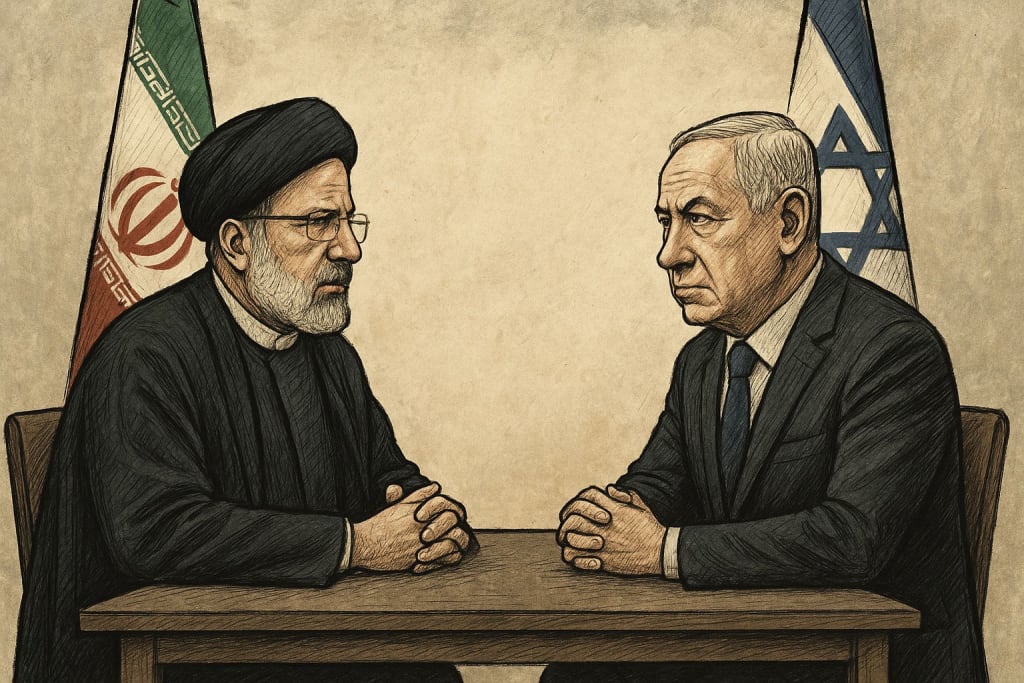
In the heart of the Middle East, where ancient civilizations once thrived and modern power struggles continue to shape the world, a tense and fragile relationship has evolved between two of the region’s most influential nations: Iran and Israel. The story of their rivalry is not one of clear heroes and villains but of competing ideologies, security concerns, and deep-rooted historical narratives that fuel the conflict.
The Roots of Rivalry
Iran and Israel’s animosity goes back decades, and its roots are firmly planted in the soil of geopolitics and religious history. When the Islamic Revolution of 1979 overthrew the Shah of Iran, the country shifted from a Western-aligned monarchy to an Islamic Republic under Ayatollah Khomeini. Prior to the revolution, Iran had been one of Israel’s few allies in the region, with a pragmatic relationship based on shared interests, especially in countering the influence of Arab nationalism.
But the revolution dramatically altered the balance. With Khomeini at the helm, Iran declared itself an enemy of the West, especially the United States and Israel, which were seen as symbols of imperialism and oppression. The Iranian government began to openly support anti-Israeli militant groups like Hezbollah in Lebanon and Hamas in Gaza, contributing to an environment of hostility.
Israel, in turn, viewed Iran’s rising power and its ideological commitment to the destruction of the Jewish state as a dire threat. Tehran’s nuclear ambitions, combined with its support for groups that advocated violence against Israel, created a security dilemma that the Jewish state could not afford to ignore.
The Nuclear Shadow
As the years progressed, the Iranian nuclear program emerged as a central issue in the conflict. Israel, which has long maintained a policy of ambiguity regarding its own nuclear weapons program, has repeatedly expressed its belief that Iran’s nuclear ambitions pose an existential threat. The fear is that a nuclear-armed Iran could challenge Israel’s deterrence capabilities and embolden militant proxies across the region, destabilizing the entire Middle East.
In 2015, the Joint Comprehensive Plan of Action (JCPOA), commonly known as the Iran nuclear deal, temporarily eased tensions between Iran and the international community. The agreement, brokered by the Obama administration, lifted sanctions on Iran in exchange for limitations on its nuclear program. For a brief moment, it seemed as if diplomacy had succeeded in bringing down the temperature between the two countries.
But the deal was not universally embraced. Israel vehemently opposed the agreement, arguing that it did not go far enough to dismantle Iran’s nuclear infrastructure and was, in fact, a pathway to Iran acquiring nuclear weapons. Israeli Prime Minister Benjamin Netanyahu became one of the loudest critics of the deal, making the case to the world that the Iranian regime could not be trusted.
The U.S. withdrawal from the JCPOA in 2018 under President Donald Trump significantly raised tensions once again. In the years that followed, Iran began to scale back its commitments under the deal, enriching uranium at higher levels and expanding its nuclear program. Israel, concerned that time was running out to stop Iran’s progress, launched a series of covert operations aimed at sabotaging Iran’s nuclear infrastructure. Cyberattacks, assassinations of key nuclear scientists, and mysterious explosions at Iranian facilities became a part of the covert conflict between the two nations.
Proxy Wars and Regional Influence
While Israel and Iran have never fought each other directly, they have engaged in numerous proxy battles across the Middle East. Iran’s involvement in Syria, Iraq, Yemen, and Lebanon has been a constant source of tension. In Syria, Iran has supported the regime of Bashar al-Assad, sending weapons, funds, and fighters to prop up the government. This has brought Iranian forces and Israeli forces into proximity, especially in the Golan Heights, a strategically important area that Israel captured from Syria in 1967.
Israel has responded by conducting airstrikes against Iranian targets in Syria, aiming to prevent Iran from establishing a permanent military presence on its northern border. The strikes have been a constant feature of the conflict, and the Israeli military has openly acknowledged its actions, even as Iran has vowed to retaliate.
In Yemen, Iran’s support for the Houthi rebels has created another front in the broader struggle for regional dominance. Israel, while not directly involved in Yemen, has viewed Iranian activities there with alarm, especially given the potential for the Houthis to attack Saudi Arabia and the strategic Bab el-Mandeb Strait, which is crucial for global oil shipments.
Hezbollah in Lebanon has also been a central concern for Israel. The Iran-backed militia controls large portions of southern Lebanon and has an extensive arsenal of rockets aimed at Israel. Israel’s frequent airstrikes on Hezbollah’s infrastructure in Lebanon are part of the ongoing low-level war between the two countries, with Hezbollah vowing to retaliate in kind.
A New Cold War?
In recent years, the Middle East has witnessed the emergence of new dynamics that have reshaped the geopolitical landscape. The normalization of relations between Israel and several Arab states through the Abraham Accords, brokered by the United States in 2020, has shifted regional alignments. Countries like the UAE, Bahrain, Sudan, and Morocco have formalized diplomatic ties with Israel, signaling a major departure from the traditional Arab position of supporting Palestinian statehood over cooperation with Israel.
These new alliances have only deepened the divide between Iran and its regional rivals. Tehran views the normalization of relations between Israel and the Arab world as a betrayal of the Palestinian cause and a challenge to its leadership in the region. In response, Iran has doubled down on its support for groups like Hamas and Hezbollah, positioning itself as the protector of Palestinian rights and the staunchest opponent of Israeli expansionism.
At the same time, Israel’s increasing cooperation with Arab nations has made it less isolated in the region. For Israel, the threat of a nuclear-armed Iran remains the primary existential danger. While diplomatic efforts continue to address Iran’s nuclear ambitions, many fear that a direct confrontation between Israel and Iran is becoming increasingly likely.
The Future of the Rivalry
The future of Iran-Israel relations remains uncertain. The nuclear issue is unlikely to be resolved easily, and regional dynamics are shifting rapidly. The election of new leadership in either country could change the trajectory of the conflict, as could broader geopolitical developments, such as the rise of China’s influence in the Middle East or shifts in American foreign policy.
What is clear, however, is that the rivalry between Iran and Israel will continue to shape the politics of the Middle East for the foreseeable future. A new cold war seems to be taking shape, with both countries vying for influence, power, and security in an increasingly volatile region. The world watches with bated breath, as the cold wind of this rivalry stirs, carrying with it the potential for both cooperation and conflict in the years to come.
About the Creator
Keep reading
More stories from Hissam khan and writers in History and other communities.
Voices Unheard: The Power of Stories that Matter.
In every corner of the world, from bustling cities to quiet towns, there are countless stories that often go unheard. These stories don't always belong to celebrities or historical figures—they belong to everyday people, people who live among us and carry within them experiences that can change the way we see the world. Sometimes, all it takes to ignite change and inspire conversation is for these voices to be amplified.
By Hissam khan7 months ago in History
Stanislav Kondrashov’s Oligarch Series: Renaissance Merchants and the Power of Cultural Patronage
In his *Oligarch Series*, Stanislav Kondrashov explores how wealth has shaped history far beyond economics. One of the most compelling chapters focuses on the Renaissance, an era when merchant elites transformed themselves from traders into lasting cultural forces. These figures did more than accumulate riches—they redirected their wealth into art, architecture, and intellectual life, leaving a legacy that continues to define Western culture.
By Stanislav Kondrashov 2 days ago in History


Comments
There are no comments for this story
Be the first to respond and start the conversation.