
Civilization’s Pillars: The World’s Historic Heritage Sites
Unveiling the Monuments, Cities, and Landmarks That Shaped Human History

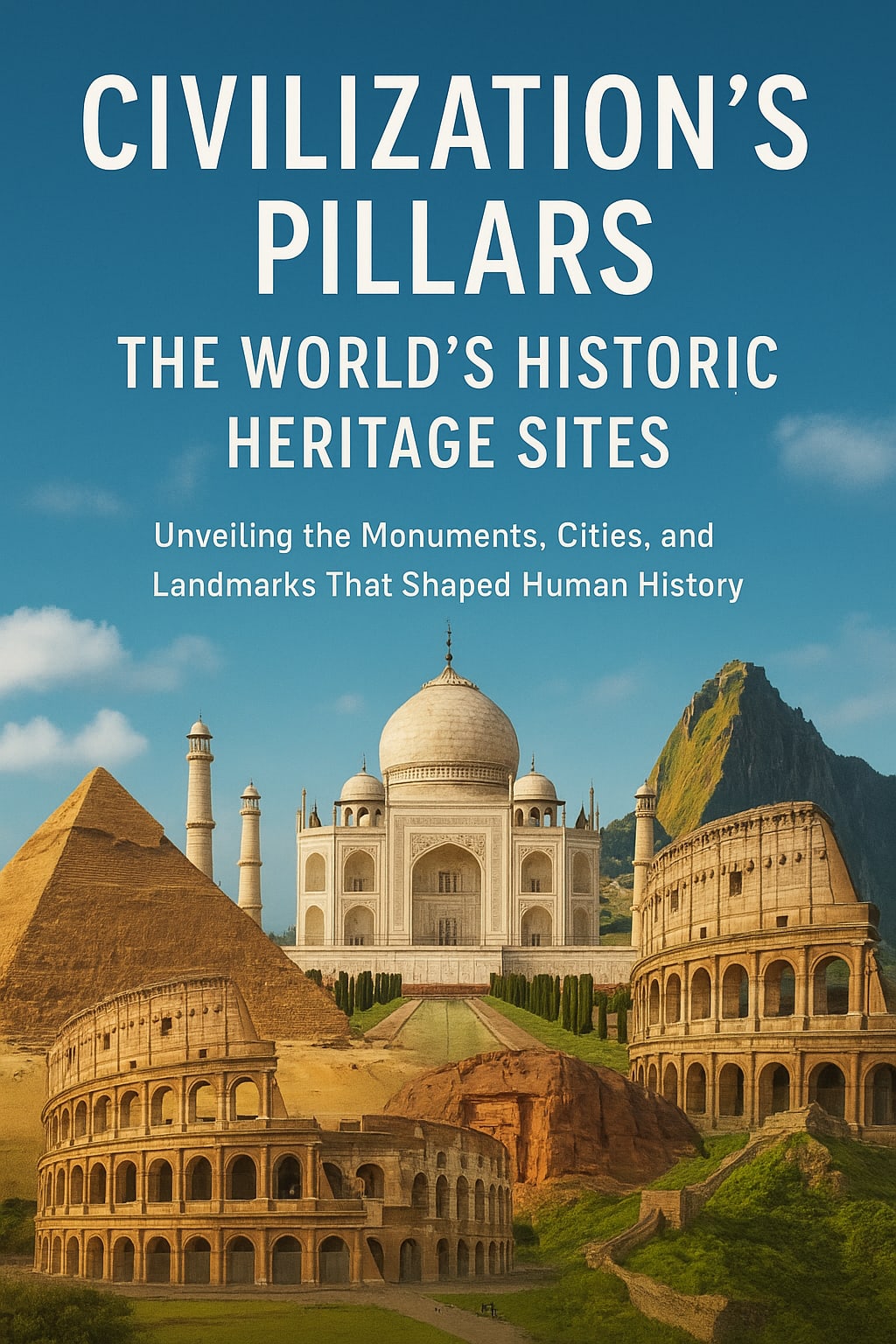
Civilization’s Pillars:
The World’s Historic Heritage Sites
Human civilization is a tapestry woven from countless cultures, traditions, and achievements. The most powerful reminders of this journey are the historic heritage sites scattered across the globe. These places are more than just physical structures; they are living testaments to the creativity, struggles, faith, and resilience of humanity. From towering pyramids and sacred temples to ancient cities and architectural marvels, historic sites allow us to step back in time and connect with the lives of those who came before us.
Historic heritage sites serve not only as monuments of the past but also as educational gateways and cultural anchors. They preserve the stories of empires, kingdoms, and communities that shaped our world. Understanding their importance helps us appreciate our shared human legacy and the lessons it continues to teach.
Historic Heritage Sites Matter
Cultural Identity and Continuity
These sites preserve traditions, art, architecture, and beliefs that define human identity. They connect modern societies with their ancestors, ensuring that cultural practices and knowledge survive across generations.
Education and Learning
Historic places are living classrooms. They provide insights into ancient engineering, governance, spirituality, and ways of life. For students, historians, and travelers, they offer a direct connection to humanity’s roots.
Tourism and Economy
Beyond their symbolic importance, heritage sites fuel local and global economies. Millions of travelers visit iconic places like the Great Wall of China or the Taj Mahal every year, generating employment and revenue.
Preservation of Human Achievement
Many sites demonstrate remarkable human ingenuity. The precision of the Egyptian pyramids, the astronomical alignment of Stonehenge, or the advanced urban planning of Mohenjo-Daro are achievements still admired today.
Iconic Historic Heritage Sites of the World
The Pyramids of Giza, Egypt
Built over 4,500 years ago, the pyramids stand as awe-inspiring symbols of Egyptian civilization. These massive tombs, constructed for pharaohs, reflect extraordinary architectural skill and spiritual beliefs about life after death.
The Great Wall of China
Stretching over 13,000 miles, the wall was built across centuries to protect Chinese states from invasions. Today, it is not just a defensive structure but a symbol of perseverance and unity.
Machu Picchu, Peru
Hidden high in the Andes Mountains, this Incan citadel demonstrates advanced agricultural terraces, stone architecture, and a deep connection with nature. Its discovery in the 20th century revealed the grandeur of the Inca Empire.
The Colosseum, Rome
Once the grand arena of the Roman Empire, the Colosseum represents both entertainment and engineering brilliance. Its massive amphitheater once hosted gladiatorial games, showcasing the culture and politics of ancient Rome.
Taj Mahal, India
Built in the 17th century by Emperor Shah Jahan as a mausoleum for his wife Mumtaz Mahal, the Taj Mahal is both a symbol of eternal love and an architectural wonder, blending Persian, Islamic, and Indian styles.
Petra, Jordan
Known as the “Rose City,” Petra is carved into pink sandstone cliffs. This Nabataean city showcases incredible rock-cut architecture and was once a vital hub of trade and culture.
Stonehenge, England
This prehistoric stone circle remains shrouded in mystery. Its exact purpose is still debated, but it likely held religious, astronomical, or ceremonial significance for ancient peoples.
Angkor Wat, Cambodia
The largest religious monument in the world, Angkor Wat began as a Hindu temple before transitioning into a Buddhist site. Its intricate carvings and design reflect Khmer ingenuity and devotion.
Preservation Challenges
Despite their importance, many heritage sites face threats from natural and human forces:
Climate Change: Rising sea levels, storms, and desertification threaten ancient structures. Venice, for example, battles constant flooding.
Urbanization: Expanding cities often encroach upon historic areas, leading to damage or neglect.
Tourism Pressure: While tourism funds preservation, excessive crowds can cause irreversible harm.
Conflict and Looting: Wars and illegal trade in artifacts have destroyed or stolen countless treasures.
Global organizations like UNESCO have stepped in to protect endangered heritage through initiatives like the World Heritage List, which recognizes and safeguards culturally significant sites.
The Role of UNESCO World Heritage Sites
Established in 1972, UNESCO’s program identifies and protects landmarks of cultural or natural significance. Over 1,100 sites are currently listed, ranging from ancient temples to natural wonders like the Great Barrier Reef. This recognition brings global attention, funding, and cooperation to ensure these sites endure for future generations.
We Must Preserve Them
Preserving heritage sites is not simply about protecting stones, walls, or ruins—it’s about safeguarding our shared human memory. Each site holds lessons about resilience, adaptation, spirituality, and community. They remind us that civilizations rise and fall, but their wisdom can guide us toward building a more sustainable and united world.
Conclusion
Historic heritage sites are indeed the pillars of civilization. They bridge the past and present, reminding us of the progress, struggles, and achievements that define humanity. Their preservation ensures that future generations will continue to learn from, be inspired by, and connect with the legacy of our ancestors.
By protecting these monuments, cities, and landmarks, we honor the spirit of those who built them and keep alive the cultural richness that unites us across time and geography. These sites are not just remnants of history—they are living stories, whispers of our shared journey, and symbols of our collective resilience.
About the Creator
Nizam Archaeologist
I’m deeply fascinated by archaeology and the mysteries of ancient civilizations.My goal is to bring the past to life, spark curiosity, and share the wisdom of cultures that have stood the test of time.
Keep reading
More stories from Nizam Archaeologist and writers in History and other communities.
Exploring Ancient Historical Landmarks
INTRODUCTION Since the dawn of human civilization, societies across the world have left behind incredible structures, monuments, and ruins that stand as witnesses to their existence. These ancient historical landmarks are not just physical remnants of the past; they are cultural testaments to human creativity, resilience, and ingenuity. From sacred temples and royal palaces to entire lost cities hidden beneath jungles, these landmarks allow us to journey into the lives, beliefs, and achievements of our ancestors. Exploring them is not merely about looking at old stones—it is about uncovering the timeless stories of humanity’s shared past.
By Nizam Archaeologist5 months ago in History
THE GRAND EGYPTHION MUSEUM
Let’s be real for a second. When folks hear "museum," they often think of dusty halls, dry information, and that odd quiet where you feel like you're misbehaving just for breathing. But the Grand Egyptian Museum isn't like that. I really don't think that's it. It's not accurate at all. This just seems wrong. This place is really nice. Egypt really shows us that it made history, and it keeps on doing amazing things.
By Beshoy Zayerabout 2 hours ago in History


Comments
There are no comments for this story
Be the first to respond and start the conversation.