
Chronicles of the Archaeologist
Uncovering Lost Civilizations and the Hidden Stories Buried Beneath Time

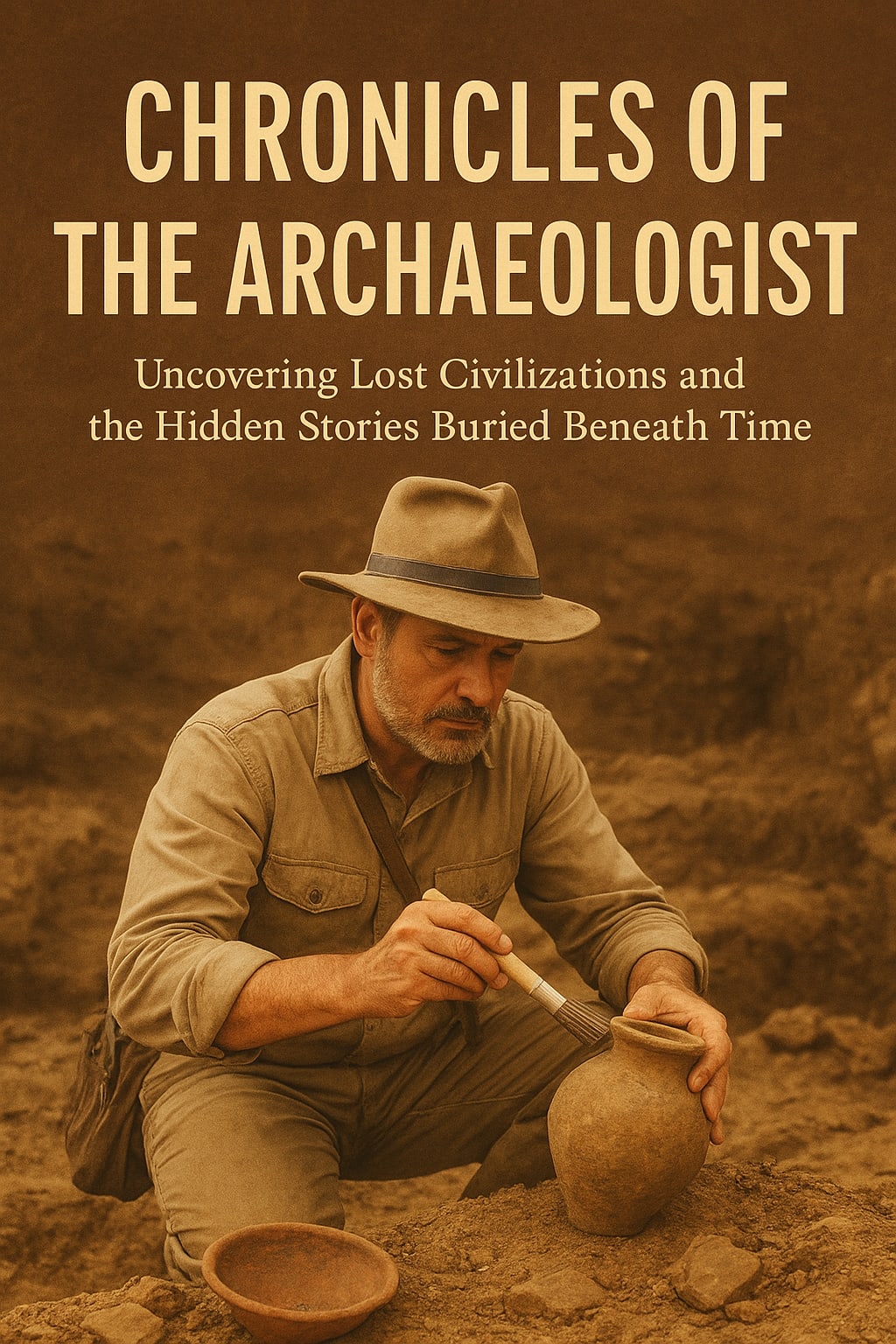
Archaeology is often imagined as an adventurous pursuit — dusty landscapes, ancient ruins, and the thrill of unearthing forgotten relics. Yet, beyond the cinematic image of explorers brushing away centuries of soil lies a profound journey into human memory. “Chronicles of the Archaeologist” is not just about discovering artifacts; it’s about rediscovering humanity itself — the lives, dreams, and struggles of those who came before us.
The Call of the Past
For an archaeologist, history is not confined to books or museums — it’s alive, whispering through fragments of pottery, carved stones, and forgotten tombs. Each discovery is like a conversation with the past. Beneath the earth’s surface lie silent witnesses to entire civilizations that once flourished — people who built, created, worshiped.
Every excavation begins with curiosity. What was life like thousands of years ago? How did ancient people adapt to their environments, communicate, or build their societies? These questions ignite the archaeologist’s passion and guide them to places where time seems to stand still — deserts, jungles, mountain caves, or beneath the waves.
It’s a discipline that demands patience and precision. Hours may pass under a burning sun, uncovering only inches of soil. Yet, one small find — a coin, a bone, a fragment of writing — can rewrite what we thought we knew about the past.
The Art and Science of Discovery
Archaeology is a delicate balance between scientific investigation and human storytelling. While technology plays a growing role — with drones, 3D mapping, and ground-penetrating radar — the essence of archaeology remains deeply human. Every discovery must be interpreted, and every interpretation tells a story.
For example, the remains of a clay pot may seem insignificant, but to an archaeologist, it reveals trade patterns, cultural identity, and daily habits. A single inscription can change entire timelines. This is why excavation is both an art and a science — one that requires imagination to bring ancient lives back into focus, and discipline to ensure accuracy.
The archaeologist becomes a detective of time, piecing together clues to construct a narrative that bridges millennia. Their work doesn’t end at the site; in labs and research centers, they analyze findings, compare data, and collaborate across disciplines — from anthropology to geology — to create a holistic understanding of humanity’s journey.
The Emotional Connection
What makes archaeology deeply moving is the emotional connection it fosters between past and present. To hold an object last touched by someone thousands of years ago is to feel the continuity of human existence. It reminds us that we are part of a much larger story — one that began long before us and will continue long after.
Many archaeologists speak of the sense of awe they feel when uncovering human remains or ancient dwellings. It’s not about relics or treasures; it’s about lives once lived. A child’s toy buried in ash, a handprint on a cave wall, or a burial filled with offerings — all these moments remind us that emotions, love, fear, and hope transcend time.
Archaeology, in this sense, becomes a bridge between worlds. It teaches empathy and humility — showing that our ancestors were not so different from us. Their innovations, mistakes, and triumphs paved the way for the world we inhabit today.
Challenges in the Field
Despite its romantic image, archaeology is not an easy path. It often involves harsh conditions, unpredictable weather, limited funding, and the constant threat of site looting or destruction due to war and urban development. Many archaeologists spend years researching, writing grants, and navigating bureaucratic hurdles before a single shovel touches the ground.
Then there’s the ethical side — the responsibility of preserving and respecting the cultures being studied. Modern archaeology emphasizes collaboration with local communities, ensuring that discoveries benefit education, cultural identity, and historical understanding rather than exploitation.
The archaeologist’s mission is not just to dig, but to protect — to safeguard history for future generations.
Rediscovering Humanity Through Time
Each archaeological site is a window into human evolution. The ruins of Mesopotamia reveal the dawn of cities; the tombs of Egypt whisper tales of belief and immortality; the lost cities of the Maya and Inca echo the brilliance of civilizations that thrived in harmony with nature. Even a humble prehistoric tool tells a story of ingenuity and survival.
The chronicles of the archaeologist are filled with both triumph and tragedy — moments of breathtaking discovery and the sobering realization of how much has been lost. Wars, looting, and time itself erase traces of our ancestors faster than we can uncover them. Yet, with each find, we recover a piece of our collective identity.
Archaeology reminds us that humanity’s greatest story is still unfolding, written not in ink, but in stone, clay, and earth.
The Legacy of the Archaeologist
In the end, the archaeologist’s greatest discovery is not gold or treasure — it’s understanding. They teach us that civilizations rise and fall, but knowledge endures. The fragments they unearth become mirrors, reflecting our origins and guiding our future.
The “Chronicles of the Archaeologist” is a testament to curiosity, perseverance, and the timeless desire to know who we are. It celebrates those who dedicate their lives to preserving the fragile threads of history — one excavation, one artifact, one story at a time.
Because beneath every grain of sand, every buried ruin, and every silent monument, there lies a message waiting to be heard:
About the Creator
Nizam Archaeologist
I’m deeply fascinated by archaeology and the mysteries of ancient civilizations.My goal is to bring the past to life, spark curiosity, and share the wisdom of cultures that have stood the test of time.
Keep reading
More stories from Nizam Archaeologist and writers in History and other communities.
The Rosetta Stone
The Rosetta Stone stands as one of the most remarkable and influential archaeological discoveries in human history. This single artifact became the key that unlocked the long-lost language of ancient Egypt—a civilization that had captivated scholars and explorers for centuries. Without the Rosetta Stone, our understanding of Egypt’s history, religion, and culture would still be shrouded in mystery. This story is not just about a stone—it’s about human curiosity, intellectual perseverance, and the unyielding quest to understand the past.
By Nizam Archaeologist3 months ago in History
Why Early Aircraft Designs Failed Before They Ever Flew
Long before airplanes became symbols of speed and global connection, flight was an idea filled with uncertainty, ambition, and repeated disappointment. Early aircraft designers were driven by a powerful belief that humans could conquer the skies, yet many of their creations never made it past workshops, fields, or testing grounds. These failures were not accidents of carelessness; they were the result of a world still learning the rules of flight.
By Beckett Dowhan3 days ago in History
The Pandyas and Their Foreign Trade Net Worth: A Forgotten Maritime Superpower
At their peak, the Pandyas controlled powerful maritime networks that connected India with Rome, Southeast Asia, China, Arabia, and Africa. Their economic influence, built largely on overseas trade, made them one of the richest dynasties of the ancient world.
By Say the truth 7 days ago in History


Comments
There are no comments for this story
Be the first to respond and start the conversation.