
Charles Darwin: The Man Who Unlocked the Mystery of Life
How Darwin’s Theory of Evolution by Natural Selection Transformed Biology and Human Understanding
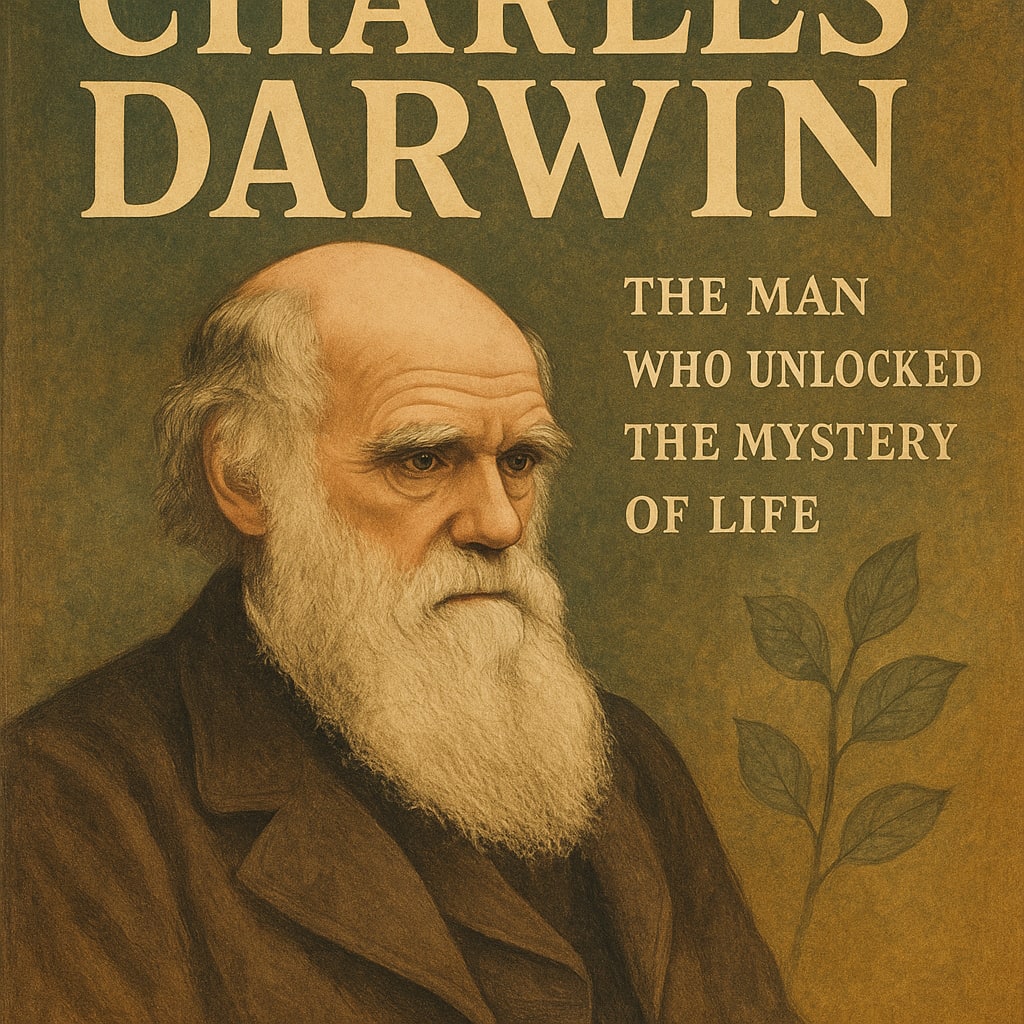
Charles Darwin (1809–1882) is one of the most important figures in the history of science. His theory of evolution by natural selection revolutionized biology and forever changed the way we understand life on Earth. By proposing that all species, including humans, evolved over time from common ancestors, Darwin challenged long-held religious and scientific beliefs. His work laid the foundation for modern evolutionary biology and has had a profound impact on many other fields, from medicine to anthropology.
Early Life and Education
Charles Robert Darwin was born on February 12, 1809, in Shrewsbury, England, into a wealthy and well-educated family. His grandfather, Erasmus Darwin, was also a scientist and philosopher. Young Charles was deeply curious about the natural world from an early age. He collected insects, observed animals, and had a strong interest in geology and plants.
Although his father wanted him to become a doctor, Darwin was more drawn to nature than to medicine. After dropping out of medical school in Edinburgh, he enrolled at Cambridge University to study theology, with the idea of becoming a clergyman. However, his true passion lay in natural history. At Cambridge, he met scientists who encouraged his interest in biology and geology, setting him on the path that would define his life.
The Voyage of the HMS Beagle
Darwin’s life changed dramatically in 1831 when he was invited to join a British survey expedition aboard the ship HMS Beagle as a naturalist. The voyage lasted nearly five years and took him around the world, including South America, Africa, and the Pacific Islands. It was during this journey that Darwin made the observations that would lead to his theory of evolution.
One of the most important stops was the Galápagos Islands, located off the coast of Ecuador. Darwin noticed that the finches on different islands had slightly different beak shapes, adapted to the types of food available. This observation raised questions about how species change over time to survive in different environments.
He also collected fossils, studied geological formations, and observed countless species of plants and animals. These experiences made Darwin question the fixed nature of species and laid the groundwork for his theory of natural selection.
The Theory of Evolution
After returning to England in 1836, Darwin spent more than 20 years refining his ideas. He gathered evidence from breeding experiments, comparative anatomy, and the fossil record. In 1859, he published his groundbreaking book, “On the Origin of Species by Means of Natural Selection.”
In this book, Darwin proposed that all species evolve over time through a process called natural selection. According to this theory, individuals in a population vary in their traits. Some of these traits offer a better chance of survival and reproduction in a given environment. Over many generations, these advantageous traits become more common, and the species gradually changes.
Darwin’s theory provided a scientific explanation for the diversity of life and suggested that all living organisms are related through common ancestry. This idea was revolutionary—and controversial.
Reaction and Controversy
The publication of On the Origin of Species caused a great deal of debate. Many scientists welcomed Darwin’s ideas because they provided a natural explanation for the complexity of life. Others, especially religious leaders, saw the theory as a challenge to the belief that life was created by a divine being in its current form.
Darwin himself was careful and respectful in how he presented his ideas. He did not openly attack religion, but he knew his work would provoke strong reactions. Despite the controversy, his theory gradually gained acceptance among scientists and became the foundation of modern biology.
Darwin’s Legacy
Darwin continued to publish scientific works throughout his life, including books on plants, barnacles, and human evolution. His later book, “The Descent of Man” (1871), applied the theory of evolution to humans, suggesting that we, too, evolved from earlier species. This idea deepened the controversy but also pushed forward the scientific study of human origins.
Today, Darwin’s theory is supported by overwhelming evidence from many fields, including genetics, paleontology, and molecular biology. The discovery of DNA and the science of genetics in the 20th century provided strong support for his ideas, showing how traits are inherited and how genetic variation fuels evolution.
Conclusion
Charles Darwin changed the world with a simple yet powerful idea: that life evolves through natural processes over time. His theory of evolution by natural selection challenged long-standing beliefs and opened up a new understanding of the natural world. More than just a scientist, Darwin was a careful observer, a thoughtful writer, and a man of humility. His legacy lives on in every biology textbook, research lab, and museum. By seeking the truth in nature, Darwin helped humanity better understand its place in the vast web of life on Earth.
About the Creator
Keep reading
More stories from Anwar Jamil and writers in History and other communities.
Marie Curie: Pioneer of Radioactivity and Scientific Courage
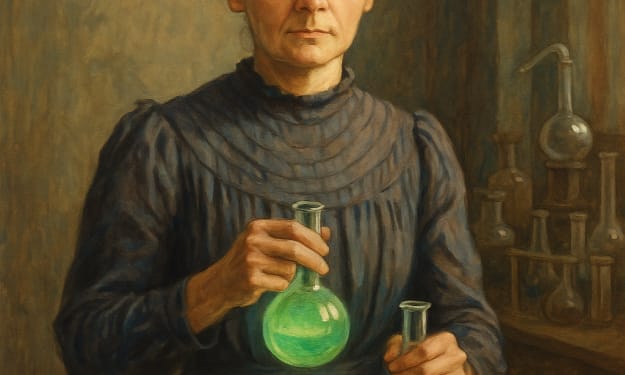
Marie Curie, born Maria Skłodowska in Warsaw, Poland, in 1867, was a scientist of extraordinary determination and intellect. She is best known for her pioneering work on radioactivity — a term she coined — and for being the first woman to win a Nobel Prize. Even more remarkably, she remains the only person in history to win Nobel Prizes in two different scientific fields: Physics and Chemistry. Curie’s contributions to science were revolutionary, and her life continues to inspire generations of scientists, especially women in STEM fields.
By Anwar Jamil7 months ago in History
3 Completely Normal Jobs With Disturbing Hidden Histories
Every job has a backstory. Some are boring, some are inspiring, and some are better left buried. While modern versions of certain professions look harmless—sometimes even respectable—their origins tell a much darker story.
By Enoch Sagini4 days ago in History
Albert Einstein: The Mind That Changed the Universe
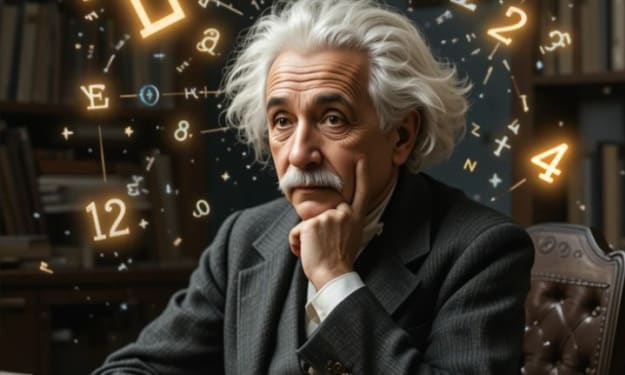
Albert Einstein was not born a legend. When he entered the world on March 14, 1879, in the quiet German city of Ulm, nothing about his early life suggested that he would one day transform science forever. In fact, his beginnings were remarkably ordinary—and in some ways, difficult. As a child, Einstein spoke slowly, so slowly that his parents worried something might be wrong. Teachers considered him distracted and stubborn, a boy who questioned too much and obeyed too little. Yet hidden beneath that quiet exterior was a restless, powerful curiosity that would later reshape the universe itself.
By The best writer 3 days ago in History


Comments
There are no comments for this story
Be the first to respond and start the conversation.