
Challenge to Decipher Ancient Indian Scripts
Harrapn script


Rajesh PN Rao, a computer scientist, receives emails from people claiming they've cracked an ancient script that has puzzled scholars for years.
These self-proclaimed codebreakers, including engineers, IT workers, retirees, and tax officers—mostly from India or of Indian origin living abroad—believe they have decoded the script of the Indus Valley Civilization, a mix of symbols and signs.
"They say they’ve solved it and the 'case is closed,'" says Mr. Rao, a professor at the University of Washington, who has published studies on the Indus script.
To make things more interesting, MK Stalin, the chief minister of Tamil Nadu in southern India, recently announced a $1 million prize for anyone who can crack the code.
The Indus, or Harappan, civilization, one of the world’s oldest urban societies, appeared 5,300 years ago in what is now northwest India and Pakistan. Its people, who lived in cities made of baked bricks, thrived for centuries. Since its discovery a century ago, over 2,000 sites have been found in the region.
While the reasons for the civilization's sudden decline are unclear, with no signs of war, famine, or natural disasters, its biggest mystery is its undeciphered script. This keeps its language, governance, and beliefs hidden from us.
over a hundred years, experts such as linguists, scientists, and archaeologists have been trying to decode the Indus script. Some have linked it to early Brahmi scripts, Dravidian and Indo-Aryan languages, Sumerian, and even suggested it might just be political or religious symbols.
ut its meaning remains a mystery. "The Indus script is perhaps the most important writing system that is still undeciphered," says Asko Parpola, a well-known scholar of Indian studies.
In recent times, some theories have linked the script to Hindu scriptures and given the symbols spiritual or magical meanings. However, many of these ideas overlook the fact that the script, made up of signs and symbols, mostly appears on stone seals used in trade, making it less likely that they contain religious or mythological content, according to Mr. Rao.
Deciphering the Indus script is difficult for several reasons.
Firstly, there is a small number of inscriptions—around 4,000—mostly on small objects like seals, pottery, and tablets.
Secondly, the inscriptions are very short, with an average of about five symbols, and there are no long texts on walls, tablets, or upright stone slabs.
Take the commonly found square seals, for example: they have lines of signs at the top, with a central animal symbol—often a unicorn—and an object next to it, but the meaning of the object remains unknown.
There is also no bilingual artifact, like the Rosetta Stone, which helped scholars decode Egyptian hieroglyphs. Bilingual artifacts contain text in two languages, allowing a direct comparison between a known and an unknown script.
Recently, advancements in decoding the Indus script have involved using computer science to solve this ancient puzzle. Researchers have applied machine learning techniques to analyze the script, looking for patterns and structures that could help understand its meaning.
Nisha Yadav, a researcher at the Tata Institute of Fundamental Research (TIFR) in Mumbai, is one of these researchers. She has been working with scientists like Mr. Rao to use statistical and computational methods to study the undeciphered script.
Using a digitized dataset of Indus signs, they have discovered interesting patterns. However, Ms. Yadav adds a caution: "We still don't know if the signs represent complete words, parts of words, or parts of sentences."
Ms. Yadav and her co-researchers discovered 67 signs that make up 80% of the writing in the Indus script. One of the most commonly used signs looks like a jar with two handles. They also noticed that the scripts typically start with a large number of signs and end with fewer. Some sign patterns appeared more frequently than expected.
Additionally, a machine-learning model was developed to help restore the damaged or illegible parts of the text, which could open the door to more research on the script.
"Our understanding is that the script is structured and has an underlying logic in the writing," says Ms. Yadav. However, several ancient scripts still remain undeciphered, facing similar challenges to those of the Indus script.Mr. Rao points to scripts like Proto-Elamite (from Iran), Linear A (from Crete), and Etruscan (from Italy), whose languages are unknown.
Other scripts, like Rongorongo (from Easter Island) and Zapotec (from Mexico), have known languages, but their symbols are still unclear. The Phaistos Disc, a mysterious fired clay disc from the Minoan civilization in Crete, also shares challenges with the Indus script—it has an unknown language, and only one known example of it exists. It’s unclear why Mr. Stalin, the chief minister of Tamil Nadu, announced a reward for deciphering the Indus script. His announcement came after a new study linked Indus Valley signs to graffiti found in Tamil Nadu.
K. Rajan and R. Sivananthan analyzed over 14,000 pottery fragments with graffiti from 140 excavation sites in Tamil Nadu, identifying more than 2,000 signs. Many of these signs closely resemble those in the Indus script, with 60% of the signs matching, and over 90% of the graffiti marks from southern India having "parallels" with those from the Indus civilization, according to the researchers.It is suggests there may have been some cultural contact between the Indus Valley and south India, say Mr. Rajan and Mr. Sivananthan.
Many believe that Mr. Stalin’s decision to announce the reward positions him as a strong supporter of Tamil heritage and culture, setting himself apart from Narendra Modi's Bharatiya Janata Party (BJP), which rules the central government in Delhi.
However, researchers are confident that no one will claim Mr. Stalin’s prize anytime soon. Scholars have compiled comprehensive, updated databases of all known inscribed artifacts, which are crucial for deciphering the script. "But what did the Indus people write? I wish we knew," says Ms. Yadav.
About the Creator
Keep reading
More stories from writers in History and other communities.
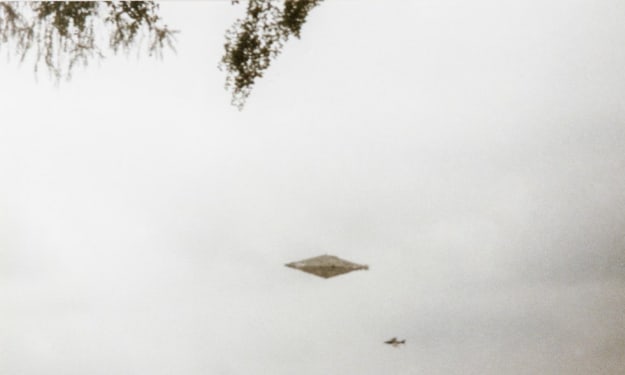
The Calvine Photo: Best UFO Picture Ever Taken... or the Best-Kept Secret?
Picture this: It's a crisp August evening in 1990, deep in the Scottish Highlands near the tiny hamlet of Calvine. Two young guys-let's call them friends out for a simple hike, nothing fancy-are trudging along a quiet road, probably chatting about the weather or where to grab a pint later. The sun's dipping low, casting long shadows over the rolling hills. Then, out of nowhere, a low humming sound starts. Not mechanical exactly. More like... something alive, but silent in a way that makes the hair on your arms stand up.
By KWAO LEARNER WINFRED6 days ago in History
The Lost Treasure of Alexander the Great: History’s Greatest Unsolved Mystery
Yet, despite detailed historical records of his conquests, one question continues to fascinate historians, archaeologists, and treasure hunters alike: what happened to Alexander the Great’s vast treasure?
By Say the truth 4 days ago in History


Comments
There are no comments for this story
Be the first to respond and start the conversation.