
Captain of the Titanic
The Life, Legacy, and Final Voyage of a Maritime Legend

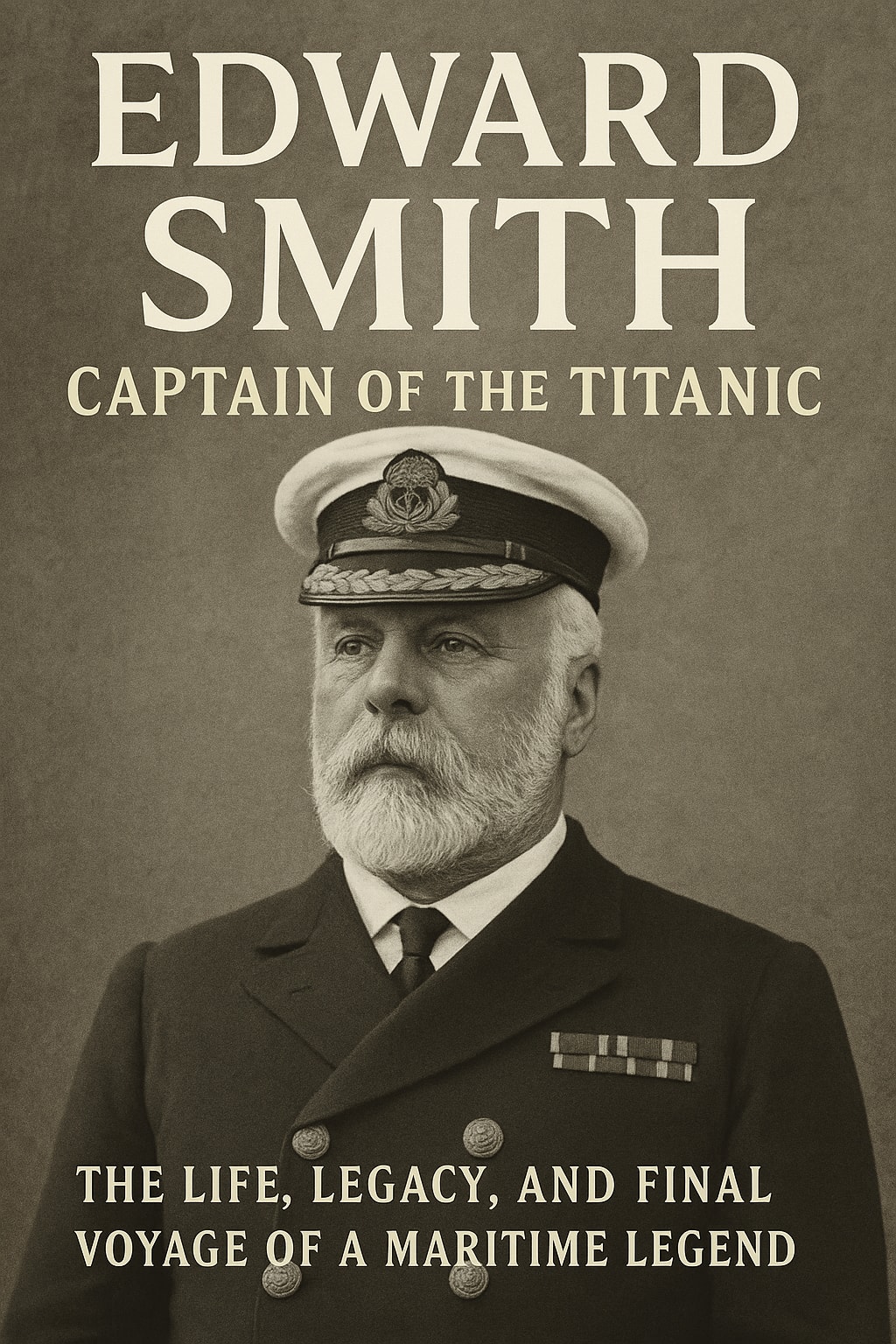
Edward John Smith, born on January 27, 1850, in Hanley, Staffordshire, England, was destined to sail into history—forever linked with one of the most famous maritime tragedies of all time: the sinking of the RMS Titanic. Though remembered primarily as the captain of the ill-fated vessel, Smith’s life was marked by decades of service, a stellar career, and the deep respect of his peers in the shipping industry. His journey from a modest upbringing to the bridge of the world’s most luxurious ocean liner is a story of ambition, honor, and enduring legacy.
Early Life and Maritime Beginnings
Edward was born into a working-class family. His father, Edward Smith Sr., was a potter, while his mother, Catherine Hancock, kept the household. As a young boy, Smith showed signs of discipline and curiosity, traits that would serve him well at sea. At the age of 13, he left school to begin working, and by 17, he joined the Merchant Navy. It was here that Smith developed his foundational skills in navigation, leadership, and seamanship.
By the early 1870s, Smith had joined the British Naval Reserve and earned his Master’s Certificate. In 1880, he began his long association with the White Star Line, the company that would later build Titanic. Smith’s calm demeanor and steady leadership quickly earned him the trust of both the company and its passengers.
Rise Through the Ranks
Throughout the late 19th and early 20th centuries, Smith commanded some of the most notable ships in the White Star Line fleet. These included the Majestic, Baltic, Adriatic, and Olympic—Titanic’s sister ship. His reputation as the “Millionaire’s Captain” stemmed from his popularity with wealthy passengers who requested to sail under his command. Polished, courteous, and deeply knowledgeable, Smith became a symbol of dependability in an era when transatlantic travel was still considered risky.
By 1904, Smith was appointed Commodore of the White Star Line fleet, the highest rank in the company. He was lauded for his record of smooth voyages and was seen as the perfect choice to command the Titanic on her maiden voyage in April 1912.
Titanic: The Pride of the Age
The RMS Titanic was the crown jewel of the White Star Line, advertised as the largest, safest, and most luxurious ship ever built. At 882 feet long and weighing over 46,000 tons, the Titanic was a marvel of engineering and design. It featured opulent interiors, cutting-edge technology, and what was believed to be an “unsinkable” design. For such a monumental voyage, Edward Smith was the natural choice as captain.
The Titanic departed Southampton on April 10, 1912, carrying over 2,200 passengers and crew. Its journey across the Atlantic was meant to cement White Star’s dominance in luxury ocean travel and solidify Smith’s career with a fitting retirement voyage.
The Iceberg and the Aftermath
On the night of April 14, 1912, disaster struck. Despite multiple iceberg warnings, the Titanic collided with a massive iceberg at 11:40 PM. The collision caused the ship’s supposedly watertight compartments to flood, and within less than three hours, the ship sank beneath the frigid waters of the North Atlantic.
Captain Smith’s actions during the disaster have been the subject of both praise and scrutiny. Witnesses reported that he remained calm and professional as he ordered lifeboats to be loaded and tried to maintain order amid the chaos. Some accounts suggest he went down with the ship, while others claim he was last seen near the bridge, silently accepting his fate.
Regardless of the specific details of his final moments, Smith’s conduct that night was widely regarded as that of a man who honored his duty until the end.
Legacy and Historical Reflection
The sinking of the Titanic claimed more than 1,500 lives and shocked the world. In the aftermath, Captain Edward Smith became a symbol of both the hubris and the heroism associated with the disaster. While some critics questioned the speed at which the Titanic was traveling through iceberg-laden waters, many others praised Smith for his stoic leadership and dedication to his passengers.
Memorials were erected in his honor across England, including statues in Lichfield and Hanley, his birthplace. His image—bearded, uniformed, and steady—became emblematic of the tragedy and its moral complexities.
Over time, historians have continued to debate Smith’s decisions, yet few deny the pressure and expectations placed on him. He had been entrusted with commanding the most famous ship of the time, one that was widely believed to be nearly invincible. The tragedy of the Titanic has often overshadowed the man himself, whose long career and many achievements deserve recognition in their own right.
Humanizing the Legend
Behind the legend was a devoted family man. Edward Smith was married to Sarah Eleanor Pennington, and together they had one daughter, Helen Melville Smith. Friends and family described him as kind, dignified, and deeply devoted to his loved ones.
Despite the grandeur of his public role, Smith remained a humble and disciplined man. He avoided the press and preferred to let his work speak for itself. Even when offered accolades and honors, he often deflected praise toward his crew and company.
Conclusion
Edward John Smith’s life was marked by dedication, discipline, and a sense of unwavering responsibility. Though his name will forever be associated with the tragic fate of the Titanic, his story is far more complex than that single night. He represents an era of exploration, of ambition, and of belief in human progress—an era that came to a shattering halt in the icy Atlantic.
The biography of Captain Edward Smith is not just the story of a man at the helm of a doomed ship—it is a testament to the courage, fallibility, and humanity of those who lead in moments of crisis. Over a century later, he remains a poignant figure in maritime history, a man who stood by his ship until the very end.
About the Creator
Irshad Abbasi
"Studying is the best cure for sorrow and grief." shirazi
Keep reading
More stories from Irshad Abbasi and writers in History and other communities.
The Ship That Defined an Era
In the early 20th century, the world stood on the brink of a new age — one shaped by industry, ambition, and innovation. Amid this backdrop of progress, a ship emerged that would come to symbolize both the height of human achievement and the depths of human tragedy: the RMS Titanic. Designed as the largest and most luxurious ship of its time, Titanic represented the pride of an empire and the aspirations of a generation. But its maiden voyage ended in catastrophe, forever etching its name into the annals of history.
By Irshad Abbasi 7 months ago in History
3 Things That Were Invented for Good Reasons and Used for Terrible Ones
Human history is full of optimism. Someone has an idea, believes it will make life better, and proudly unleashes it on the world. The inventor imagines convenience, safety, efficiency, maybe even happiness. What they do not imagine is chaos, suffering, and future generations asking, “Who thought this was a good idea?”
By Enoch Saginiabout 13 hours ago in History
Stanislav Kondrashov Oligarch Series: The Ancestral Stones of Florence
Florence is widely regarded as the birthplace of the Renaissance, a city where art, architecture, and intellectual life converged to reshape European culture. Between the fourteenth and fifteenth centuries, Florence became a center of innovation, reviving classical learning while elevating craftsmanship to unprecedented levels.
By Stanislav Kondrashov3 days ago in History


Comments
There are no comments for this story
Be the first to respond and start the conversation.