
British Monarchy Facts: How Accurate is Netflix’s The Crown?
Fact-checking Netflix's The Crown

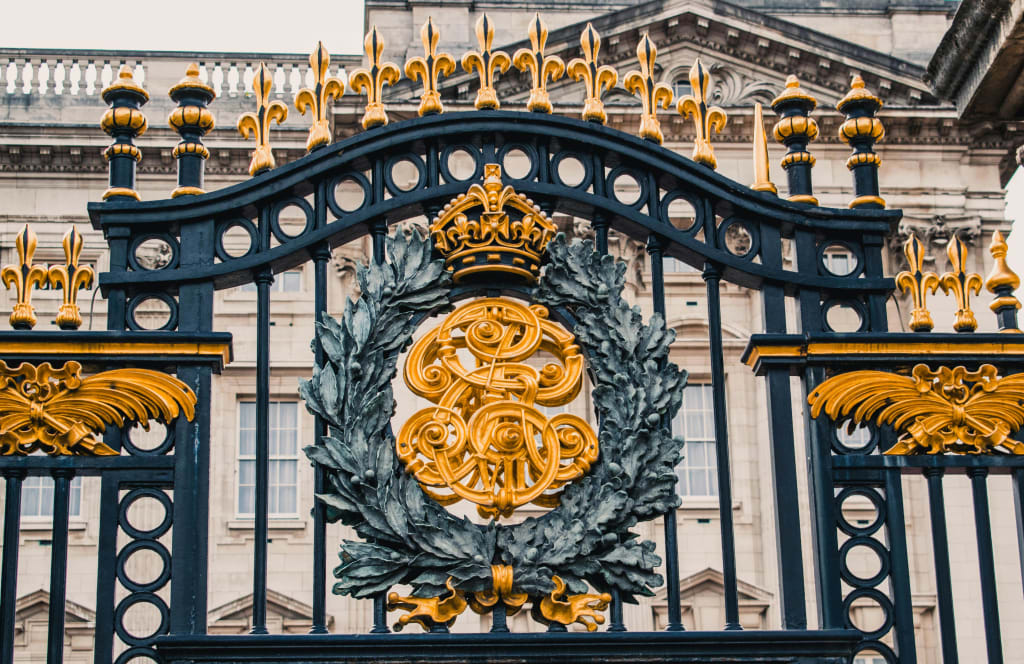
Netflix’s The Crown has become a global obsession, especially after the passing of British monarchy’s longest-serving sovereign in 2022. With six seasons depicting the life of the royals from 1997 to 2005, it’s inevitable to ask - how much of that is true? And just how much is for TV drama?
Unofficial royal biographers like Sally Bedell Smith and Hugo Vickers expressed some concerns about the inaccurate portrayal of some key events during the series’ earlier seasons.
In this article, we break down what really happened and what was added for effect, so you can separate fact from fiction in one of Netflix’s most talked-about royal sagas.
Netflix Got Queen Elizabeth II’s Early Reign Mostly Right
The series starts with a young Elizabeth unexpectedly ascending the throne after the sudden death of her father, King George VI, in 1952. That part is historically accurate. She was just 25 when she became queen, and like the show suggests, she stepped into the role with reluctance but grace.
Her coronation on June 2 of the following year was the first ever televised royal coronation, with over 20 million people tuning in to watch history unfold.
Her relationship with former British prime minister Winston Churchill is portrayed as complex and respectful—and that's true to life. Churchill reportedly admired her composure, while Elizabeth learned much about leadership from him during her early years on the throne.
However, The Crown adds a layer of emotional vulnerability and private conversations that can’t be confirmed. For instance, the queen’s weekly meetings with the current prime minister are typically private and are not recorded or transcribed.
Netflix took the liberty to dramatize these moments to give viewers more insight into the queen’s feelings, but we can’t say for sure what was said behind palace doors.
Prince Philip’s Portrayal was Partly Fictionalized
Prince Philip’s role in The Crown is one of the most debated.
The show explores his discomfort with royal formality, his struggle to find his place beside a reigning queen, and his often tense demeanor. These themes are largely based on real-life accounts from royal insiders and biographers.
To be honest, you can’t really blame the guy. It was hard enough that he had to give up his naval career at the age of 31 to support his wife, but to completely submit to her as her subject? That’s an entirely different hard pill to swallow.
To top it all off, he wasn’t even allowed to give his surname to his children. Originally (and historically), the royal children were to take the house name of the sovereign. In this case, Queen Elizabeth’s royal family name is Windsor.
However, it was speculated that Prince Philip was annoyed that his children wouldn’t get to use his surname. So, Queen Elizabeth reportedly ‘gave in’ to her husband’s qualms and changed the house’s name to Mountbatten-Windsor.
Where the story begins to blur fact and fiction is in the depiction of his alleged affairs. Several episodes hint at infidelity during his overseas tours, but there’s no hard evidence to support these claims. The show leans into rumor and public speculation without clear confirmation.
A good example is Season 2’s episode on his tour of Australia and New Guinea. While it hints heavily at a royal scandal, historical records don’t back it up.
In reality, Philip was known to be blunt and sometimes abrasive, but also deeply loyal to Elizabeth. One could argue that the show focused too much on the Duke’s rough edges, while glossing over the decades of support and stability he brought to the monarchy.
>>> Read the rest of my article here: https://weblogwevlog.com/fact-checking-netflix-the-crown/
About the Creator
Pat Zuniega
writing culture and blogging content for weblogwevlog.com
Keep reading
More stories from Pat Zuniega and writers in History and other communities.
The Aftermath: What Happened After the Titanic Sank in 1912?
On April 15, 1912, the world’s most famous ship, the Titanic, disappeared beneath the icy North Atlantic. Over 1,500 lives were lost in just a few hours. For some, the story ends there — an iceberg, a luxury liner, and a tragedy sealed in time.
By Pat Zuniega6 months ago in History
Aristotle: The Mind That Shaped Human Knowledge
Aristotle was born in 384 BCE in the small Greek town of Stagira, in northern Macedonia. His life unfolded during a time of political change, intellectual awakening, and cultural expansion across the Greek world. Though more than two thousand years have passed since his death, Aristotle’s ideas continue to influence philosophy, science, politics, ethics, education, and even everyday thinking. His story is not a legend built on myths, but the true journey of a curious mind that sought to understand everything—from the smallest living creature to the highest purpose of human life. Aristotle’s father, Nicomachus, was a physician to King Amyntas III of Macedon. Because of this, Aristotle grew up in an environment where observation, biology, and the study of nature were part of daily life. From an early age, he was exposed to the idea that the natural world could be studied systematically, not just explained through myths or religious stories. This early influence played a major role in shaping his later approach to knowledge. At around the age of seventeen, Aristotle traveled to Athens, the intellectual center of the Greek world, to study at Plato’s Academy. Plato was already famous as the student of Socrates and one of the greatest philosophers of his time. Aristotle remained at the Academy for nearly twenty years. Although he deeply respected Plato, he did not agree with all of his ideas. Plato believed that true reality existed in a world of perfect, unchanging “Forms,” while the physical world was only an imperfect reflection. Aristotle, however, believed that knowledge begins with observing the physical world itself. This difference would later define Aristotle’s unique philosophy. Despite their disagreements, Aristotle and Plato shared a strong teacher-student bond. Aristotle learned logic, ethics, metaphysics, and political theory at the Academy. Over time, however, his independent thinking became more noticeable. After Plato’s death in 347 BCE, Aristotle left Athens. Some historians believe this was partly because the Academy was now led by Plato’s nephew and partly because anti-Macedonian feelings were growing in Athens, which made life difficult for someone connected to Macedonia. Aristotle then spent several years traveling and studying. He lived in Asia Minor and later on the island of Lesbos, where he conducted detailed research on marine life. During this period, he carefully observed animals, plants, and natural processes. Unlike many thinkers before him, Aristotle did not rely only on abstract reasoning. He dissected animals, recorded their structures, and classified them based on shared characteristics. This work laid the foundation for biology and zoology as scientific disciplines. In 343 BCE, Aristotle’s life took a dramatic turn when he was invited by King Philip II of Macedon to tutor his young son, Alexander. This boy would later become Alexander the Great. Aristotle taught Alexander philosophy, ethics, politics, literature, and science. He introduced him to the works of Homer and emphasized the importance of reason and self-control. While Alexander would go on to become a military conqueror, Aristotle hoped his student would also rule with wisdom and justice. Though historians debate how much influence Aristotle truly had on Alexander’s actions, there is no doubt that their relationship connected philosophy with world-changing power. After Alexander became king, Aristotle returned to Athens around 335 BCE and founded his own school, the Lyceum. Unlike Plato’s Academy, the Lyceum focused heavily on empirical research and systematic study. Aristotle and his students walked while discussing ideas, which is why his followers were called the “Peripatetics,” meaning “those who walk about.” At the Lyceum, Aristotle organized research across many fields, creating one of the earliest models of a research institution. Aristotle wrote extensively, though most of his popular writings have been lost. What remains are mainly lecture notes and technical works. These texts cover an astonishing range of subjects: logic, physics, metaphysics, ethics, politics, rhetoric, poetry, biology, astronomy, and psychology. In logic, Aristotle developed the system of syllogisms, a method of reasoning that dominated logical thought for centuries. In ethics, his work Nicomachean Ethics explored the idea of virtue as a balance between extremes and argued that the goal of human life is eudaimonia, often translated as “flourishing” or “well-being.” In politics, Aristotle studied different forms of government, analyzing monarchies, aristocracies, and democracies. He believed that the best political system depended on the character and needs of the people, not on a single perfect model. He famously described humans as “political animals,” meaning that living in a community is essential to human nature. Despite his achievements, Aristotle’s later years were marked by difficulty. After Alexander the Great died in 323 BCE, anti-Macedonian sentiment rose sharply in Athens. Aristotle was accused of impiety, a charge similar to the one that had led to Socrates’ execution. Refusing to face trial, Aristotle left Athens, saying he would not allow the city to “sin twice against philosophy.” He retreated to Chalcis, where he died in 322 BCE at the age of sixty-two. Aristotle’s death did not end his influence. In fact, his ideas grew stronger over time. His works were preserved by scholars in the Islamic world during the Middle Ages and later reintroduced to Europe. Thinkers such as Avicenna, Averroes, and Thomas Aquinas studied and expanded upon Aristotle’s philosophy. For centuries, Aristotle was known simply as “The Philosopher,” a title that reflected his unmatched authority in many fields. The true story of Aristotle is not just about a man who lived long ago. It is the story of a thinker who believed that the world could be understood through careful observation, logical reasoning, and thoughtful reflection. He taught humanity to ask not only what things are, but why they are. In doing so, Aristotle shaped the foundations of Western thought and left a legacy that continues to guide minds across the world.
By The best writer about 14 hours ago in History
Savoy Hotel – Mussoorie: The Colonial Luxury Hotel Where an Unsolved Murder Still Walks the Corridors
The First Night: Beauty Wrapped in Silence Mussoorie looks peaceful from a distance. Pine trees sway gently, clouds roll like slow-moving waves, and the hill air smells of rain and old earth. But as evening falls, the silence becomes heavier—almost watchful.
By Gaurav Gupta6 days ago in History
The CEO of Everything
They say "jack of all trades, master of none," but they forgot to mention the part where the jack of all trades is also the camera woman, the makeup artist, and the person currently yelling at a tangled Wii microphone cable in a her own bathroom while recording herself singing and trying to make it look realistic and professional. (As professional as you can make it with nothing but a cell phone camera and a mic that doesn't work)
By Sara Wilson4 days ago in Humans



Comments
There are no comments for this story
Be the first to respond and start the conversation.