
The Aftermath: What Happened After the Titanic Sank in 1912?
The Titanic legacy, timeline, and aftermath.


On April 15, 1912, the world’s most famous ship, the Titanic, disappeared beneath the icy North Atlantic. Over 1,500 lives were lost in just a few hours. For some, the story ends there — an iceberg, a luxury liner, and a tragedy sealed in time.
For many, the story continued with the Hollywood box-office hit Titanic, following the tragic love story of Jack and Rose aboard the ship. No spoiler warnings! We all know how things ended here.
But setting aside the movie depiction, what exactly happened in real life after the ship sank? That’s the part we don’t hear enough about. From the frantic rescue to the long-term trauma and sweeping global reforms, the Titanic’s story stretched far beyond that single night.
This article traces the days and decades after the sinking and how the Titanic managed to change the course of maritime history.
The Rescue: RMS Carpathia Arrives After the Titanic Sank
On the 4th day of her voyage from England to New York, the Titanic struck an iceberg at 11:40 PM on April 14, 1912. It sank just over two and a half hours later. In that time, flares lit the sky, Morse code pleas were sent, and lifeboats scattered into the darkness.
For a detailed hourly breakdown of the ship’s sinking and final hours, read through this timeline.
The RMS Carpathia, 58 miles (93 kilometers) away, was the only ship to respond in time — and it raced through the night at full speed.
Carpathia arrived on the scene at 4:00 AM. What they found was a frozen, silent ocean dotted with lifeboats and survivors in shock.
The scene that greeted Carpathia was described as,
"fields of ice on which, like points on the landscape, rested innumerable pyramids of ice."
The temperature hovered just above freezing. The water was colder. Most of those who hadn’t made it into a boat had already succumbed to hypothermia.
Captain Arthur Rostron of the Carpathia made heroic decisions under pressure. He diverted course immediately, pushed the ship beyond its recommended speed, and ordered his crew to ready blankets, coffee, and medical care. By the end, they had taken aboard 705 survivors.
The Survivors: Shock, Loss, and a Public Outcry for Stories
For those pulled from lifeboats, survival wasn’t the end; it was the start of something heavy.
Survivors aboard Carpathia were bruised, frostbitten, and emotionally shattered. Some were pulled from the sea after hours. Others had watched loved ones vanish beneath the waves. There were children without parents and families torn in half.
When Carpathia docked in New York on April 18, it was chaos. Crowds, reporters, photographers, and police swarmed the pier. Some survivors were whisked away by limousines, others collapsed into the arms of volunteers. The press fed on every detail.
A few names became legendary.
Molly Brown
She was a first-class passenger, one of the survivors, and was later dubbed “The Unsinkable Molly Brown.”
She helped evacuate the ship by rowing her lifeboat and urging the crew to return for more passengers. When Quartermaster Robert Hichens refused out of fear that the boat would be swamped or pulled under, she threatened to throw him overboard if he didn’t comply.
After being rescued by the RMS Carpathia, she organized a committee of first-class survivors to provide supplies and support for second- and third-class passengers.
J. Bruce Ismay
Ismay was the Titanic’s most controversial survivor. He was the chairman and managing director of the White Star Line, the shipping company that owned the famous vessel.
After the disaster, both the American and British press harshly criticized Ismay for leaving the ship while women and children remained aboard. Some newspapers even labeled him the "Coward of the Titanic."
Read the complete article here: https://weblogwevlog.com/titanic-1912-aftermath/
About the Creator
Pat Zuniega
writing culture and blogging content for weblogwevlog.com
Keep reading
More stories from Pat Zuniega and writers in History and other communities.
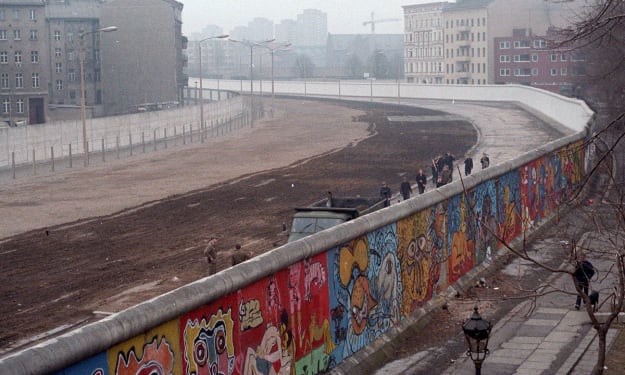
Cold War in Berlin: A Tale of the City Divided Overnight
Imagine waking up and discovering that you couldn’t go to work, visit your best friend, or hug your grandmother because a wall had appeared in the middle of your city overnight. This was the reality for Berliners on August 13, 1961.
By Pat Zuniega7 months ago in History
3 Completely Normal Jobs With Disturbing Hidden Histories
Every job has a backstory. Some are boring, some are inspiring, and some are better left buried. While modern versions of certain professions look harmless—sometimes even respectable—their origins tell a much darker story.
By Enoch Sagini7 days ago in History
Albert Einstein: The Mind That Changed the Universe
Albert Einstein was not born a legend. When he entered the world on March 14, 1879, in the quiet German city of Ulm, nothing about his early life suggested that he would one day transform science forever. In fact, his beginnings were remarkably ordinary—and in some ways, difficult. As a child, Einstein spoke slowly, so slowly that his parents worried something might be wrong. Teachers considered him distracted and stubborn, a boy who questioned too much and obeyed too little. Yet hidden beneath that quiet exterior was a restless, powerful curiosity that would later reshape the universe itself.
By The best writer 6 days ago in History



Comments (1)
Subscribe back