
Black Pharaohs of Egypt: The Untold Story of the Nubian Kings
When we think of ancient Egypt, images of grand pyramids

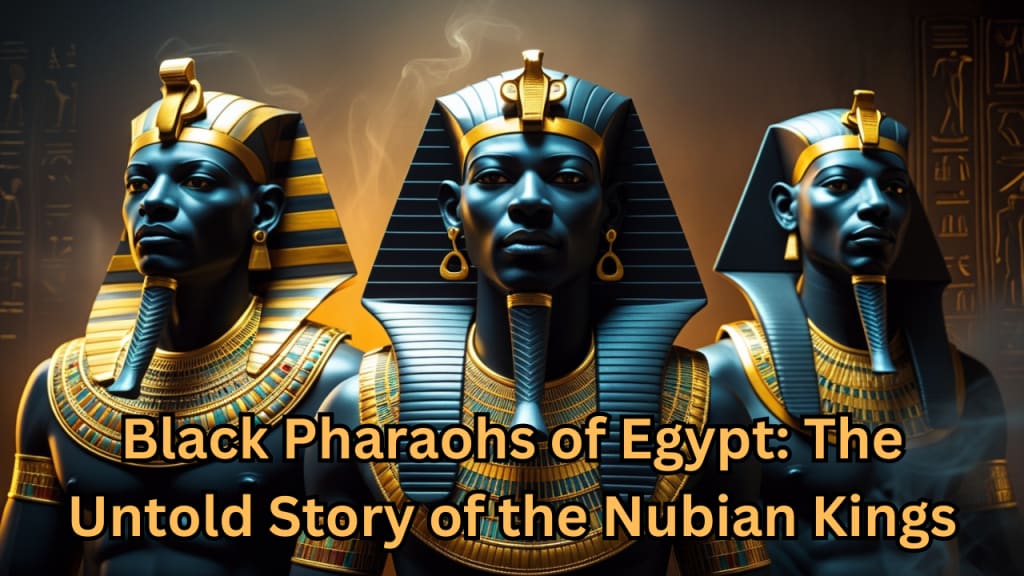
When we think of ancient Egypt, images of grand pyramids, towering statues, and legendary rulers like Tutankhamun and Ramses II come to mind. But there's a fascinating and often overlooked chapter in Egypt’s history—the era of the Black Pharaohs of Egypt. These rulers, known as the Nubian kings of the 25th Dynasty, came from the land of Kush (modern-day Sudan) and left a profound impact on Egypt’s civilization.
Their reign wasn’t just about conquest; it was a period of cultural revival, architectural brilliance, and political unity. Yet, their story is often left out of mainstream narratives. In this article, we’ll explore the rise of the Black Pharaohs of Egypt, their contributions, and why their legacy still matters today.
The Rise of the Nubian Pharaohs
The story of the Black Pharaohs of Egypt begins in Kush, an ancient African kingdom south of Egypt. For centuries, Kush and Egypt had a complex relationship—sometimes allies, sometimes rivals. The Kushites admired Egyptian culture, adopted its religious practices, and even built their own pyramids, which still stand today in Sudan.
By the 8th century BCE, Egypt was weakened by internal conflicts and divided among competing rulers. Seeing an opportunity, King Piye, a powerful ruler from Kush, marched north with his army, determined to unify Egypt under his leadership.
Piye: The First Black Pharaoh of Egypt
Piye’s conquest wasn’t just about war—it was about restoring order. Unlike many conquerors, he saw himself as a protector of Egyptian traditions rather than a foreign invader. When he captured cities, he offered mercy to those who surrendered and demanded loyalty rather than destruction.
One of the most fascinating records of his reign is the Victory Stela, a stone inscription detailing his triumph over Egypt’s fragmented rulers. In it, he describes how he purified temples, respected the gods, and brought Egypt back to its former glory.
With Piye’s victory, the 25th Dynasty of Egypt was born, marking the era of the Black Pharaohs of Egypt.
The Golden Age of the Nubian Kings
Piye’s successors continued his legacy, ruling Egypt with a blend of Nubian and Egyptian traditions. Some of the most notable Black Pharaohs of Egypt included:
1. Shabaka: The Unifier and Innovator
Shabaka, Piye’s successor, focused on reviving Egypt’s intellectual and religious traditions. He preserved ancient Egyptian texts that were in danger of being lost and encouraged advancements in architecture and literature.
One of his greatest contributions was the Shabaka Stone, a document containing religious and philosophical insights that influenced Egyptian beliefs for generations.
2. Taharqa: The Pharaoh Who Challenged the Assyrians
Perhaps the most famous of the Black Pharaohs of Egypt, Taharqa expanded Egypt’s borders, strengthened its economy, and built impressive temples, including additions to the Karnak Temple in Luxor. His reign was a time of prosperity, but it was also marked by conflict with the powerful Assyrian Empire. Despite his military efforts, the Assyrians eventually pushed the Nubian rulers back to Kush, ending the 25th Dynasty’s rule over Egypt.
3. Tantamani: The Last Black Pharaoh of Egypt
Tantamani tried to reclaim Egypt but faced strong opposition from the Assyrians and local Egyptian rulers. Despite his efforts, he was unable to maintain control, marking the end of Nubian rule in Egypt. However, even after losing Egypt, the kingdom of Kush remained a powerful civilization for centuries.
The Legacy of the Black Pharaohs
Though their rule over Egypt lasted less than a century, the Black Pharaohs of Egypt left a lasting legacy:
Cultural Renaissance: They revived Egypt’s traditions, preserved religious texts, and invested in grand architecture.
Architectural Influence: Many temples and monuments built during their reign still stand today, showcasing the brilliance of their craftsmanship.
African Heritage: Their story challenges the idea that Egyptian civilization was separate from the rest of Africa. The Black Pharaohs of Egypt highlight the deep African roots of ancient Egypt.
Why Their Story Matters Today
The Black Pharaohs of Egypt deserve recognition not just in history books but in the global understanding of African heritage. Their story is a testament to resilience, leadership, and cultural pride.
Too often, history is told from a narrow perspective, ignoring the contributions of African civilizations. The Nubian rulers of Egypt remind us that Africa has always been home to great leaders, innovators, and builders of advanced societies.
By learning about the Black Pharaohs of Egypt, we expand our understanding of history and appreciate the richness of African contributions to world civilization.
Final Thoughts
The Black Pharaohs of Egypt were more than just conquerors; they were guardians of tradition, builders of great monuments, and symbols of unity. Their reign was short-lived, but their impact on Egyptian and African history is undeniable.
So the next time you think about ancient Egypt, remember that its story isn’t just about one people or one land—it’s about a shared history that connects cultures across Africa and beyond.
What do you think about the story of the Black Pharaohs of Egypt? Have you ever heard of them before? Share your thoughts in the comments below!
🔺 Uncover the Secrets of the Pharaohs! 🔺
Ancient Egypt holds mysteries beyond imagination—lost tombs, hidden knowledge, and unsolved enigmas buried beneath the sands of time. Want to explore the untold stories of the pharaohs and their extraordinary civilization?
🔥 Subscribe to PharaohX now and step into a world of mystery, power, and forgotten legends! 👉 PharaohX Youtube Channel
Don't miss out—history is waiting to be revealed! 🏺✨
About the Creator
John Arthor
seasoned researcher and AI specialist with a proven track record of success in natural language processing & machine learning. With a deep understanding of cutting-edge AI technologies.
Keep reading
More stories from John Arthor and writers in History and other communities.
The Secrets of Tutankhamun and Other Ancient Egyptian Mysteries!
Ancient Egypt has always been a land of fascination, filled with towering pyramids, enigmatic symbols, and stories that seem almost too incredible to be true. But among all its wonders, one name stands out: Tutankhamun. His tomb, discovered in 1922, remains one of the greatest archaeological finds in history, shrouded in mystery and intrigue.
By John Arthor11 months ago in History
If America Walks Away from NATO, the World Will Feel the Shock
If America Walks Away from NATO, the World Will Feel the Shock For more than seventy years, NATO has stood as a symbol of collective security and shared responsibility. It was never a perfect alliance, but it worked because it was built on a simple idea: when nations stand together, wars are less likely to happen. Today, however, that foundation is being shaken—not by foreign enemies, but by growing voices inside the United States questioning whether NATO is still worth it.
By Wings of Time 8 days ago in History
3 Harmless Habits That Once Caused Absolute Chaos
Most habits are comfortingly dull. You chew gum. You clap at events. You check your phone. You assume—reasonably—that these actions will not destabilize governments, bankrupt industries, or end lives. Society depends on this assumption. If every small habit carried catastrophic potential, we would never leave the house.
By Enoch Sagini4 days ago in History




Comments
There are no comments for this story
Be the first to respond and start the conversation.