
Big Band Street Dance, A Celebration
A Celebration and the History of a Town

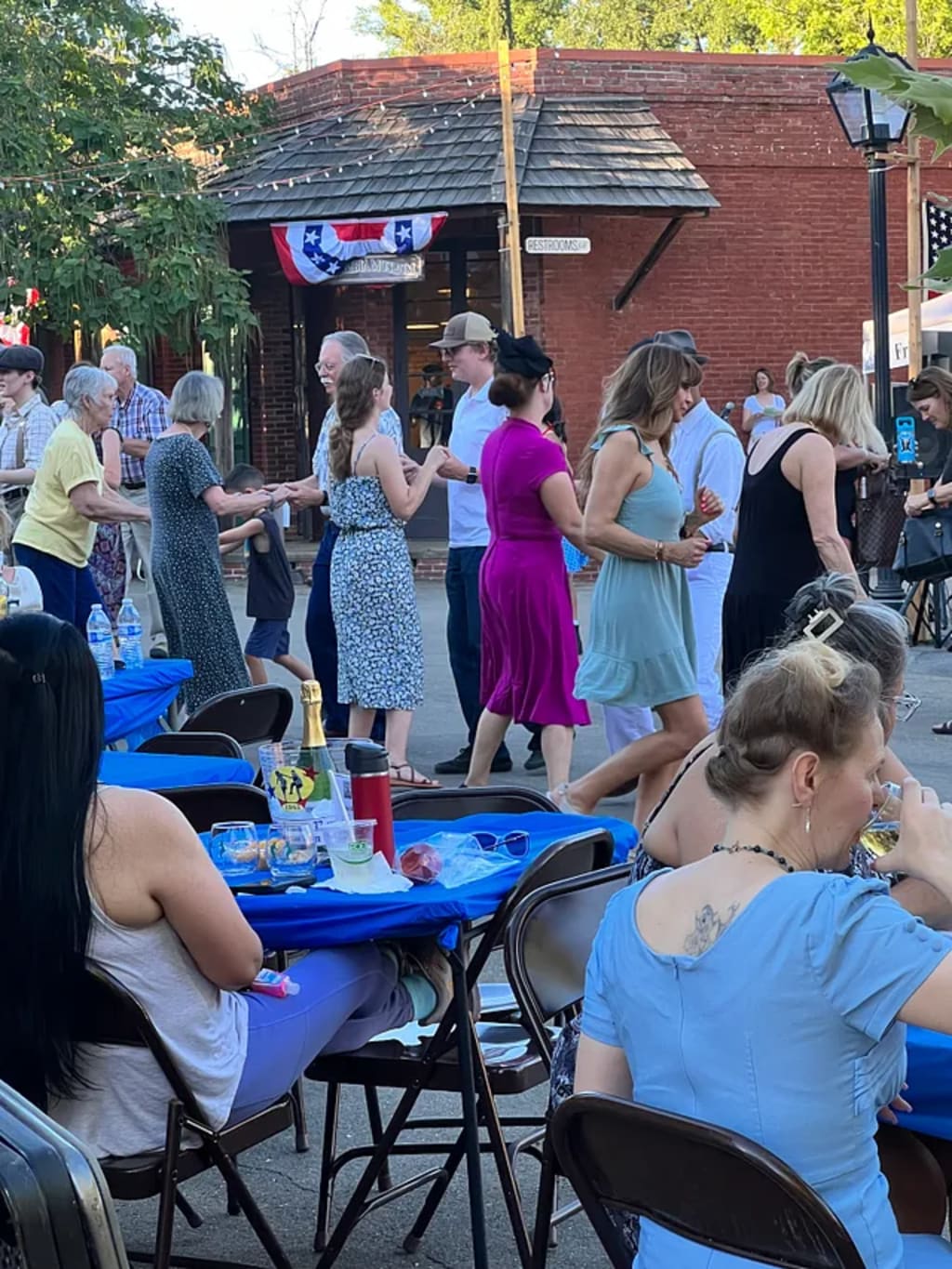
The Columbia Street Dance began in 1995 as a way to commemorate Columbia’s 50th anniversary of becoming a State Park. This event draws people from near and far. It marked the twenty eight anniversary of the Street Dance, as well as the 78th anniversary of Columbia becoming a state park this year.
What exactly made this Gold Rush town a State Park, as well as California’s Capital for a day?
Columbia SHP is located within the territory of a real town, Columbia, California! This site was designated a State Historic Park in 1945 by the State Legislature in order to preserve an example of one of the most colorful periods in American history, the Gold Rush. A bill was passed appropriating $50,000 to be matched by the public to acquire the land and buildings in Columbia’s old business district. For one day on July 15, 1945, Governor Earl Warren relocated his office to Columbia. It was there that he signed SB 1256 creating Columbia State Park.
Columbia’s history dates back thousands of years before the first gold miners arrived. For thousands of years, Native Californians lived in the valleys, foothills, and mountains of Central California. Columbia was the home of the Central Sierra Miwok. A traditional Miwok culture is sensitive to the land and the changing seasons, which sustains and guides their daily activities. Large, multi-family villages were located near oak groves and reliable water sources. Their diet consisted primarily of acorns, supplemented by fish, birds, deer, small game, insects, and native plants. Camps and grinding rocks can still be seen in or near oak groves.
With the arrival of newcomers to the region, the native people’s way of life was drastically altered. As a result of these newcomers, disease was introduced to the region and warfare increased. Despite the devastating malaria epidemic of 1833, as well as the abuses and deaths suffered during the gold rush, descendants of the native Miwok and Yokut people are still alive today.
Columbia’s beginning, started on March, 27, 1850 when a group of Prospectors found gold. There was a rainstorm that caught Thaddeus Hildreth, his brother George, John Walker, and others by surprise. Walker decided to test his luck in the nearby gulch while drying out their gear. It did not take long for his findings to attract thousands of miners.
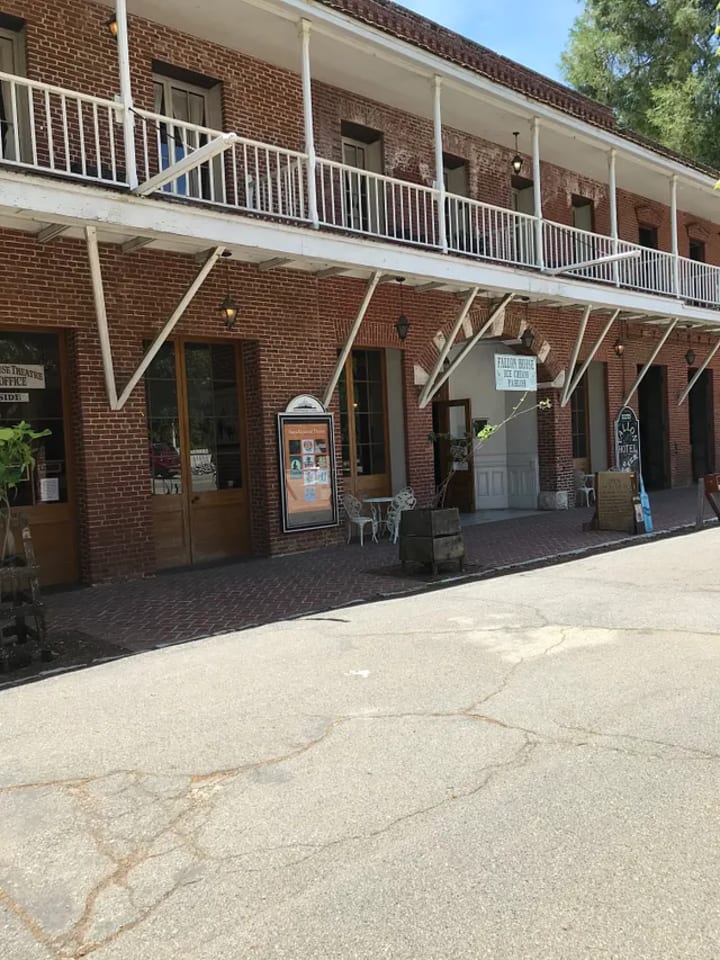
Hildreth’s Diggings, a crowded camp of log cabins and canvas tents, was formally renamed Columbia on April 29, 1850. By 1852, Columbia was home to more than 150 stores, shops, saloons, and other businesses. The town also had three churches, a meeting hall, a Masonic Lodge, and a branch of the Sons of Temperance.
The first miners to arrive were from the nearby towns of Sonora and Jamestown. By the summer of 1850, many of the Mexican miners had left Columbia due to the exclusionary Foreign Miner’s Tax.

As a result of the tax, foreign-born miners were required to pay the state $20 per month for the privilege of mining. A significant number of Chinese, French, Irish, Italian, German, and Jewish miners and merchants lived in Columbia by 1852, contributing to the town’s growing cultural and ethnic diversity.
By 1853, Columbia was one of the largest cities in California. The estimated population was 25,000 to 30,000. Between 1850 and the early 1900s, as much as $150 million in gold was mined here. Gold from Columbia helped to finance the United States government and the Union Army during the Civil War.
Columbia’s economy began to decline in the late 1860s as mining dwindled. The vacated buildings were torn down and vacant lots were mined for gold in the crevices of the limestone bedrock.
Columbia did not become a ghost town. Despite the fact that the population of the town declined after the easy gold was panned out, the town was never abandoned. As early as the 1920s, the Columbia Progressive Club began to discuss the preservation of old Columbia’s buildings. State park commissioners hired Frederick Law Olmsted, Jr. in 1928 to survey lands for the California park system. Columbia has been recommended as one of the best preserved gold mining towns in the state by Olmsted Jr.
As a result of Olmsted’s recommendation, locals and preservation groups have worked together to preserve Columbia’s historic brick buildings. Columbia was designated as California State Landmark 123 on July 6, 1933. In the 1930s, two women spearheaded the preservation effort. A local artist, Otheto Weston, and a preservationist, Rita Zimmerman, founded the Historic Mining Town Preservation League in 1934. The Great Depression made it difficult for the groups to raise the matching funds to make the agreement official despite their successful efforts to gain the support of the State Parks Commission.
During the Great Depression, Columbia, like the rest of the country, experienced rationing and sent its young men to war. As the Second World War came to an end, California began to place a greater emphasis on preservation. As a consequence of this renewal, a celebration was held in Columbia on July 15, 1945, when Governor Earl Warren officially designated the old business district as a state park.

Let’s put on our dancing shoes, and have some old fashioned fun as we celebrate Columbia…
Copyright ©️ Michelle R Kidwell
July.16.2023…
About the Creator
Michelle Renee Kidwell
Abled does not mean enabled. Disabled does not mean less abled.” ― Khang Kijarro Nguyen
Fighting to end ableism, one, poem, story, article at a time. Will you join me?
Keep reading
More stories from Michelle Renee Kidwell and writers in History and other communities.
World War I
The morning fog lay thick over the trenches of northern France, clinging to the earth as if it too feared what was about to happen. Private Thomas Hale pulled his coat tighter around himself, though it did little to stop the cold from seeping into his bones. He had been in the trenches for six months, yet the damp smell of mud, smoke, and fear still felt unfamiliar, like a nightmare he could not wake from.
By Maavia tahira day ago in History
Chicago Hospital Held Newborn Baby for 8 Months Over an Unpaid Medical Bill
Debts were handled much differently in the 19th and early 20th century. Back then, people who accrued debt had more to fear than letters and calls from collection agencies the same way we do today, especially if they owed a hospital or doctor money.
By Criminal Matters2 days ago in History
📢 Raise Your Voice Thread: 01/08/2026
Our “Raise Your Voice Threads” are hosted most alternating Thursdays at 12PM ET to offer creators more avenues to uncover exceptional stories on Vocal. As we are continuously searching for fresh creators and inspiring stories, this thread provides an opportunity to exchange and discuss the stories that have moved and motivated us on Vocal.
By Raise Your Voice by Vocal7 days ago in Resources


Comments (1)
Nice srticle