
Battle of Qadsiyah
The Decisive Clash That Paved the Way for the Islamic Conquest of Persia

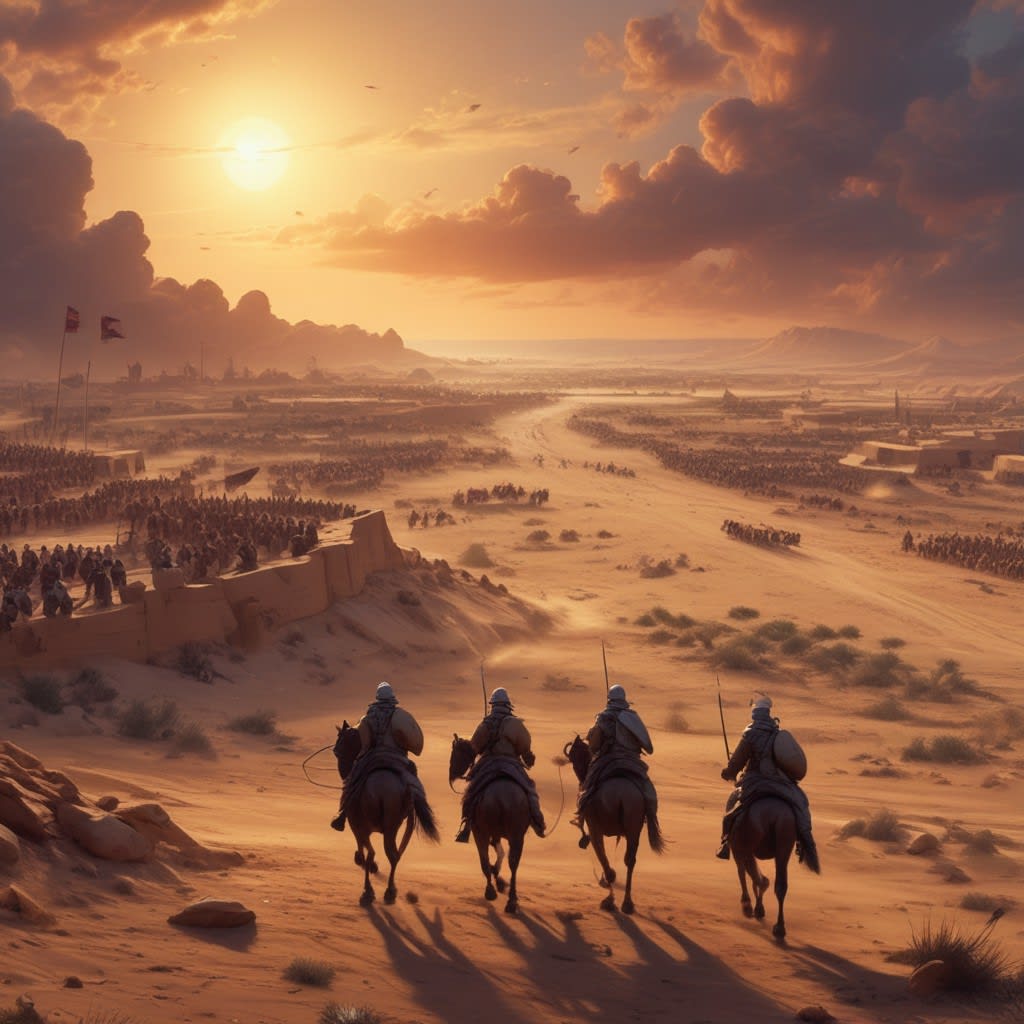
War of Qadsiyah
The Decisive Battle That Marked the Fall of the Sassanian Empire
The War of Qadsiyah stands as one of the most significant battles in early Islamic history. It was not just a military confrontation but a turning point that led to the collapse of the ancient Sassanian Empire and the rapid expansion of the Islamic Caliphate into Persia. The clash happened in the year 636 CE, near the banks of the Euphrates River, close to the town of Qadsiyah, in present-day Iraq. This battle symbolized the fierce determination of the early Muslim forces and the vulnerabilities of a once-mighty empire struggling with internal decay.
Background: The Rise of the Rashidun Caliphate and the Sassanian Empire
In the early 7th century, the Arabian Peninsula witnessed the emergence of Islam, rapidly spreading across the region after the death of Prophet Muhammad in 632 CE. The Rashidun Caliphate, under the leadership of Caliph Abu Bakr and then Caliph Umar ibn al-Khattab, embarked on campaigns to expand Muslim territory beyond Arabia.
To the northeast of Arabia lay the Sassanian Empire, one of the two dominant powers of the era, alongside the Byzantine Empire. The Sassanians, ruling over Persia and parts of Mesopotamia, had for centuries been engaged in a bitter rivalry with Byzantium. However, by the early 7th century, the empire was weakened by years of exhausting wars, internal political strife, and economic difficulties.
The Sassanians saw the growing power of the Muslims as a new threat. The initial clashes between the two sides took place on the border regions, but it became clear that a decisive confrontation was inevitable. The Caliphate was determined to expand, and the Sassanians were equally determined to defend their lands.
The Lead-Up to Battle
The Muslim forces were led by Sa'd ibn Abi Waqqas, a prominent companion of Prophet Muhammad and an experienced military commander. Sa'd was appointed by Caliph Umar to lead the campaign against Persia. The Sassanian army was commanded by Rostam Farrokhzad, a seasoned general with the difficult task of defending his empire from the advancing Muslim army.
The Sassanians had a well-equipped army, featuring heavily armored cavalry, infantry, and war elephants. These elephants were considered a symbol of military might and were expected to intimidate and trample the enemy forces. The Muslim army, although smaller and less equipped in terms of heavy weaponry, had the advantage of high morale, unity of purpose, and excellent tactics.
The battlefield near Qadsiyah was strategically chosen. It was near the Euphrates River, which provided water and a natural barrier. Both armies prepared themselves for the clash that would decide the fate of the region.
The Battle Unfolds
The Battle of Qadsiyah lasted for several days, with intense fighting from dawn to dusk. The Sassanians relied heavily on their war elephants to break the Muslim ranks. These massive creatures charged into the Muslim lines, causing chaos and fear. However, the Muslim soldiers, trained in guerrilla tactics and agile maneuvers, managed to adapt quickly.
One of the key turning points in the battle was the Muslim army's ability to neutralize the elephants. They targeted the mahouts (elephant drivers) and used fire and loud noises to scare the animals, causing them to panic and sometimes even turn against their own troops.
On the infantry and cavalry fronts, Sa'd ibn Abi Waqqas deployed his troops in well-coordinated formations, using the desert environment to his advantage. The Muslim forces executed swift cavalry charges that disrupted the Persian lines, while the infantry maintained firm defensive positions.
Rostam Farrokhzad, the Sassanian commander, was wounded during the battle, which led to a decline in the morale of his troops. Leadership faltered as the Muslim army pressed their advantage, gradually pushing back the Sassanian forces.
Aftermath and Significance
The Battle of Qadsiyah ended in a decisive victory for the Rashidun Caliphate. The defeat shattered the Sassanian military and opened the gates for Muslim forces to capture Ctesiphon, the Sassanian capital. This victory was not just a military triumph but a catalyst for the eventual fall of the Sassanian Empire.
The conquest of Persia brought a vast and wealthy region under Islamic rule. It also led to significant cultural and religious transformations, as Islam spread deeply into Persian society. The assimilation of Persian administrative skills, culture, and knowledge further enriched the Islamic civilization.
Moreover, the victory at Qadsiyah showcased the effectiveness of the Muslim military leadership and the resilience of their troops despite facing a larger and better-equipped enemy. It became a symbol of the unstoppable expansion of Islam and a landmark moment in Middle Eastern history.
Legacy
The War of Qadsiyah remains a subject of study for military historians and scholars interested in the early Islamic conquests. It highlights the importance of leadership, tactical innovation, and morale in warfare. The battle also serves as a reminder of how empires rise and fall, shaped by the resolve and strategies of their people.
The site of the battle near Qadsiyah is remembered as a place where the destiny of the region changed forever — from the ancient Sassanian civilization to the burgeoning Islamic world.
About the Creator
Reader insights
Outstanding
Excellent work. Looking forward to reading more!
Top insights
Compelling and original writing
Creative use of language & vocab
Easy to read and follow
Well-structured & engaging content
Excellent storytelling
Original narrative & well developed characters
Expert insights and opinions
Arguments were carefully researched and presented
Eye opening
Niche topic & fresh perspectives
Heartfelt and relatable
The story invoked strong personal emotions
On-point and relevant
Writing reflected the title & theme
Keep reading
More stories from Zain Ul Abedin Khan and writers in History and other communities.
The Spark That Changed the World
In the annals of innovation, where names like Tesla, Edison, and Turing echo through time, one name often escapes mention — Dr. Aryan Mehta. Yet, it was he who gave the world its most transformative device since the computer: the Magnic.
By Zain Ul Abedin Khan10 months ago in History
The London Smog of 1952: The "Great Smog" that killed 12,000 people in four days of absolute, yellow darkness.
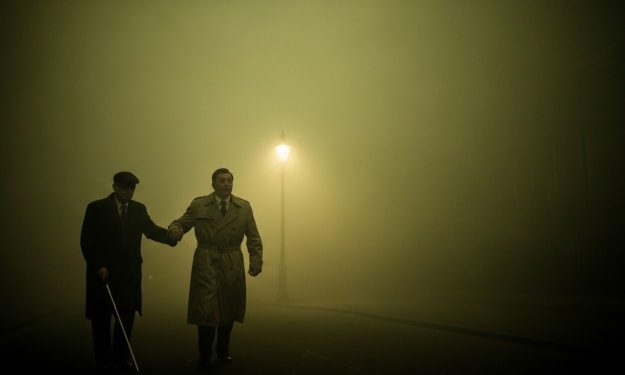
The taste of a copper penny coated in rotten egg yolk. That was the first warning. It was Friday, December 5, 1952. A blind man led a sighted businessman across Euston Road, tapping his white cane against the invisible curb. The businessman couldn't see his own shoes. The air had turned into a thick, yellowish-green soup that smelled of burning hair and raw sulfur. It was not a fog. It was an executioner. Over the next four days, twelve thousand Londoners would choke to death in their own beds, murdered by the very fireplaces they lit to keep warm.
By The Chaos Cabineta day ago in History
The Politics of Playing Dress-Up
Well, to start off I'd like to say a happy world book day to all who celebrate. I know I haven't really posted anything on my socials about it but I'm not a jubilant kind of person. I lay low most of the time. Let's start off with a popular anecdote from the vaults...
By Annie Kapur7 days ago in Geeks



Comments
There are no comments for this story
Be the first to respond and start the conversation.