
"Badshahi Mosque: A Marvel of Mughal Architecture in Lahore"
A Timeless Marvel of Mughal Architecture

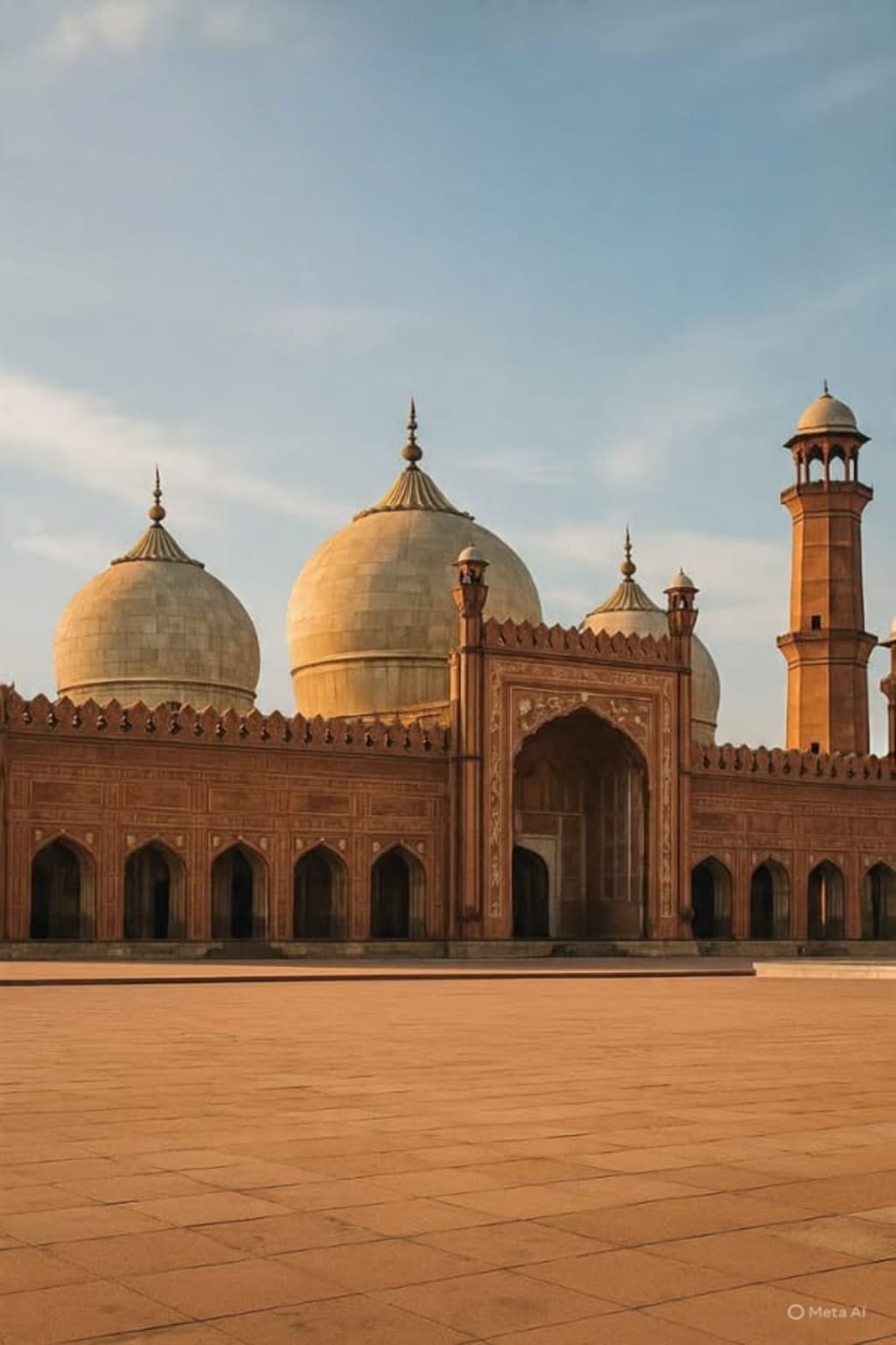
*The Timeless Grandeur of Badshahi Masjid*
The Badshahi Masjid, located in the heart of Lahore, Pakistan, is a majestic testament to the architectural and cultural legacy of the Mughal Empire. Built between 1671 and 1673 by Emperor Aurangzeb, this magnificent mosque is a blend of immense scale, intricate artistry, and profound religious significance. As one of the largest mosques in the world, the Badshahi Masjid is an iconic symbol of Lahore's rich history and cultural fusion.
*A Marvel of Mughal Architecture*
The Badshahi Masjid is a masterpiece of Mughal architecture, showcasing the blend of Islamic, Persian, and Indian styles. Its design is characterized by enormous, meticulously well-planned structures, intricate tile work, calligraphy, and marble inlays. The mosque's architecture is a testament to the cultural and religious legacy of the Mughal Empire, which shaped the Indian subcontinent for centuries.
*History and Significance*
The Badshahi Masjid was built during the zenith of Mughal power in the late 17th century. Emperor Aurangzeb commissioned the mosque in 1671, and it was completed in just two years. The mosque held the title of the largest mosque in the world from 1673 to 1986, with a human capacity of over 100,000. The Badshahi Masjid is not only a sacred space for prayer and spiritual growth but also a symbol of national identity and cultural heritage.
*Architectural Features*
The Badshahi Masjid's architectural features are a blend of grandeur and intricacy. Some of its notable features include:
- *Red Sandstone Facade*: The mosque's exterior is built using red sandstone, which gives it a distinctive and majestic appearance.
- *Towering Domes*: The mosque features three marble domes, with the largest one situated in the center of the mosque.
- *Minarets*: The mosque has four octagonal, three-story minarets, each 196 feet tall, topped with marble canopies.
- *Intricate Tile Work*: The mosque's interior and exterior feature intricate tile work, calligraphy, and marble inlays.
*Cultural and Religious Importance*
The Badshahi Masjid holds significant cultural, historical, and religious importance. It is a symbol of Pakistan's rich cultural heritage and a testament to the country's Islamic legacy. The mosque is a popular destination for tourists and worshippers alike, attracting millions of visitors annually. As a UNESCO World Heritage site, the Badshahi Masjid is not only a Pakistani treasure but a monument of global cultural heritage.
*Preservation and Conservation*
The Badshahi Masjid has undergone several conservation and restoration efforts over the years. The earliest documented conservation work was carried out during the British colonial period in the early 20th century. Today, the mosque is meticulously maintained to preserve its architectural integrity and cultural significance.
*A Symbol of National Pride*
The Badshahi Masjid is a source of national pride for Pakistanis, representing the country's rich cultural heritage and Islamic legacy. The mosque has played a significant role in the country's history, serving as a symbol of resistance against colonial rule and a beacon of hope for the nation.
*A Tourist Destination*
The Badshahi Masjid is one of Lahore's most popular tourist destinations, attracting millions of visitors annually. Visitors from around the world come to marvel at the mosque's stunning architecture, intricate tile work, and historical significance. The mosque is also an important site for Muslims, who come to pray and seek spiritual guidance.
*Conclusion*
The Badshahi Masjid is a timeless symbol of Mughal grandeur of Mughal architecture, showcasing the blend of Islamic, Persian, and Indian styles. Its stunning architecture, rich history, and cultural significance make it an iconic landmark in Lahore and a testament to Pakistan's rich cultural heritage. As a UNESCO World Heritage site, the Badshahi Masjid continues to inspire wonder and awe in visitors from around the world. Its grandeur and beauty are a reminder of the rich cultural legacy of the Mughal Empire and its enduring impact on the region's architecture, art, and culture.
*Future Generations*
The Badshahi Masjid is not only a treasure of the past but also a legacy for future generations. As a symbol of Pakistan's rich cultural heritage, the mosque serves as a reminder of the importance of preserving our cultural legacy for future generations. By protecting and conserving the Badshahi Masjid, we can ensure that its grandeur and beauty continue to inspire wonder and awe in visitors for centuries to come, forever preserving our history and cultural identity.
*Architectural Influence*
The Badshahi Masjid's architecture has influenced many other buildings in the region, including the Lahore Fort, the Wazir Khan Mosque,Start writing...
About the Creator
Shakeel Ahmad
Student
Keep reading
More stories from Shakeel Ahmad and writers in History and other communities.
"The Mystery of the Bermuda Triangle"
The waves were calm as Captain Rami steered the cargo ship *Sea Whisper* through the Atlantic. The crew had set off from Miami, headed toward San Juan, Puerto Rico. It was a familiar route—one that passed through the legendary Bermuda Triangle. Some of the younger crew members chuckled about the myths, while the older ones quietly recited prayers.
By Shakeel Ahmad 7 months ago in History
Honoring a Pioneer: The Dr. Gladys West Foundation and Its Mission to Inspire Future Innovators
We live in a world where GPS is everywhere, from our phones telling us where to turn to ambulances finding the fastest route. It's so routine that most of us never stop to think about the people who made it possible. But one of the key figures behind it was Dr. Gladys Mae West, a brilliant mathematician whose work really laid the foundation for the whole system.
By Sophie Bullockabout an hour ago in History
So You Decided To Become a Nurse Practitioner:
So you decided to become an "Advanced Practice" nurse. Congratulations!... is what I would say if this was a good idea. Grad school? In this economy? What were you thinking? Likely it was something along the lines of either 1) “I've seen these other chucklefucks do it— Why can't I?” or even 2) “I've got a nice career, I should shake it up. I miss feeling like I have no clue what I'm doing.”
By Sandor Szabo7 days ago in Fiction




Comments
There are no comments for this story
Be the first to respond and start the conversation.