
“Bacha Khan Baba: A Champion of Non-Violence and a Great Leader of the Pashtuns”
“The Life and Legacy of Bacha Khan: A Journey of Peace, Education, and Resistance”

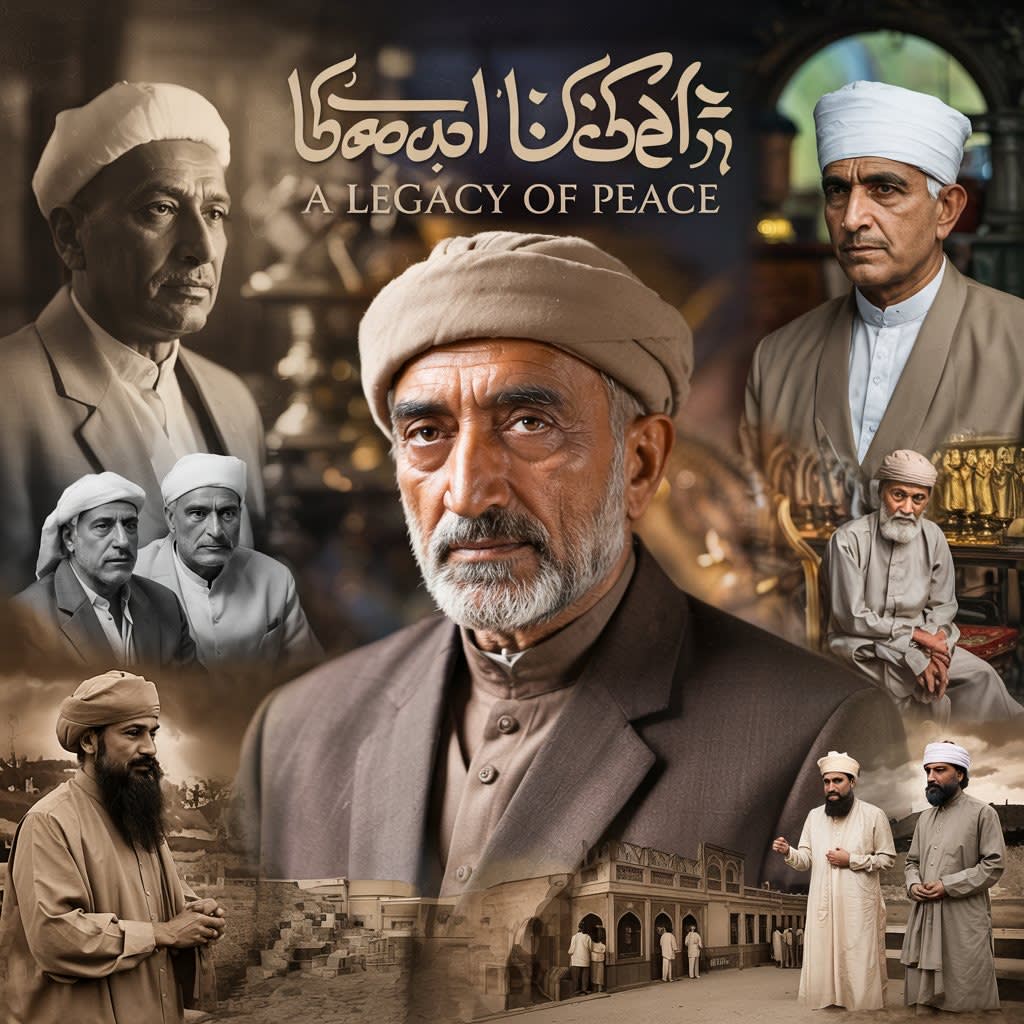
In the heart of the rugged mountains of the Indian subcontinent, where the winds whispered tales of bravery and honor, a leader emerged who would dedicate his life to peace, education, and the upliftment of his people. Khan Abdul Ghaffar Khan, fondly known as Bacha Khan Baba, was not just a political figure but a symbol of resilience, wisdom, and non-violence. His story is one of unwavering dedication to justice and his people, the Pashtuns.
Early Life and Vision
Born on 6th February 1890 in Utmanzai, a small village in present-day Khyber Pakhtunkhwa, Pakistan, Bacha Khan belonged to a prominent and well-respected Pashtun family. Despite being born into privilege, he saw the suffering of his people—poverty, lack of education, and centuries of oppression. Unlike many others who sought power through violence, he chose a different path: the path of knowledge and peace.
From an early age, Bacha Khan realized that education was the key to freeing his people from the chains of ignorance and colonial rule. Inspired by reformist movements, he established Azad Schools, where Pashtun children, especially the poor, could receive an education free from British influence. These schools emphasized not just literacy but also character building, self-discipline, and the importance of unity.
The Khilafat Movement and the Non-Violent Struggle
Bacha Khan’s passion for justice led him to join the Khilafat Movement in the 1920s, which aimed to protect the Ottoman Caliphate and resist British imperialism. However, he soon realized that the larger struggle was not just political—it was social and educational. His vision was to awaken the Pashtuns from centuries of internal conflict and tribal wars and unite them under a common cause of peace and progress.
Inspired by Mahatma Gandhi’s philosophy of non-violence (Ahimsa), Bacha Khan founded the Khudai Khidmatgar (Servants of God) movement in 1929. This movement was unique in many ways. Unlike traditional resistance groups that relied on arms, the Khudai Khidmatgars wore simple red uniforms and swore an oath of non-violence, service, and self-sacrifice. Their mission was to resist British rule through peaceful protests, social reforms, and education.
Sacrifices and Struggles Against British Rule
The British colonial rulers saw Bacha Khan as a dangerous threat, not because he carried weapons, but because his ideas empowered people. He was imprisoned numerous times, spending over 30 years in jail. Despite the torture, humiliation, and hardships he faced, he never wavered in his commitment to non-violence.
One of the darkest moments in this struggle came on 23rd April 1930, when British forces opened fire on peaceful protesters in Peshawar’s Qissa Khwani Bazaar. Hundreds of unarmed Khudai Khidmatgars were killed, but none of them retaliated with violence. This massacre shook the subcontinent and proved the strength of Bacha Khan’s movement.
Role in the Freedom Movement
Bacha Khan was a close ally of Gandhi and the Indian National Congress. He strongly supported a united and independent India, where all religious and ethnic groups could live peacefully. However, the partition of India in 1947 was a painful event for him. He and many Pashtuns had hoped for an autonomous Pashtunistan or at least a system that respected their rights. Unfortunately, his dreams were not fulfilled.
After Pakistan’s creation, Bacha Khan and his followers were treated with suspicion. Despite his sacrifices for independence, he was repeatedly jailed by the new government. Yet, he remained steadfast, advocating for democracy, human rights, and Pashtun unity.
Legacy and Last Days
Even in his old age, Bacha Khan never stopped working for peace. He continued his mission of education and social reform, believing that a peaceful society could only be built through knowledge and unity. His influence extended beyond the subcontinent, as global leaders recognized his contributions to non-violence and social justice.
Bacha Khan passed away on 20th January 1988 in Peshawar. As a final symbol of his lifelong commitment to peace, he was buried in Jalalabad, Afghanistan, as a gesture of unity between the Pashtuns of both sides of the border. His funeral was attended by thousands, and despite the war in Afghanistan at the time, a ceasefire was declared to honor him.
Bacha Khan’s Message for Today
The legacy of Bacha Khan Baba remains relevant even today. His principles of non-violence, education, and social justice continue to inspire activists around the world. His message was simple: true power lies not in weapons, but in the mind, heart, and unity of people.
In a world still struggling with conflict and division, the life of Bacha Khan serves as a reminder that the strongest warriors are not those who pick up swords, but those who fight hatred with love and ignorance with knowledge. His dream of a peaceful, educated, and united Pashtun society is yet to be fully realized, but his followers continue to work toward it.
Conclusion
Bacha Khan Baba was more than just a leader; he was a movement, an idea, and a vision that lives on. He proved that true strength lies in patience, courage, and the unwavering commitment to justice. His life story is not just history—it is a lesson for generations to come.
About the Creator
Muhammad yaqoob
MuHsin.
Be HaPPy AloN…..
Keep reading
More stories from Muhammad yaqoob and writers in History and other communities.
“World War II: The Deadliest War in History and Its Lasting Impact”
World War II was the biggest and most destructive war in human history. It involved over 50 countries and was fought on land, sea, and air across almost every part of the world. This war, also known as the Second World War, began in 1939 and lasted until 1945. It caused massive loss of life, destroyed cities, and changed the course of history forever.
By Muhammad yaqoob9 months ago in History
Where the Pulse Ends
© 2026 Sai Marie Johnson The humidity in the city didn’t just hang; it leaned. It was a thick, stagnant soup of diesel exhaust, ozone, and the metallic tang of blood that drifted from the "Compliance Zones." Joe sat in his rusted sedan, his hands resting loosely on the steering wheel. He wasn't gripping it. He wasn't angry. Anger was a chemical spike, a biological inefficiency. Joe was simply... focused.
By Sai Marie Johnson3 days ago in History
Wild Card Weekend Recap: What Happens Now?
I think I figured out why I love Wild Card Weekend so much. It's because it's the first playoff anything of the calendar year. The NFL season starts in the fall, and once upon a time, the champion was crowned either on or slightly before New Year's. The evolution of the NFL schedule has resulted in the playoffs starting just into the New Year, and currently, the final week of the season falls on the first weekend of the New Year, with Wild Card Weekend coming a week after that. So yes, chronologically, the NFL's Wild Card Weekend serves as the first playoff anything of the calendar year.
By Clyde E. Dawkins7 days ago in Unbalanced



Comments
There are no comments for this story
Be the first to respond and start the conversation.