
Augustus and the Transformation of Rome: From Bricks to Marble
Ancient Rome

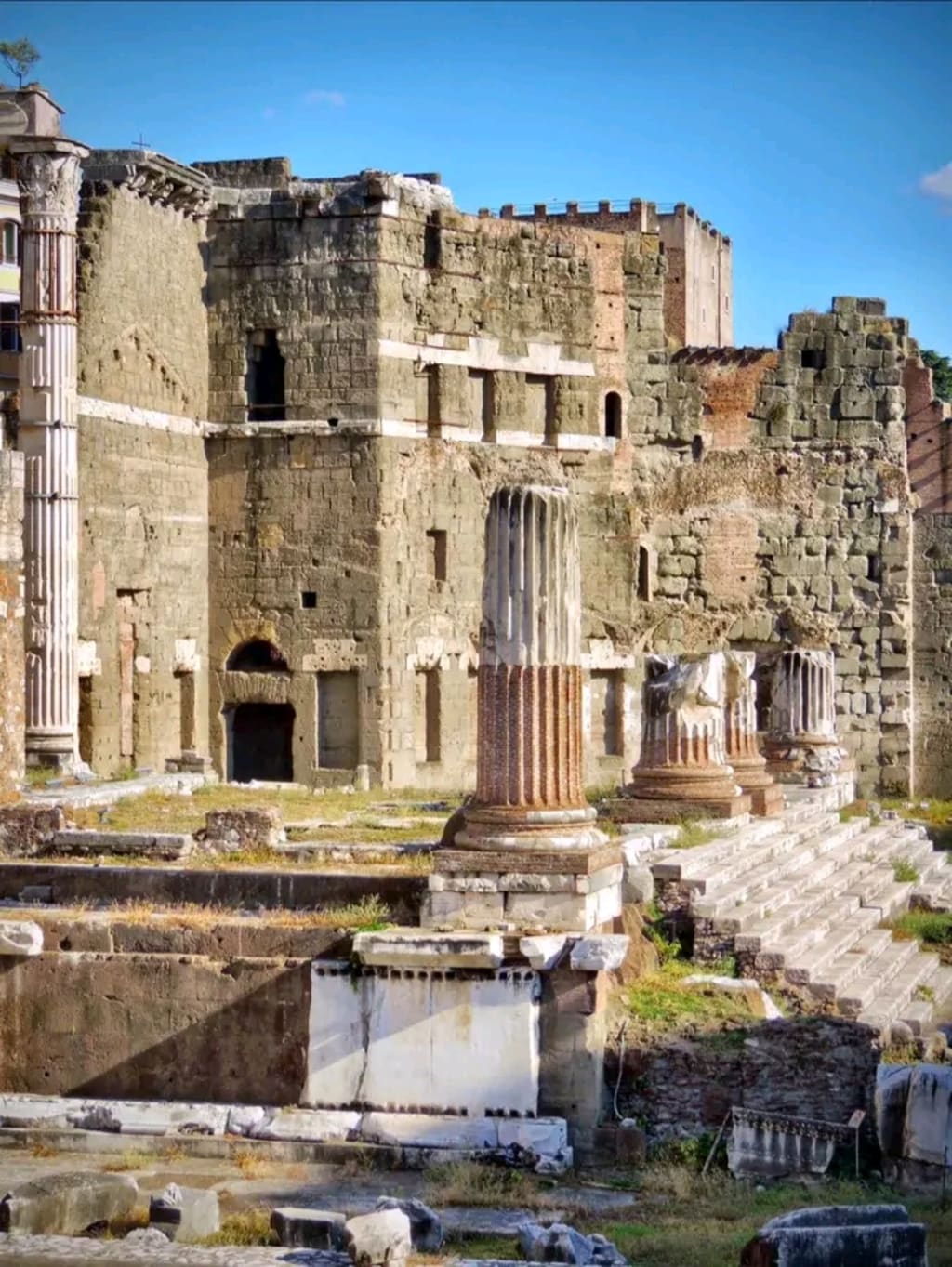
When Augustus proclaimed, “I found Rome a city of bricks and left it a city of marble,” he was not merely indulging in poetic flourish. As Rome’s first emperor, Augustus (born Gaius Octavius) ushered in an era of unprecedented architectural and cultural transformation that solidified his legacy as one of history’s most visionary leaders. While his rise to power was marked by violence and political intrigue, his reign brought stability, prosperity, and a stunning physical transformation of the Eternal City.
Among his many accomplishments, Augustus’s contributions to Roman architecture stand as one of his most enduring legacies. His building projects did more than beautify Rome—they symbolized the empire's power and stability while crafting a new identity for the burgeoning Roman Empire.
The Visionary Emperor
Augustus rose to power in the aftermath of Julius Caesar’s assassination in 44 BCE. After years of civil war, he emerged victorious, and in 27 BCE, the Roman Senate granted him the title "Augustus," meaning "the revered one." This marked the beginning of the Roman Empire and Augustus’s reign as its first emperor.
Unlike many rulers who sought to expand their territories through constant warfare, Augustus focused on consolidating power and securing peace. The period of his reign, known as the Pax Romana (Roman Peace), was characterized by economic growth, cultural flourishing, and, crucially, an ambitious program of urban development.
Rome’s Transformation: A City of Marble
Augustus understood the power of architecture to communicate ideas. To him, the transformation of Rome into a city of marble was not just about aesthetics—it was a way to project the grandeur of the empire and the stability of his rule. He initiated a series of public works that reshaped the city’s skyline and set the standard for Roman architecture for centuries.
Among his most notable projects was the construction of the Forum of Augustus, an ambitious complex that still stands as a testament to his architectural vision.
The Forum of Augustus
Built to commemorate Augustus’s victory at the Battle of Philippi in 42 BCE, the Forum of Augustus was designed as a grand public space that celebrated Rome’s military and cultural achievements.
The forum featured a large open plaza surrounded by colonnades, with the imposing Temple of Mars Ultor (Mars the Avenger) as its centerpiece. This temple, dedicated to the god of war, symbolized Augustus’s role as the restorer of peace and avenger of Caesar’s assassination.
The forum was constructed using Carrara marble, a dazzling white stone imported from northern Italy. The material became a hallmark of Augustus’s building projects, replacing the more utilitarian bricks that had previously dominated Roman architecture. The use of marble gave the forum a sense of grandeur and permanence, aligning with Augustus’s vision of a Rome that would endure for eternity.
Today, the ruins of the Forum of Augustus remain one of the most impressive sights in Rome. Visitors can admire the towering marble columns and remnants of the temple, which continue to evoke the majesty of Augustus’s reign.
Other Architectural Achievements
The Forum of Augustus was just one of many projects that transformed Rome under Augustus’s leadership. Among his other notable contributions were:
1. The Ara Pacis (Altar of Peace): This monumental altar was dedicated to Pax, the Roman goddess of peace, and celebrated the stability brought by Augustus’s rule. Its intricate carvings depict scenes of Roman mythology and the emperor’s achievements.
2. The Mausoleum of Augustus: Augustus built this grand tomb for himself and his family, reflecting his desire to leave a lasting legacy. The mausoleum was one of the largest tombs of its time and a prominent feature of the Roman landscape.
3. The Aqua Virgo: Augustus oversaw the construction of this aqueduct, which supplied fresh water to the city. Its completion was a vital step in improving the quality of life for Rome’s residents.
4. Restoration of Existing Structures: In addition to his new projects, Augustus invested in restoring and improving many older buildings, including the Capitoline Temple and the Basilica Julia in the Roman Forum.
The Symbolism of Marble
The decision to use marble in many of his projects was symbolic. Marble was not only durable and visually striking but also rare and expensive. By commissioning buildings with marble, Augustus reinforced his image as a leader who brought wealth and stability to Rome. The gleaming white stone became a symbol of the empire’s strength and Augustus’s commitment to its future.
This transformation also served a political purpose. By reshaping Rome’s urban landscape, Augustus reinforced his authority and aligned his reign with the city’s destiny as the capital of a vast empire. The new marble structures were more than architectural achievements—they were monuments to his power and vision.
A Legacy Set in Stone
Augustus’s architectural legacy can still be seen throughout Rome today. His building projects laid the groundwork for the city’s development during the imperial era and inspired subsequent emperors to embark on their own ambitious constructions.
The ruins of the Forum of Augustus, the Ara Pacis, and other structures serve as reminders of his transformative reign. As visitors walk among the marble columns and remnants of ancient temples, they can glimpse the vision of an emperor who sought to reshape the city—and the empire—into something timeless.
Augustus’s words, “I found Rome a city of bricks and left it a city of marble,” remain a fitting epitaph for a ruler whose vision and ambition left an indelible mark on history. His architectural achievements continue to inspire awe, offering a window into a golden age of Roman civilization.
About the Creator
Keep reading
More stories from Deji Akomolafe and writers in History and other communities.
London’s Ancient City Wall: A Living History at London Wall
London is a city steeped in history, with its streets, parks, and structures offering glimpses into its rich past. One of the most evocative remnants of this history is the section of the old city wall standing adjacent to the street known as London Wall. This ancient structure, blending Roman engineering with medieval additions, tells the story of the city’s transformation across centuries.
By Deji Akomolafeabout a year ago in History
A massive underwater stone wall that is almost 7,000 years old is found by divers.
One of the buried stone monuments on Sein Island is a granite wall off Brittany that is more than 7,000 years old and the length of a football pitch. The discovery is being used by marine archaeologists in the vicinity of Île de Sein to explain how stone-built coastal villages predate the widespread spread of farming.
By Francis Dami4 days ago in History
Statue of Liberty: America’s Timeless Symbol of Freedom
The Statue of Liberty is one of the most iconic landmarks in the United States and a powerful symbol of freedom, democracy, and hope. Located on Liberty Island in New York Harbor, the statue has welcomed millions of immigrants and visitors since the late nineteenth century. Officially titled Liberty Enlightening the World, it represents the ideals upon which the United States was founded and continues to inspire people across the globe.
By Mukhtiar Ahmad7 days ago in History
Miss Persephone's Manual to a Seemingly Ordinary Life
Miss Persephone was found at the dining table, her blue eyes swollen, her tears arriving and retreating like the tides of the ocean. Earlier that day, her family had visited her in the retirement home where she had lived for eight years. It was her eightieth birthday.
By Imola Tóth2 days ago in Fiction


Comments
There are no comments for this story
Be the first to respond and start the conversation.