
Atlantis Uncovered
A Deep Dive into the Controversial Lost City

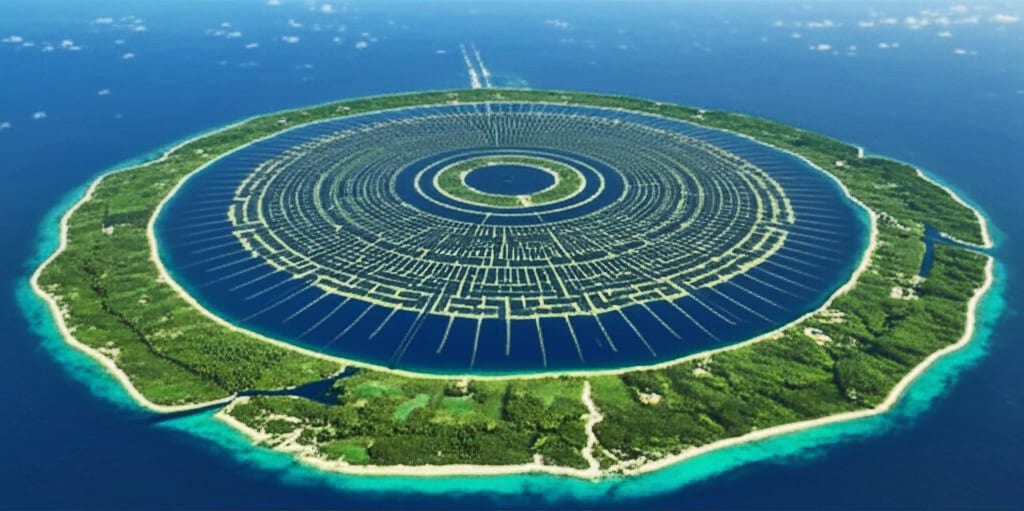
For millennia, the legend of Atlantis has captivated imaginations, fuelling countless expeditions, inspiring artistic masterpieces, and sparking heated debates. Was it a real place, a utopian society swallowed by the sea as punishment for its hubris? Or is it merely a philosophical allegory crafted by Plato to explore themes of ideal governance and societal decay? This article embarks on a journalistic journey to explore the enduring mystery of Atlantis, examining the historical context, scrutinizing the available evidence, and delving into the diverse interpretations that surround this enigmatic lost city.
Platonic Origins: Weaving Fact and Fiction
The primary source for the Atlantis narrative lies within two of Plato's dialogues: Timaeus and Critias, written around 360 BC. Timaeus introduces Atlantis as a historical account passed down through generations, while Critias provides a more detailed description of its rise and fall. According to Plato, Atlantis was a powerful naval empire located "beyond the Pillars of Hercules" (commonly identified as the Strait of Gibraltar). Its inhabitants, initially virtuous and guided by divine blood, gradually succumbed to greed and ambition. This moral corruption ultimately led to their downfall, as Atlantis incurred the wrath of the gods and was destroyed by earthquakes and floods, sinking into the ocean in a single day and night.
Key Elements of Plato's Atlantis:
Location: Beyond the Pillars of Hercules (Atlantic Ocean).
Description: A large island with a sophisticated civilization, advanced technology, and a powerful military.
Society: Initially utopian, characterized by wisdom, justice, and harmony, but later corrupted by greed and ambition.
Downfall: Destroyed by earthquakes and floods as punishment for their hubris.
Purpose: An allegorical tale to illustrate the dangers of unchecked power and moral decline.
It's crucial to understand that Plato's primary intention wasn't to provide a literal historical account. He used Atlantis as a vehicle to explore his philosophical ideas about ideal governance, social structures, and the corrupting influence of power. The story served as a cautionary tale, warning against the dangers of societal decay and the importance of maintaining moral integrity.
Searching for Atlantis: Expeditions and Theories
Despite the allegorical nature of Plato's account, the allure of Atlantis has prompted numerous expeditions and generated countless theories about its potential location. Over the centuries, various places have been proposed as the site of the lost city, ranging from the Mediterranean to the Atlantic and even Antarctica.
Popular Theories and Proposed Locations:
Mediterranean Hypothesis: This theory suggests that Atlantis was located in the Mediterranean Sea, possibly linked to the Minoan civilization of Crete, which experienced a catastrophic volcanic eruption on the island of Thera (modern-day Santorini) around 1600 BC. Proponents argue that the Minoan civilization's advanced culture and sudden decline could have inspired Plato's Atlantis narrative.
Atlantic Ocean Hypothesis: This theory posits that Atlantis was indeed located in the Atlantic Ocean, as Plato described. Some researchers have suggested specific locations, such as the Azores islands, the Canary Islands, or even a submerged landmass in the mid-Atlantic Ridge.
Bimini Road Theory: The Bimini Road, a submerged rock formation near Bimini Island in the Bahamas, has been proposed as evidence of Atlantis. However, geological analysis has revealed that the Bimini Road is a natural formation, not a man-made structure.
Antarctica Theory: This controversial theory suggests that Atlantis was located in Antarctica, which was a temperate region thousands of years ago before being covered in ice. Proponents cite ancient maps and geological anomalies as potential evidence.
Irish Shelf Theory: More recently, some researchers have suggested that Atlantis could be located on the Irish continental shelf, an area that was above sea level during the last ice age. This theory remains highly speculative.
Challenges in Finding Atlantis:
Lack of Concrete Evidence: Despite numerous expeditions and theories, there is no conclusive archaeological or geological evidence to support the existence of Atlantis. All proposed locations remain speculative.
Problem of Interpretation: Plato's description of Atlantis is open to interpretation, making it difficult to pinpoint a specific location based on his account.
Geological Changes: Over thousands of years, the Earth's geography has changed significantly due to tectonic activity, sea-level fluctuations, and erosion, making it challenging to identify potential submerged sites.
Scientific Scrutiny: Separating Fact from Fiction
The scientific community generally views Atlantis as a myth or allegory, rather than a historical reality. While acknowledging the enduring appeal of the story, scientists emphasize the lack of empirical evidence to support its existence.
Arguments Against the Existence of Atlantis:
Absence of Archaeological Evidence: No artifacts, structures, or other remnants of a sophisticated civilization have been found in any of the proposed locations for Atlantis.
Geological Implausibility: The sudden and catastrophic destruction of a large island, as described by Plato, is geologically improbable. While earthquakes and floods can cause significant damage, they are unlikely to completely submerge an entire landmass in a single day and night.
Lack of Corroborating Evidence: There are no independent historical accounts or archaeological findings to corroborate Plato's story. The Atlantis narrative appears to be unique to his writings.
Allegorical Interpretation: Most scholars believe that Plato intended Atlantis as an allegory, not a literal historical account. The story served as a philosophical tool to explore themes of governance, morality, and societal decay.
Role of Pseudo-Science:
The search for Atlantis has often been associated with pseudo-science and fringe theories. Some proponents of Atlantis rely on unsubstantiated claims, misinterpreted data, and speculative interpretations of ancient texts to support their beliefs. It's crucial to distinguish between legitimate scientific inquiry and pseudo-scientific speculation when evaluating claims about Atlantis.
Enduring Appeal: Why Atlantis Still Matters
Despite the lack of scientific evidence, the legend of Atlantis continues to fascinate and inspire. Its enduring appeal lies in its rich symbolism and its ability to tap into fundamental human desires and anxieties.
Symbolic Interpretations of Atlantis:
Utopia and Dystopia: Atlantis represents both the ideal of a perfect society and the dangers of unchecked power and moral corruption. It serves as a reminder of the fragility of civilization and the importance of maintaining ethical values.
Lost Paradise: Atlantis evokes the myth of a lost paradise, a golden age of peace, prosperity, and harmony that was tragically destroyed. This resonates with our longing for a better world and our fear of societal collapse.
Human Hubris: The downfall of Atlantis serves as a cautionary tale about the dangers of human hubris and the consequences of exceeding our limits. It reminds us that even the most advanced civilizations are vulnerable to destruction if they lose their moral compass.
Atlantis in Popular Culture:
Atlantis has inspired countless works of literature, art, film, and video games. From Jules Verne's Twenty Thousand Leagues Under the Sea to Disney's Atlantis: The Lost Empire, the legend of Atlantis has been reimagined and reinterpreted in countless ways, reflecting our evolving cultural values and anxieties. Its presence in popular culture ensures that the myth of Atlantis will continue to captivate generations to come.
Conclusion: A Myth with Enduring Power
The question of whether Atlantis was a real place remains unanswered. While the scientific community generally views it as a myth or allegory, the legend of Atlantis continues to inspire and provoke debate. Whether it existed as a historical city or solely as a philosophical concept, Atlantis serves as a powerful reminder of the human capacity for both greatness and destruction. Its enduring appeal lies in its ability to tap into our deepest hopes and fears, reminding us of the importance of striving for a better world while remaining mindful of the dangers of hubris and moral decay. Ultimately, the mystery of Atlantis may never be fully solved, but its legacy will continue to resonate for generations to come.
FAQs About Atlantis
Q: Was Atlantis a real place?
A: The scientific consensus is that Atlantis is likely a myth or allegory created by Plato, rather than a historical reality. There is no concrete archaeological or geological evidence to support its existence.
Q: Where was Atlantis located?
A: Plato placed Atlantis "beyond the Pillars of Hercules" (Strait of Gibraltar), but numerous locations have been proposed, including the Mediterranean Sea, the Atlantic Ocean, and even Antarctica. None of these locations have been definitively proven.
Q: What caused the destruction of Atlantis?
A: According to Plato, Atlantis was destroyed by earthquakes and floods as punishment for the inhabitants' greed and moral corruption.
Q: Why is Atlantis still so popular?
A: The legend of Atlantis continues to resonate because it taps into fundamental human desires and anxieties, such as the longing for a utopian society, the fear of societal collapse, and the cautionary tale of human hubris.
Q: Is there any hope of finding Atlantis?
A: While the possibility of finding definitive proof of Atlantis cannot be completely ruled out, the lack of evidence and the geological improbability of its sudden destruction make it unlikely.
About the Creator
Manik Roy
AI Writer | AI Photographer | AI Artist
The Untold Story of Tata Group , Who built the Empire ?
If you live in India, at some point in your day you probably come across a product from the Tata Group of Companies. Look at the cars running on the roads — you’ll see Tata Motors. Look up at planes flying in the sky — you’ll think of Air India. And the iconic Taj Hotel, famous all over the world, is also owned by the Tata Group. From power to fashion, from tea to salt — the Tata Group has a presence everywhere.
By Imran Ali Shah5 days ago in History
Pearl
1980 something. we all hung out at Pearl and you and i were nothing special, or so i thought. i mean we all danced, drenched in our own sweat, our own saline solution of fear, too many beers, shots, laughter, tears, fucks in the bathroom and i don't know when we began to be afraid. do you?
By ROCK aka Andrea Polla (Simmons)5 days ago in Fiction




Comments
There are no comments for this story
Be the first to respond and start the conversation.