
Ashes of the Golden Age
The Death of Knowledge in the Fall of Baghdad

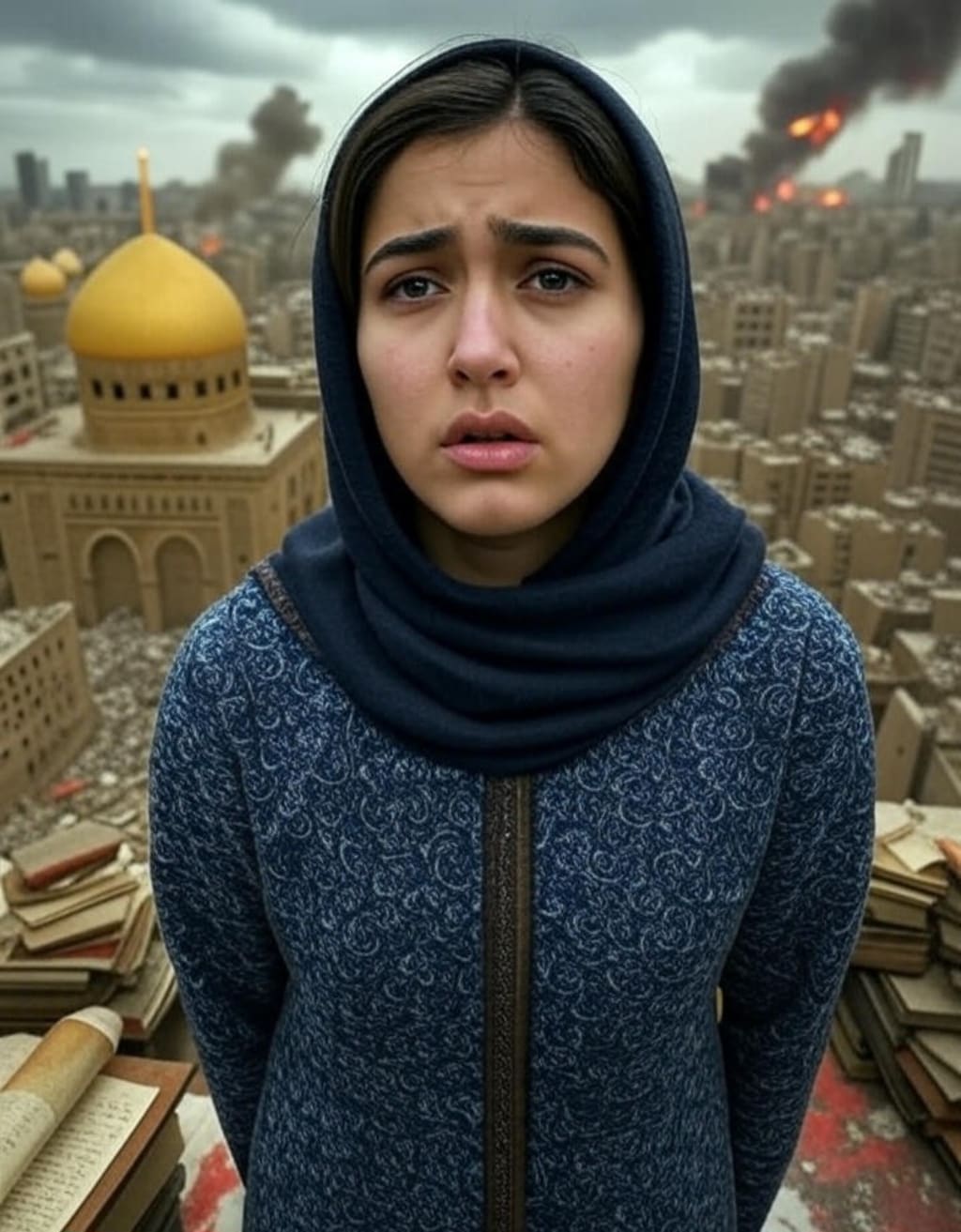
In the winter of 1258, the skies over Baghdad were not cloudy, but they were dark. Not with rain—but with ash, smoke, and the cries of a dying city.
Once hailed as the crown jewel of the Islamic world, Baghdad was a beacon of knowledge, art, and culture. Its heart was the Bayt al-Hikma—the House of Wisdom—a magnificent center of learning that had preserved and expanded the works of Greek philosophers, Indian mathematicians, Persian astronomers, and Arab scientists. The Tigris River, which ran through the city, had mirrored golden domes and bustling markets for centuries.
But now, it would reflect something else.
In early January, the Mongol commander Hulagu Khan, grandson of Genghis Khan, encamped his army at the gates of the city. His message was clear: surrender or burn. The Abbasid Caliph Al-Musta'sim, blinded by arrogance and poor advisors, refused to submit, believing the city too holy, too grand to fall.
He was wrong.
On January 29, 1258, the siege began. The Mongols, masters of siege warfare, bombarded Baghdad’s walls with catapults and flaming arrows. Panic spread inside. Families huddled together, not knowing whether to pray or flee. Shops closed. Scholars and poets—once honored guests in every home—were now just terrified citizens.
Among them was Amira, a young scholar and scribe who had grown up in the House of Wisdom. Her father, an aging astronomer, had taught her to love the stars—and the books that told of them. They had spent hours together copying manuscripts by candlelight.
Now, their world trembled.
Each day, Amira and her father could hear the city's outer defenses crumble. Each night, screams echoed from beyond the walls. The caliph ordered resistance. But what could swords and hope do against the largest Mongol army the world had seen?
On February 10, the Mongols breached the gates.
What followed was not a battle. It was an annihilation.
For seven days, Baghdad was looted and destroyed. Palaces were set ablaze. Mosques were desecrated. The streets filled with the dead and the dying. People were slaughtered—men, women, and children alike. The caliph himself was captured, rolled into a carpet, and trampled to death under horses—so that no royal blood would touch the earth.
But the worst crime, Amira would later remember, was not what was taken—but what was lost.
The Mongols turned to the House of Wisdom.
Scrolls, manuscripts, maps, and books—thousands upon thousands—were hurled into the Tigris River. Amira, hidden behind a collapsed arch, watched in horror as men laughed while throwing centuries of human achievement into the water. Some books were soaked in oil and used as torches.
The river, once a symbol of life, now ran black with ink and red with blood.
"My daughter," her father whispered, clutching his bleeding side, “remember this. The sword kills the body, but fire kills the soul. They have killed the soul of Baghdad.”
Amira wept silently.
When the fires finally died and the Mongols moved on, Baghdad was unrecognizable. The population, once over a million, had been reduced to less than a hundred thousand. The markets were silent. The call to prayer no longer echoed through the minarets.
But from the ashes, something small and fragile remained.
Amira, with a few surviving scholars, gathered whatever pages and scraps they could salvage. She wrapped them in cloth and hid them in pottery jars. They buried the jars outside the city, marking them with symbols known only to a few.
It would not restore what was lost—but it would remember.
Years later, when travelers came to what remained of Baghdad, they spoke of a ruined city—haunted and hollow. But some also spoke of a woman who told stories of stars, philosophy, and forgotten wisdom. They said she recited poems from memory, taught children numbers, and drew maps of lands she had never seen but had once read about.
Amira had become the last page of a lost library.
And in time, other cities would rise. Cairo, Istanbul, Samarkand—new homes for knowledge. But never again would the world know a city quite like Baghdad.
Because Baghdad was not just destroyed—it was erased.
And as the ink of a thousand scrolls bled into the river, the world lost not only books—but truths, dreams, and light.
About the Creator
Raza Ullah
Raza Ullah writes heartfelt stories about family, education, history, and human values. His work reflects real-life struggles, love, and culture—aiming to inspire, teach, and connect people through meaningful storytelling.
Keep reading
More stories from Raza Ullah and writers in History and other communities.
Twilight of the Crown
Once the sun never set on the British Empire. Its crimson hue stretched from the windswept highlands of Scotland to the golden sands of India, from African jungles to the vast Australian outback. But empires, like the tides, rise and fall. And the fall of the British Empire was not a single event, but a slow, dramatic unraveling of control, identity, and power.
By Raza Ullah7 months ago in History
The Seven Wonders of the World: Amazing Human Creations
People have always been fascinated by things that are grand and unusual. From the very beginning of civilization, humans wanted to build structures that were not just useful, but also showed their skill, creativity, and ambition. The Seven Wonders of the World are the most famous examples of this desire. They are impressive not only because of their size or beauty, but also because of the stories they tell about our past, different cultures, and human innovation. The idea of the Seven Wonders comes from ancient travelers and historians who listed the most remarkable human creations. Even though some of these wonders no longer exist, their legacy continues to inspire people around the world. Let’s explore each one, looking at their history, significance, and why they remain unforgettable. 1. The Great Pyramid of Giza (Egypt) The Great Pyramid of Giza is the only surviving wonder of the original Seven Wonders. Built around 2560 BCE as the tomb of Pharaoh Khufu, it is an extraordinary engineering achievement. Made from more than two million limestone blocks, some weighing over 15 tons, the precision of its construction is still astonishing today. The pyramid shows the power and beliefs of ancient Egypt and continues to attract visitors from all over the world. It is a true symbol of human skill and vision. 2. The Hanging Gardens of Babylon (Iraq) The Hanging Gardens of Babylon are famous for their beauty and clever design, though historians still debate whether they really existed. Ancient stories say King Nebuchadnezzar II built these stepped gardens for his wife, Amytis, who missed the green hills of her homeland. The gardens, described as terraces full of trees, flowers, and shrubs, appeared to float above the city. Whether real or partly mythical, they show how ancient people combined nature and architecture in extraordinary ways. 3. The Statue of Zeus at Olympia (Greece) Around 435 BCE, the sculptor Phidias created the Statue of Zeus at Olympia. This huge statue of the Greek god Zeus, seated on a throne, was over 12 meters tall and made of ivory and gold-plated bronze. It represented both artistic skill and religious devotion. Even though it was destroyed long ago, records and artistic depictions keep its memory alive, showing the Greeks’ dedication to beauty, religion, and craftsmanship. 4. The Temple of Artemis at Ephesus (Turkey) The Temple of Artemis, built around 550 BCE, was dedicated to the Greek goddess of the hunt and wilderness. Known for its enormous size, detailed sculptures, and beautiful design, it was rebuilt several times after destruction, reflecting its cultural importance. People traveled from across the Mediterranean to see it, making the temple a center of religion, art, and commerce. Today, its ruins still tell the story of a civilization that valued beauty and spiritual devotion. 5. The Mausoleum at Halicarnassus (Turkey) Built between 353 and 350 BCE, the Mausoleum at Halicarnassus was the tomb of Mausolus and his wife Artemisia. Combining Greek, Egyptian, and Lycian styles, it stood around 45 meters tall and was decorated with intricate sculptures. Its design influenced monumental tombs for centuries. Even after earthquakes destroyed it, the Mausoleum remains a symbol of human creativity and architectural achievement. 6. The Colossus of Rhodes (Greece) The Colossus of Rhodes, built between 292 and 280 BCE, was a massive bronze statue of the sun god Helios, celebrating Rhodes’ victory over an invading army. Over 30 meters tall, it was one of the tallest statues of the ancient world. Although it only stood for 54 years before an earthquake toppled it, the Colossus became a symbol of triumph, resilience, and artistic achievement, inspiring large statues throughout history. 7. The Lighthouse of Alexandria (Egypt) The Lighthouse of Alexandria, or Pharos, was built around 280 BCE on the small island of Pharos. Standing over 100 meters tall, it served as both a landmark and a guide for sailors entering Alexandria’s busy harbor. Its elegant design combined functionality and beauty. Though earthquakes destroyed it long ago, it remains a symbol of human ingenuity and innovation in maritime engineering. The Legacy of the Seven Wonders The Seven Wonders are more than just buildings; they are symbols of human creativity, ambition, and achievement. Each wonder tells a story about the people who built it, the culture it came from, and the new ideas of its time. Even though some no longer exist, their stories continue to live through historical records, art, and the fascination of people worldwide. These wonders still inspire architects, artists, engineers, and travelers today. From the pyramids of Egypt to the Hanging Gardens of Babylon, they remind us that imagination and effort can create something that lasts for thousands of years. They are examples of determination, vision, and the pursuit of excellence. Conclusion The Seven Wonders of the World are timeless creations that celebrate human creativity and determination. They are more than stones, metals, or ruins—they represent entire civilizations and the marks they left on history. Even after centuries, their stories continue to inspire people to dream, create, and achieve greatness. These wonders remind us that with vision, passion, and effort, humans can build creations that
By Binan Mooon5 days ago in History
Reform or Replace? The Future of Global Governance
Reform or Replace? The Future of Global Governance Global governance stands at a critical crossroads. Institutions created after World War II—especially the United Nations—were designed to prevent another global catastrophe. For decades, they provided platforms for dialogue, coordination, and conflict management. But today, many people question whether these institutions still work as intended. The growing debate is no longer just about reform. It is about whether global governance should be repaired or replaced entirely.
By Wings of Time 2 days ago in History




Comments (1)
Fall of baghdad.