
Ancient Qal'at al-Bahrain Reveals Bahrain's Legacy
Archaeological site showcasing Dilmun civilization's rich history and culture
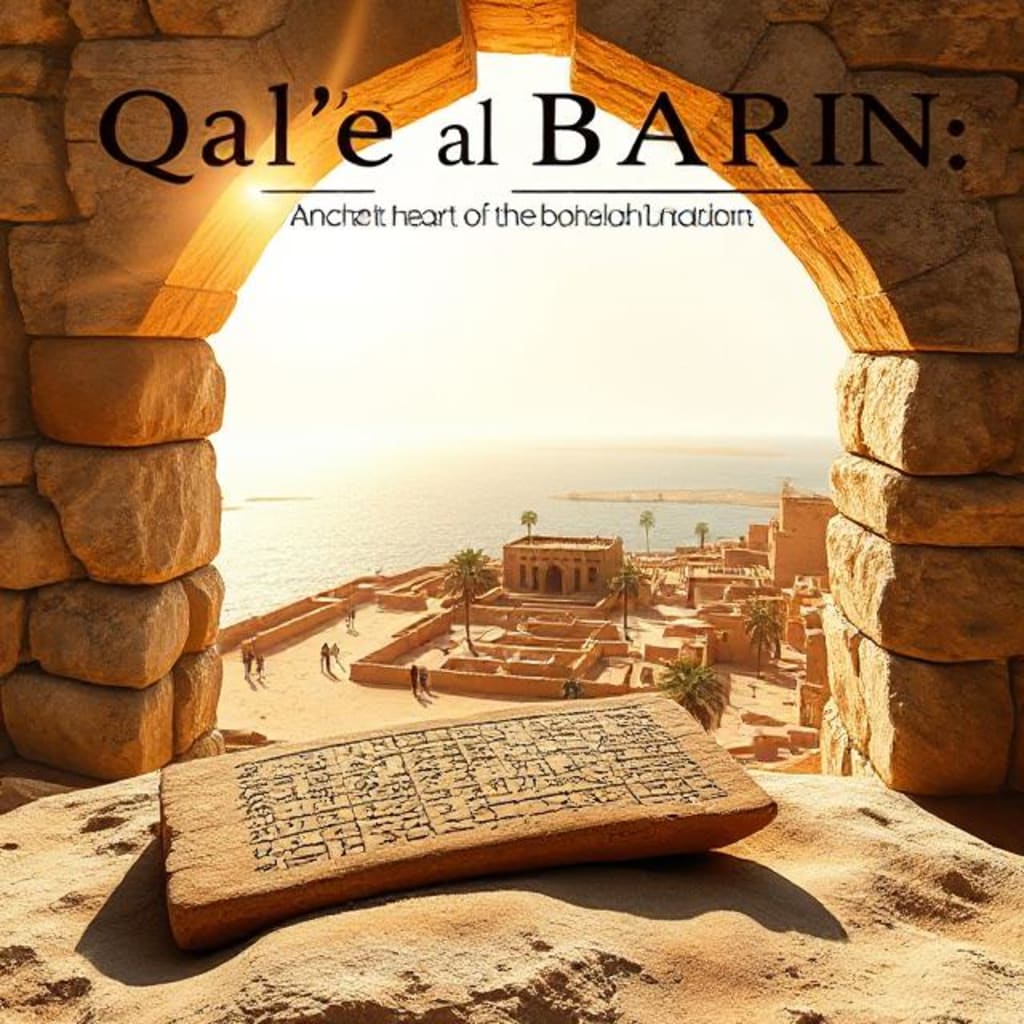
Perched on the northern coast of Bahrain Island, overlooking the turquoise waters of the Arabian Gulf, Qal'at al-Bahrain, also known as the Bahrain Fort or Portuguese Fort, is one of the most significant archaeological sites in the region. It is not only a monument of immense historical value but also the most prominent physical remnant of the ancient Dilmun civilization, which flourished more than 4,000 years ago. This site tells the story of Bahrain’s early role as a vital trade hub connecting Mesopotamia, the Indus Valley, and beyond.
The Rise of Dilmun
The earliest evidence of settlement at Qal’at al-Bahrain dates back to around 2300 BCE, during the time of the Dilmun civilization, which is often referred to as the “Land of Paradise” in ancient Sumerian texts. The Dilmunites played a central role in regional trade, acting as intermediaries between Mesopotamia (modern-day Iraq) and the Indus Valley (present-day Pakistan and northwest India). Goods such as copper, pearls, textiles, and dates flowed through this bustling port, making it a rich and influential city-state.
Archaeological excavations reveal that Dilmun was not just a trade center but also a religious and cultural beacon. Temples, burial mounds, and evidence of a well-organized urban life have all been found at Qal’at al-Bahrain. This supports the belief that the area was revered by Mesopotamians as a holy land blessed with abundance and purity.
Layers of Civilization
One of the most fascinating aspects of Qal’at al-Bahrain is its stratified layers, which provide a rare and detailed timeline of human settlement. Archaeologists have identified seven distinct layers of occupation spanning from the early Dilmun period to the Islamic era.
These layers include remnants of residential areas, commercial buildings, religious structures, and even military installations. The site reveals the evolving nature of governance, architecture, and society over millennia. For example, during the Hellenistic period (around 3rd century BCE), Qal’at al-Bahrain saw the influence of Greek culture after Alexander the Great’s conquests, although local customs and traditions remained strong.
The Portuguese Fortress
The most visible structure today is the Portuguese-built fort, which gives the site its modern name. Constructed in the 16th century, the fort was part of Portugal's strategic effort to control maritime trade routes in the Gulf. It is built using coral stones and lime mortar, with high defensive walls and square towers. The Portuguese presence lasted only a few decades, but the fort remains as a testament to Bahrain’s continued geopolitical importance through the ages.
Interestingly, the Portuguese fort was built directly over earlier ruins, contributing to the site's layered history. Excavations beneath the fort have revealed artifacts from the Dilmun, Hellenistic, and Islamic periods, showcasing a continuity of occupation and use.
Rediscovery and Excavation
Though locals always knew of the site, serious archaeological work began in the 1950s and has continued ever since, involving teams from Bahrain, France, and other countries. These excavations have yielded thousands of artifacts, including pottery, inscriptions, tools, and religious items, many of which are now housed in the Qal'at al-Bahrain Site Museum.
Among the most remarkable finds are clay tablets with cuneiform writing, linking the site directly to ancient Mesopotamian trade records. Large residential buildings, city walls, and harbor structures have also been unearthed, providing a vivid picture of life in ancient Bahrain.
UNESCO World Heritage Site
In 2005, Qal'at al-Bahrain was inscribed as a UNESCO World Heritage Site, recognizing its outstanding universal value as an ancient trading port and capital of Dilmun. The designation has helped raise global awareness of Bahrain’s rich historical heritage and has encouraged continued preservation and research efforts.
UNESCO described it as “the best known and most intensively investigated site in the country,” highlighting its archaeological, historical, and cultural significance.
A Living Legacy
Today, Qal’at al-Bahrain stands not only as a monument to the past but also as a symbol of Bahrain’s enduring identity. The site attracts historians, tourists, and locals alike who come to explore its ruins, stroll along its ancient walls, and gaze out at the sea that once connected empires.
Modern Bahrainis take pride in this heritage, and cultural programs, educational tours, and festivals are often held at or near the site. It serves as a bridge between the past and present, reminding us of Bahrain’s longstanding role as a center of trade, culture, and human innovation.
Conclusion
Qal’at al-Bahrain is much more than a fort; it is a timeless archive of civilizations, a reminder of the ancient world's interconnectedness, and a symbol of Bahrain’s historical significance. From the rise of Dilmun to the Portuguese occupation and beyond, this site tells a compelling story of human progress, resilience, and cultural exchange. For those who seek to understand the roots of Gulf history, Qal’at al-Bahrain is an essential place to begin.
About the Creator
Keep reading
More stories from Mukhtiar Ahmad and writers in History and other communities.
Krak des Chevaliers Syria's Timeless Crusader Fortress
Rising majestically on a hilltop in western Syria, Krak des Chevaliers stands as one of the most important and well-preserved medieval castles in the world. Built and expanded over centuries, this formidable fortress has borne witness to the Crusades, Islamic conquest, and centuries of regional conflict. Its powerful stone walls and imposing towers not only echo a history of warfare and religion but also represent the architectural brilliance of the medieval period.
By Mukhtiar Ahmad9 months ago in History
A System That Isn’t Working Challenge Winners
Systems promise order. They organize behavior, distribute opportunity, and suggest that if everyone follows the rules, things will work. The entries in A System That Isn’t Working look closely at what happens when that promise begins to slip.
By Vocal Curation Team4 days ago in Resources



Comments
There are no comments for this story
Be the first to respond and start the conversation.