
American Cultures by Foreign Influence
A Tapestry Woven from Distant Shores

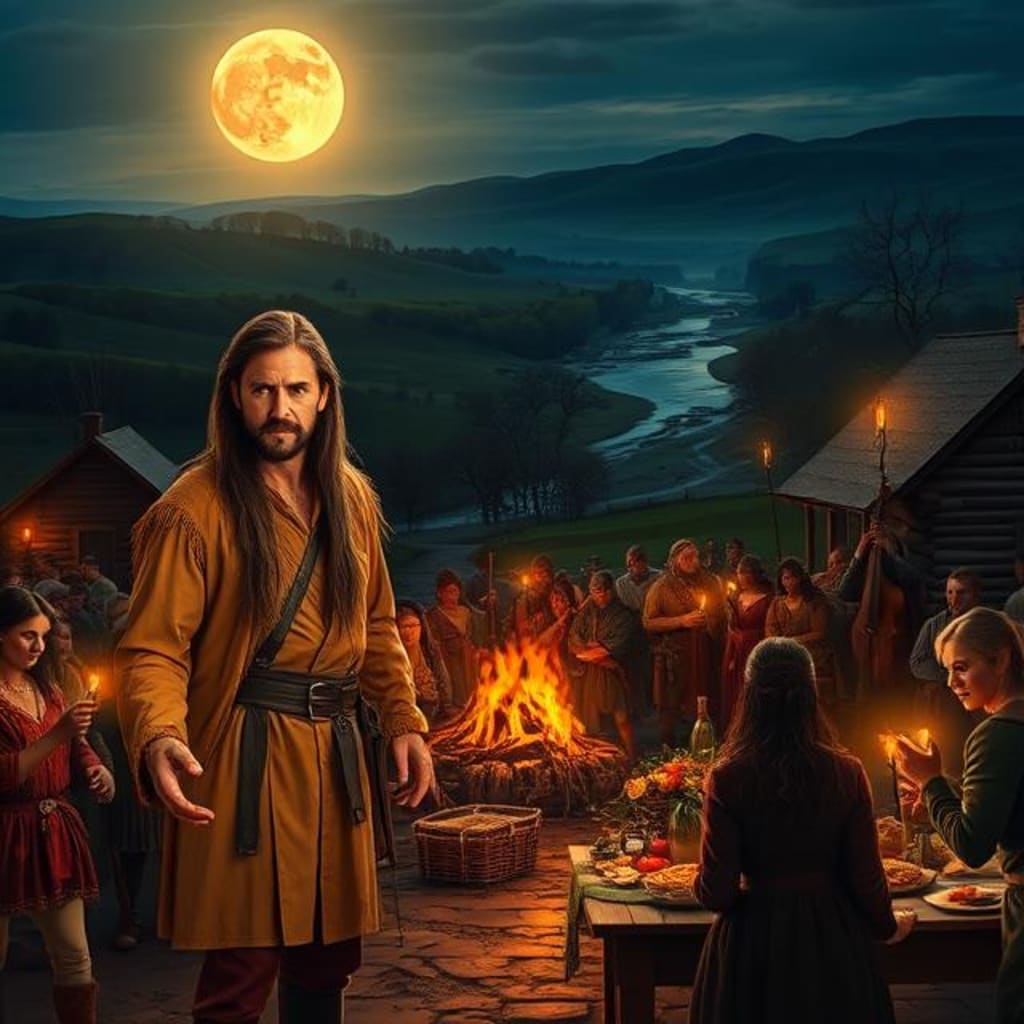
The land stretched wide and wild beneath a sky that seemed to hold the weight of eternity. From the rolling prairies of the Midwest to the dense forests of the Northeast, America in the early 19th century was a tapestry of untamed beauty and restless ambition. Its people were as varied as the terrain—indigenous tribes who’d walked the earth for millennia, settlers carving out new lives, and enslaved souls stolen from distant shores. Into this crucible came the foreigners, their ships and caravans bearing not just goods, but ideas, traditions, and dreams that would reshape the young nation forever.
In the heart of the Ohio Valley, where the river bent like a silver thread through green hills, stood the town of Crossroads. It was a fledgling settlement, its log cabins and muddy streets a testament to the grit of its founders—farmers from Virginia, German immigrants fleeing war, and a scattering of Irish laborers seeking fortune. Among them lived Elias Stone, a man of mixed blood, his mother a Shawnee healer, his father a Scots trader who’d vanished into the frontier. At twenty-five, Elias was a bridge between worlds, his dark eyes sharp with wisdom, his hands skilled with both rifle and quill. He ran the town’s trading post, a hub where cultures met, bartered, and clashed.
Crossroads thrived on its diversity, but it was a fragile harmony. The Shawnee, pushed west by encroaching settlers, watched from the hills, their drums a distant heartbeat. The Germans brought their blacksmithing and beer, the Irish their songs and stubborn hope, while the Virginians clung to their tobacco and tales of the Old Dominion. Yet change was coming, carried on the wind from across the seas.
It began with the arrival of the Stella Maris, a ship that docked in Philadelphia in the spring of 1823, its hold brimming with passengers from Naples. Fleeing famine and unrest, these Italians carried little but their faith, their recipes, and a fierce will to survive. Among them was Lucia Rossi, a woman of twenty, her hair black as coal, her spirit unbowed despite the loss of her family to the voyage. She’d heard of the Ohio Valley, a land of promise, and with a handful of her kin, she set out westward, their wagon creaking under the weight of olive oil jars and a battered mandolin.

When Lucia reached Crossroads, the town buzzed with curiosity and suspicion. Her olive skin and lilting tongue marked her as foreign, an outsider in a place already straining at its seams. Elias met her at the trading post, drawn by the scent of garlic and the sound of her voice haggling over flour. “You’re a long way from home,” he said, leaning against the counter.
“So are you,” she replied, her eyes meeting his with a spark of defiance. “This land belongs to no one yet. We make it ours.”
Their exchange was the first thread in a tapestry that would bind Crossroads—and America—together. Lucia’s kin settled on the town’s edge, planting tomatoes and basil in soil that had never known such crops. Their cooking filled the air with strange, rich aromas, drawing the curious and the hungry. The Irish, ever fond of a tune, traded ballads for mandolin lessons, while the Germans marveled at the Italians’ wine, a rival to their own brews. Elias, fluent in the Shawnee tongue, saw echoes of his mother’s herbcraft in Lucia’s remedies, and a quiet respect grew between them.
But not all welcomed the newcomers. Caleb Holt, a Virginian farmer with a voice like thunder, saw the Italians as a threat to his way of life. “They’ll overrun us,” he growled at the town meeting, his fists clenched. “Foreigners with their Popish ways and heathen food. This is our land.” His words found fertile ground among the fearful, and whispers of driving the Italians out began to spread.

The tension broke on the night of the Harvest Moon. The Italians had invited the town to a feast—tables laden with pasta, roasted peppers, and bread dipped in oil, a gesture of goodwill. The air rang with laughter and music, the mandolin weaving with an Irish fiddle. Elias sat beside Lucia, sharing stories of the Shawnee stars, when shouts shattered the peace. Caleb and his men stormed in, torches blazing, their faces twisted with rage. “Go back to your ships!” Caleb bellowed, hurling a plate to the ground.
Chaos erupted. Fists flew, and the feast became a battlefield. Elias leapt to his feet, shielding Lucia as a torch swung toward her. “Enough!” he roared, his voice cutting through the din. He faced Caleb, unarmed but unyielding. “This town stands because we’re different. You burn that, you burn us all.”
Caleb hesitated, his torch wavering. The crowd stilled, the weight of Elias’s words sinking in. Then, from the shadows, a new sound rose—a low, resonant chant. The Shawnee emerged, led by Tala, a warrior with braids like midnight. She’d watched Crossroads from afar, her people wary of its growth. Now, she stepped forward, her presence a quiet storm. “The land does not care for your quarrels,” she said, her gaze sweeping the crowd. “It drinks blood or it drinks peace. Choose.”
The standoff held, taut as a bowstring. Then Lucia stepped beside Elias, her voice steady. “We came to build, not to break. Share this with us, or let us go.” She gestured to the scattered feast, a symbol of her people’s hope.
Caleb’s shoulders sagged, the fire in his eyes dimming. He dropped the torch, its flames snuffed in the dirt. One by one, the townsfolk returned to the tables, tentative at first, then with growing ease. The Shawnee joined them, bringing venison and corn, their chants blending with the mandolin. The night ended not in ruin, but in a fragile truce—a meal shared under the moon, a new rhythm born of clashing roots.
Years passed, and Crossroads grew. The Italians’ gardens spread, their flavors seeping into the town’s kitchens. The Germans built a brewery beside an Italian vineyard, their children laughing in two tongues. The Irish wove tales of Naples into their lore, while the Shawnee taught the settlers to read the river’s moods. Elias and Lucia married, their union a quiet cornerstone, their son a boy of many bloods—Shawnee, Scots, Italian, American.
But the story didn’t end there. Word of Crossroads spread, drawing more foreigners—Chinese laborers from the railroads, French trappers from the north, even a scattering of Russians fleeing the Tsar. Each brought their own threads, their own colors, stitching them into the fabric of the town. Caleb, softened by time, became its mayor, his gruff voice now defending the diversity he’d once feared. “Ain’t no one thing,” he’d say, chewing a tomato grown from Lucia’s seeds. “That’s what makes us.”
The nation watched, too. Tales of Crossroads reached the cities, the ports, the prairies, whispering of a place where foreign influence didn’t dilute America, but defined it. The Civil War loomed, testing that unity, but the town held fast, its people fighting not just for a flag, but for the lives they’d forged together. Elias, graying now, stood on the hill where Tala had spoken, his son at his side, Zephyr’s descendant—a mutt of every breed—barking at the wind.
“This is us,” he told the boy, gesturing to the patchwork below. “Not one story, but a thousand. And it’s still growing.”
About the Creator
Great pleasure
An Author.
Keep reading
More stories from Great pleasure and writers in History and other communities.
Arab Pointers in the Desert
The sun blazed over the Endless Sands, a sea of dunes that stretched beyond the horizon, shimmering with heat and secrets. This was the domain of the Banu Ziyad, a nomadic tribe renowned for their mastery of the desert and their prized companions—the Arab Pointers. These dogs were no ordinary hounds; slender and swift, with coats of burnished gold and eyes like polished onyx, they were bred for the hunt, their senses honed to track prey across the merciless expanse. To the Banu Ziyad, they were more than beasts—they were kin, guardians, and the heartbeat of their survival.
By Great pleasure11 months ago in History
I found the history of Death that produced the AI that I have found
If someone you love died tomorrow, would you want to continue communicating with them? Not through memories or stored messages, but through artificial intelligence — a chatbot that uses their texts, emails, and voice notes to respond in their own tone and style.
By Jejak Kabar Duniaa day ago in History



Comments
There are no comments for this story
Be the first to respond and start the conversation.