
Allegations against Hasina: UN Report Analysis
Report hold Hasina accountable

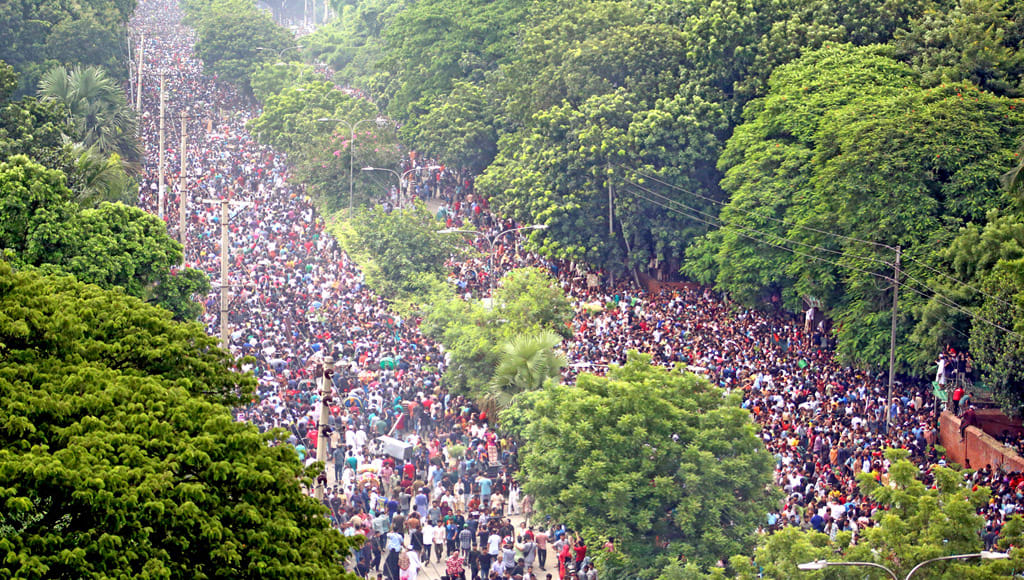
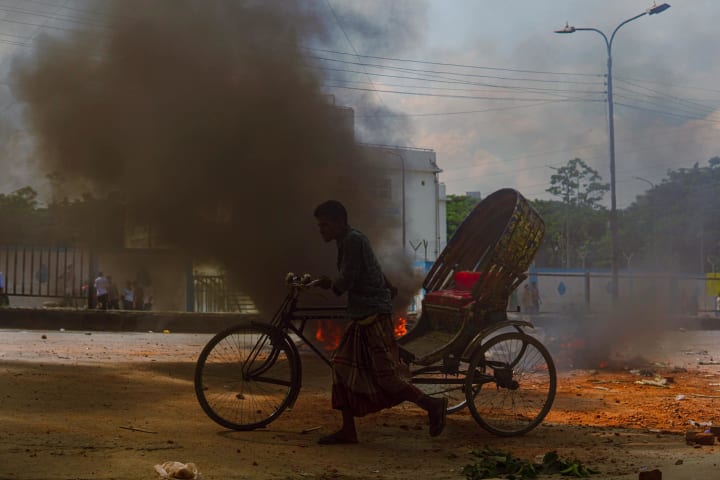
On February 12, 2025, UN High Commissioner for Human Rights Volker Türk held a press conference in Geneva to unveil the report titled “Human Rights Violations and Abuses related to the Protests of July and August 2024 in Bangladesh”
“The testimonies and evidence we gathered paint a disturbing picture of rampant state violence and targeted killings that are amongst the most serious violations of human rights, and which may also constitute international crimes,” Volker Türk, the U.N. human rights chief,
It is clear that “the top echelons of the former government were aware and in fact involved in the commission of very serious violations,” Mr. Türk told reporters.
Depth Analysis of the Fact Finding Report
Methodology
OHCHR team includes forensic physician, weapons expert, gender specialist, open-source analysts with legal advisor and press advisor. They visited Dhaka, Sylhet, Rangpur and Narshingdi. They took interviews of people from Cumilla, Gazipur, Jamalpur, Khulna, Naryangonj, Sirajgonj and the Hill Tracts. They took over 230 interviews, among them 35 women, 2 non-binary and 10 children. The notable interviewees are Inspector General of Police, Directors General of RAB, Ansar VDP and BGB. Army and DGFI denied interview requests. BNP and Jatiya Party attended the interviews. Jamaat and Shibir’s leadership did not respond against Hasina. But supporters of Jamaat and Shibir provided testimonies.
OHCHR received 959 communications to create the report; they also received reports from BGB, NSI and Ministry of Information Technology. The Army didn’t participate in the reporting process to the OHCHR.
Report Analysis
The report is starting with the background of quota movement based on a verdict in favor of quota on June 5, 2024. The students thought it was designed to block merit-based employment in government jobs.
A protester remarked, “I cannot get a government job since I do not belong to a political party. I am just a village boy.”
It was basically a protest based on inequality and frustration about among the young people of Bangladesh.
In the report, OHCHR talked about the background of the anger from corruption to crony capitalism, youth unemployment to economic struggles. The report states, wealth distribution was more unequal during last 15 years. They stated the background of election manipulation in Bangladesh from 2014 to 2024.
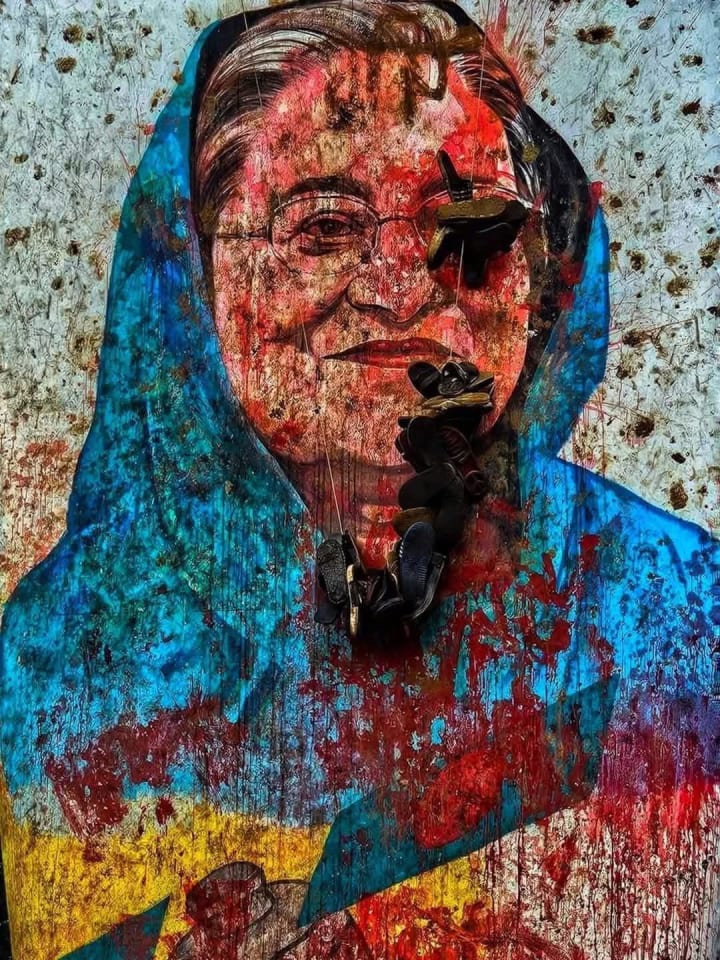
On July 14, Sheikh Hasina provoked the students by saying, “Should the grandchildren of freedom fighters lose quota benefits so that the grandchildren of razakars can get them?”
This quote spread like a wave of storm in all parts of Bangladesh. the comment wrote the end of a regime of 15 years. Hasina and her administration pay the price by fleeing from Bangladesh to various parts of the world specially India.
The student community responded with anger to the comment made by Former Prime Minister Hasina, “Who are you? Who am I? Razakar, razakar.” This slogan ultimately started a 21 days long war, a war that ended 15 years of bloodshed, enforced disappearances, killings, tortures and painful memories of Anti Hasina force. On August 5, 2024, Hasina fled to India amid protests going on in Bangladesh.
BCL President Saddam provoked the incident by saying, “no razakar on the streets of Bangladesh”.
Former Minister of Social Welfare Dipu Moni said: “Those who introduce themselves as razakars have no right to march with that flag.”
The report mentioned about the violence that was committed by the Bangladesh Chhatra League, there was unlawful use of weapons by police and security forces. There were allegations of Awami supporters being armed to attack the peaceful protesters. Police used rubber bullets, tear gas, and metal shotguns against protesters. The Awami supporters helped police to carry out the assault on protesters in demonstration. The Directorate General of Forces Intelligence deployed approximately 1000 officers for intelligence gathering. They formed a core committee in the Ministry of Home Affairs to provide directions for the security forces. Hasina directly supervised operations via call or in person meetings.
In the report they talked about militarization of policing in Bangladesh. They specifically talked about RAB, BGB, DGFI, Ansar VDP and NTMC. There were allegations of killings, tortures, unreported abduction, enforced disappearances conducted by them. They recommended the abolition of the Rapid Action Battalion and National Telecommunication Monitoring Center due to violation of human rights in Bangladesh.
In this report, The OHCHR mentioned a timeline of incidents that started from July 1 to August 15.
- There were attempts to calm protesters,
- protesters called shutdown,
- failed government negotiation attempts,
- escalation of protests and government crackdown.
- major security operations and block raids by security forces,
- the Supreme Court ruling,
- expansion of protesters’ demand,
- mass arrests and repression.
- There was a shift of Army support from the government to the people.
The incident of the Long March to Dhaka was instrumental in the fall of the government headed by Former Prime Minister Hasina.
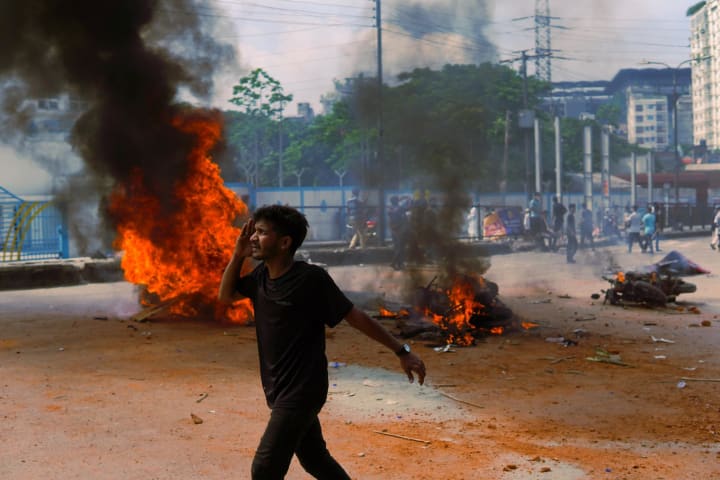
There are allegations against police for killing protesters in the July uprising. The extrajudicial killing of Abu Sayed is one of the examples of police’s naked role in the July uprising. Police shot multiple times at Abu Sayed, who was a 23-year-old student at Begum Rokeya University. They reviewed the forensic reports of Abu Sayed’s death. There were uses of shotguns by the security forces. 12% of protesters were affected by the shotguns used by security forces. The report indicates there was more use of lethal weapons to prevent the protesters. They examined a few incidents related to the uprising. In those cases, they found extrajudicial killing reports, indiscriminate use of force, inadequate medical reports and gross human rights violation. One of them was an incident in Cumilla where police, BGB used tear gas, rubber bullets and lethal ammunition to prevent the protesters. BCL used rods to ambush the protesters. BCL members assaulted women. There were allegations of police ordered to shoot in a video briefing which was verified by the experts. Hasina was aware of the incidents and excessive use of forces, the report says.
There were allegations of using helicopters to shoot the protesters. Eyewitnesses validated the use of firearms from the helicopters and the security forces also used tear gas from the helicopters, confirmed by the video analysts after analyzing the videos related to the incidents. There was manipulation of death documentation, threats to the medical institutions, arbitrary arrests. Arbitrary detention was made by the abuse of the judicial system. There were arrests of injured protesters too.
The report indicates the tortures related to the detainees in the prisons. The detainees were kept in inhumane condition. They were given electric shocks, broken fingers and other forms of torture that gave a huge pain to the detainees. There were 10 days of internet shutdown to calm down the uprising efforts. The use of DGFI was hidden from the public view and false narratives were spread to mislead the people of the country.
Stats
There are 841 protest related deaths including 10 women. 12272 injured including 394 women and 4 listed as “others”. NSI identified 314 additional deaths, among them 40 children. OHCHR revised their information of death estimation to 1400 people. 78% of deaths were from the use of firearms to prevent the protests. 66% killed by high power military rifles, 12% killed by lethal shotguns. Ballistic research demonstrates the use of Bangladesh Ordnance Factory’s devastating 7.62x39mm military ammunition. Between July 1, 2024, and August 4, 2024, Bangladesh Police detained 10,525 men, 25 women, and 63 children. In the same time frame, RAB arrested 34 women and 1,118 men.
Recommendation by OHCHR
The United Nations Office of High Commissioner for Human Rights made some recommendations to enhance good governance in Bangladesh.
1.recommend investigation and prosecution of causes related to the July uprising and overall accountability of judiciary alongside an independent judiciary system,
2. moratorium on death penalty
3. International Crimes Tribunal reforms,
4. Police reforms.
5.wanted an end to torture and mass arrests,
6. demilitarization of policing, UN peacekeeping personnel screening,
7. mortarium on repressive laws like Cyber Security Act, Anti-Terrorism Act, Official Secrets Act and others.
8.proposed to amend the Foreign Donation Law.
9. wanted Human rights commission reform.
10. emphasized free and fair elections in the political spectrum.
11. recommended not to ban political parties to validate the term “free and fair elections.”
The report is a historical document that certify internationally Hasina has allegations of “Crimes against Humanity”. This document can be marked as a proof of the bad governance and environment of fear in the country for the last 15 years. Awami League is going to face struggle after this report getting published. OHCHR report is a groundbreaking move of international community to recognize state sponsored crimes in Bangladesh.
About the Creator
Azmain Mugdha
Department of History
Specialized in South Asian Studies
Keep reading
More stories from writers in History and other communities.
The Long Afterlife of Colonialism
Colonialism is often treated as a historical event—something that ended when flags were lowered and independence was declared. But what if colonialism never truly left? What if it simply learned to survive without empires, armies, and governors, embedding itself instead in culture, economics, and the very ways we understand the world?
By Rachid Zidinea day ago in History
'Go' is an ancient Chinese game that archaeologists have found stones from.
Over a thousand years ago, game pieces from the ancient Chinese board game "Go" were interred together. An examination of these "Go stones" reveals that they are made of expertly carved porcelain, smoke-blackened clay, or shell material.
By Francis Damia day ago in History




Comments
There are no comments for this story
Be the first to respond and start the conversation.