
Alauddin Khilji: The Sultan Who Defied Invasions and Reformed an Empire
He ruled not just with the sword, but with strategy. While Mongols stormed borders and nobles plotted from within, one Sultan reshaped the Delhi Sultanate with iron discipline and ruthless reform

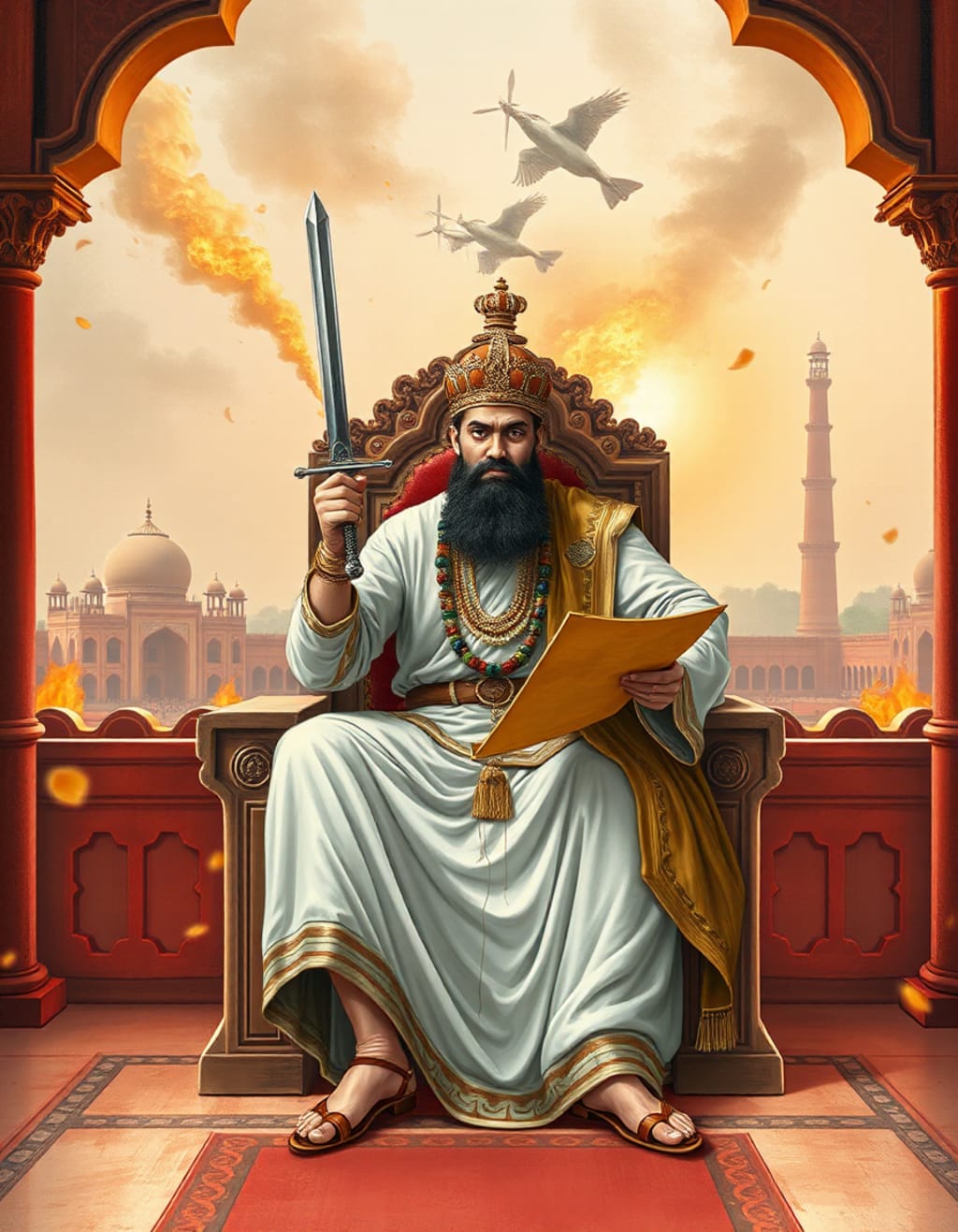
I. The Rise of a Relentless Sultan
In the early 13th century, the Indian subcontinent was under the rule of the Delhi Sultanate, but its throne was fragile. Internally, it was plagued by corrupt nobles and rebellions. Externally, it faced the terrifying threat of Mongol invasions from Central Asia.
Then came Alauddin Khilji, born as Ali Gurshasp around 1296, the nephew and son-in-law of Jalaluddin Khilji, the founder of the Khilji Dynasty.
Unlike other princes of his time, Alauddin was not born into comfort. He earned his throne through ambition, intelligence, and strategic ruthlessness. His rise began with a controversial act — he assassinated his uncle Jalaluddin and declared himself the Sultan of Delhi.
It was a bloody start, but for Alauddin, survival and control came before sentiment.
II. A Nation Under Siege: The Mongol Threat
Perhaps Alauddin’s most urgent challenge came from outside — the Mongols, who were sweeping across Asia like a plague of fire. By the time he came to power, Mongol raiders had already made multiple incursions into northern India, leaving death and destruction behind.
Unlike his predecessors, Alauddin did not cower.
He built a powerful standing army, improved fortifications, and trained his troops in quick mobilization tactics. Under his command, Delhi withstood at least five major Mongol invasions, including the massive 1306 attack by Tarbai Khan. Each time, the Mongols were defeated or repelled — something no other Indian ruler could claim with such consistency.
His military brilliance not only saved Delhi — it preserved the subcontinent’s cultural future.
III. The Reformer of the Marketplace
But Alauddin was not just a warrior — he was a reformer with a sharp mind for economics.
To fund his massive military and ensure loyalty, he reshaped the empire’s economy:
Fixed prices were introduced for grain, textiles, and essential items.
Grain hoarding was banned, and black marketeers were punished severely.
State-run warehouses were set up to store surplus food, especially for hard times.
Tax reforms were enforced with efficiency, even in the most rebellious provinces.
His goal? To lower the cost of living for soldiers and citizens, stabilize the economy, and make war sustainable without burdening the treasury.
It worked. For the first time, a soldier in Delhi could live well on his salary — and that made the Sultan’s army one of the most loyal in the Islamic world.
IV. Crushing Rebellion Before It Grew
Alauddin Khilji believed in absolute control. He banned alcohol in his court, forbade nobles from socializing without permission, and appointed spies to report on any sign of rebellion.
While such measures were harsh, they were effective. The political chaos that had marked earlier reigns was replaced by order, discipline, and fear.
His motto was simple:
“No one should dream of rebellion, even in sleep.”
In one sense, he ruled like a despot. In another, like a surgeon — cutting away the disease before it spread.
V. The Conqueror of South India
While defending the north, Alauddin Khilji also expanded his empire to the south.
His most trusted general, Malik Kafur, led devastating campaigns deep into Deccan and South India — including against the mighty Yadava, Kakatiya, and Hoysala kingdoms. Cities like Devagiri (Daulatabad), Warangal, and Madurai fell one by one.
Though these regions were not fully annexed, they were forced into tribute, and massive wealth was sent to Delhi — strengthening Khilji's treasury and reputation.
It was the first time a Delhi Sultan had reached so far into the south, changing the perception of the Sultanate from a northern kingdom into a pan-Indian empire.
VI. His Controversial Personal Life
Alauddin Khilji’s personal life remains one of history’s more complex and debated topics.
His close relationship with Malik Kafur, the slave-turned-general, has been examined for both its political loyalty and emotional intimacy. While some sources hint at a romantic bond, others emphasize loyalty and military brilliance.
He also had multiple wives and maintained a royal harem, yet rarely allowed anyone — even his family — too close to his political affairs.
To him, power came first, and everything else was secondary.
VII. Architecture, Culture, and Administration
Despite his harsh policies, Alauddin had a vision of greatness that extended to culture and architecture.
He constructed the Alai Darwaza — a magnificent gateway near the Qutub Minar, reflecting Indo-Islamic architecture. He also began plans for a second minar even taller than Qutub, though it was never completed.
He respected scholars and poets, and his court welcomed figures like Amir Khusro, whose works continue to shape South Asian culture even today.
His administration was known for its efficiency, record-keeping, and intelligence network — elements that would influence the later Mughal bureaucracy.
VIII. The Later Years and Death
Toward the end of his reign, Alauddin Khilji grew paranoid and ill, trusting only Malik Kafur. After his death in 1316, the kingdom fell into internal strife and power struggles.
Malik Kafur attempted to take control, but his rule was short-lived. The Khilji dynasty soon crumbled, overtaken by the Tughlaq Dynasty. Yet, Alauddin’s legacy endured.
He was remembered not just for his military victories, but for reforming India’s political and economic structure in ways few rulers dared to.
IX. How History Remembers Him
Alauddin Khilji’s legacy is divisive.
To some, he was a tyrant — harsh, paranoid, and ruthless. To others, he was a brilliant administrator, a savior against Mongol domination, and a ruler who understood power better than any of his peers.
He may not have been beloved — but he was respected and feared, even centuries later.
No Sultan before him had defended India with such strategy, reformed its economy with such precision, or expanded its influence with such ambition.
X. Conclusion: A Sultan Like No Other
In the grand story of India, Alauddin Khilji stands apart — not as a hero, but as a ruler who did what had to be done.
He understood that to protect a kingdom in flames, sometimes you must become fire yourself.
Through blood and brilliance, through steel and strategy, Alauddin Khilji carved a place in history that still echoes in the monuments of Delhi, the tales of warriors, and the policies of rulers who followed.
His reign was not kind, but it was effective, decisive, and unforgettable.
About the Creator
rayyan
🌟 Love stories that stir the soul? ✨
Subscribe now for exclusive tales, early access, and hidden gems delivered straight to your inbox! 💌
Join the journey—one click, endless imagination. 🚀📚 #SubscribeNow
3 Historical Events That Were Ruined by One Incredibly Small Detail
History is shaped by big ideas, brave leaders, and sweeping movements—but sometimes, the tiniest, most overlooked detail changes everything. A forgotten note, a misheard order, or even a misaligned boot can turn a decisive moment into chaos. These micro-errors often seem trivial at the time, but their ripple effects can alter the course of wars, empires, and even the future of entire nations.
By Enoch Sagini4 days ago in History
Pablo Escobar: The Man Who Declared War on Colombia
Pablo Emilio Escobar Gaviria was born on December 1, 1949, in Rionegro, Colombia, and raised in the nearby city of Medellín. He grew up in a modest household, the son of a farmer and a schoolteacher. From an early age, Escobar showed ambition and defiance. He dreamed of power, wealth, and influence—dreams far larger than his surroundings. In a country struggling with inequality and limited opportunity, Escobar believed the rules were written to keep people like him down. Instead of trying to change the system, he chose to dominate it.
By The best writer a day ago in History



Comments
There are no comments for this story
Be the first to respond and start the conversation.