
Agrasen Ki Baoli: A Timeless Historical Landmark with Rich Culture and Architecture
Explore the captivating history and architectural beauty of Agrasen Ki Baoli, an ancient step-well in New Delhi that blends Hindu, Islamic, and Mughal styles, showcasing the city’s rich cultural heritage and engineering expertise.

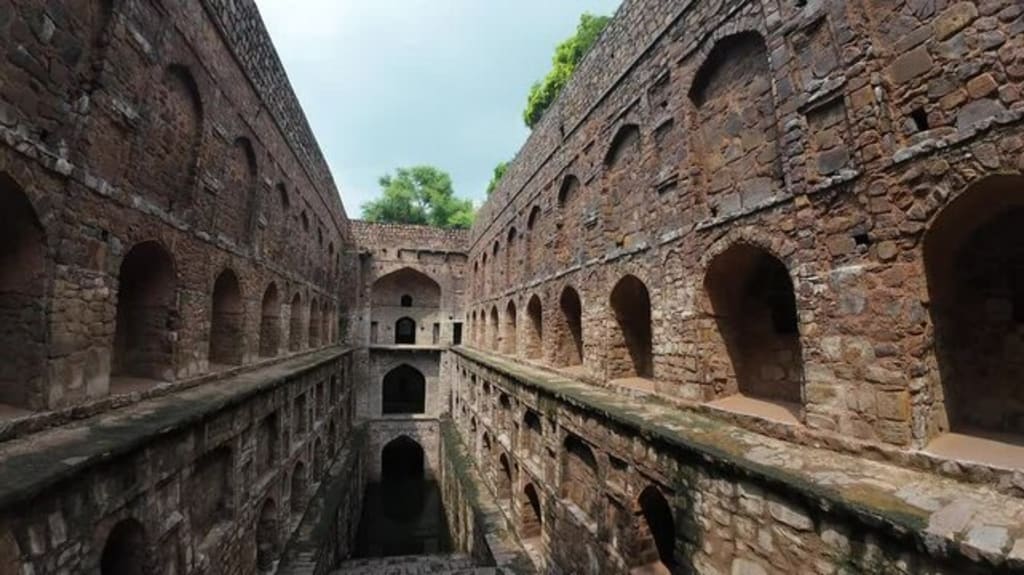
Agrasen Ki Baoli is a famous old landmark in New Delhi, India. It is a step-well near Connaught Place, a busy area in the city. The step-well has a rich history, special design, and deep cultural meaning. Many people, including tourists, historians, and architects, visit Agrasen Ki Baoli to learn about it. In this article, we will talk about its history, design, and importance.
History of Agrasen Ki Baoli
Agrasen Ki Baoli is said to have been built a long time ago, during the Mahabharata period. Some people believe it was built by King Agrasen, who also founded the city of Agroha, now in Haryana. The well is named after him, though there are many stories about where it really came from.
Later, in the 14th century, during the rule of the Tughlaq dynasty, the step-well was repaired. The Tughlaqs were important rulers of the Delhi Sultanate and helped improve the city's buildings and water systems. They made Agrasen Ki Baoli an important part of Delhi's water supply.
Over time, the baoli changed because of different rulers and time periods. Today, it is a beautiful mix of old and new styles of architecture.
Architecture of Agrasen Ki Baoli
Agrasen Ki Baoli is a step-well, which means it is a structure built to get water. Step-wells were made a lot in old India to store water, especially in places where there was not much water. The well has a deep, narrow shape with steps going down to the water.
Agrasen Ki Baoli has three levels and about 103 steps that go down to the bottom. The well is made of stone. It is about 60 meters long and 15 meters wide. The steps help people reach the water, and the baoli can store a lot of water.
The special thing about Agrasen Ki Baoli is its design. The baoli shows a mix of Hindu and Islamic styles, showing the different history of Delhi. The top part of the baoli is made of red sandstone, and the lower part is built with stone and brick. The arches and designs on the walls show the Mughal style, which was used when the Mughal Empire ruled India.
The baoli is surrounded by tall walls with small windows that let in light and air. The walls have detailed carvings, and there are small rooms and spaces along the sides of the well. These designs help keep the baoli cool, especially in the hot summer.
Significance of Agrasen Ki Baoli
Agrasen Ki Baoli is important for many reasons. It is a beautiful building and shows how old people in India were good at engineering and managing water. The step-well reminds us of how important saving water was, especially in places where water was hard to find.
A long time ago, step-wells like Agrasen Ki Baoli were the main source of water for people in Delhi. People used the baoli for drinking, washing, and other everyday things. The water in the baoli would go up and down depending on the rainy season. It was also a place where people could relax and enjoy the cool shade, which helped them feel better during hot days.
Agrasen Ki Baoli is also important for Delhi's history of buildings. It mixes different types of architecture, like Hindu, Islamic, and Mughal styles. This shows how Delhi's history changed, from the time of the Delhi Sultanate to the Mughal Empire.
Agrasen Ki Baoli Today
Agrasen Ki Baoli is a famous place to visit in New Delhi. It is looked after by the Archaeological Survey of India (ASI) and is open for everyone to visit. The baoli is free to visit and is in the middle of the city, so it is easy to reach for both tourists and locals.
The baoli is clean and well-kept, and people can enjoy its interesting design and learn about its history. Many people like to take pictures here because it looks unique and beautiful. Some visitors come to relax, think, or take a calm walk around the well.
Agrasen Ki Baoli is shown in many Bollywood movies and is famous among movie fans. It is seen as an important part of Delhi's old history, and its mysterious look makes it special. The baoli is also mentioned in old history books and is an important part of Delhi's culture.
The baoli is close to other famous places in Delhi, like the Red Fort, India Gate, and Connaught Place. Visitors can visit Agrasen Ki Baoli along with these places to enjoy the history and culture of the city.
Legends and Myths
Over time, many myths and stories have grown around Agrasen Ki Baoli. Some people think the baoli is haunted and connect it with strange events. The dark and quiet place has led to stories about ghosts and spirits living there. While these stories are not true, they make the baoli seem more mysterious.
Another popular story is that, during the British rule in India, the baoli was used for secret meetings. Some people believe that leaders and freedom fighters met there while fighting for India's independence.
Visiting Agrasen Ki Baoli
Agrasen Ki Baoli is a place everyone should visit if they like history, old buildings, or photography. The well is open every day from 7:00 AM to 6:00 PM, and it is free to visit. People should wear comfortable shoes because there are many steps to walk down to reach the bottom. It is better to visit during cooler months to avoid the hot summer weather.
Agrasen Ki Baoli is on Hailey Road, near Connaught Place, in central New Delhi. It is easy to reach by metro, with the nearest station being Rajiv Chowk (Blue Line). The station is just a short walk from the site.
In the end................
Agrasen Ki Baoli is a hidden treasure in the center of New Delhi. Its history, unique design, and cultural importance make it a must-see spot in the city. Whether you love history, architecture, or just want a calm place in the busy city, Agrasen Ki Baoli has something for everyone. The well reminds us of Delhi's past and still inspires visitors with its beauty and mystery. Agrasen Ki Baoli is a true gem of New Delhi's history.
About the Creator
Rahul Kumar
I'm Rahul Kumar, a passionate writer & author who creates engaging content across niches—from lifestyle to tech—to inform, inspire, and connect with readers.
E-mail: [email protected]
https://medium.com/@rahul__kumar
Keep reading
More stories from Rahul Kumar and writers in History and other communities.
Aam Khas Bagh: Mughal Gardens and Sikh History Combined in Punjab’s Heart
Aam Khas Bagh is a historic garden in Sirhind, Punjab, India. It is an important monument that helps us learn about the Mughal Empire's past. The garden is an example of Mughal design, which mixes beauty and practical use in a balanced way. Today, Aam Khas Bagh is a place that attracts people who love history, architecture, and the culture of the Mughal period.
By Rahul Kumar9 months ago in History
The Evolution of Aviation Engineering From Risk to Reliability
In the earliest days of aviation, flight was less a science and more a gamble. Engineers, inventors, and pilots worked without established data, proven formulas, or standardized safety practices. Every takeoff carried uncertainty, and every landing was a test of survival. Aircraft were built using intuition, observation, and relentless trial rather than structured engineering principles. What kept aviation moving forward was not reliability, but persistence.
By Beckett Dowhan2 days ago in History
Charlie Chaplin — The Tramp Who Conquered the World
Charlie Chaplin was not born into comfort or certainty. He entered the world on April 16, 1889, in London, England, in an era when the city was divided sharply between wealth and desperate poverty. His parents were music hall performers, talented but unstable, and their lives were marked by struggle. Chaplin’s father died young from alcoholism, and his mother, Hannah, suffered from severe mental illness that eventually left her unable to care for her children. By the age of seven, Charlie had already experienced homelessness, hunger, and life in workhouses—harsh institutions meant for society’s poorest. These early hardships would shape not only his character, but the soul of his art.
By The best writer 5 days ago in History
Autonomy Is The Real Privilege
Good morning, freedom-seekers! Today we’re gonna be looking at autonomy. A strange word, I know; one many would probably look at blankly and run away from on sight. We’re gonna figure out what it actually means, consider how it’s achieved, and decipher just how deeply most of us are tangled up in dependence without realising it.
By That ‘Freedom’ Guy3 days ago in Humans



Comments
There are no comments for this story
Be the first to respond and start the conversation.