
Age of Kings and Conquests
Power Struggles, Expanding Empires, and the Turning Tides of the Early Medieval World
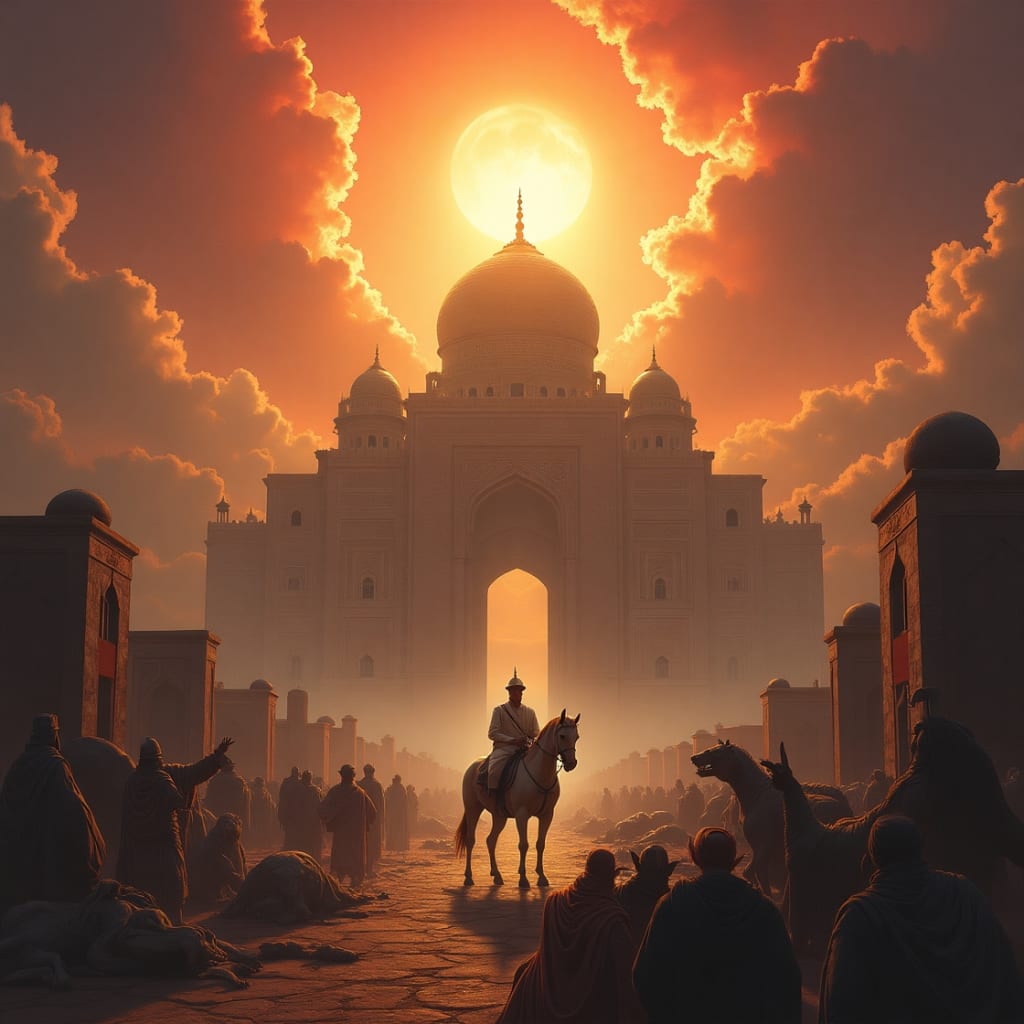
Between 800 and 850 AD, the world stood at a pivotal crossroad. In every corner of the known world, empires rose, borders shifted, and rulers seized power—or lost it. This was an age where kings became emperors, warriors carved out kingdoms, and the tides of religion and culture surged across continents. The early medieval world was anything but stagnant. It was alive, restless, and full of stories that shaped the centuries to come.
In the heart of Europe, a towering figure emerged: Charlemagne, King of the Franks, who in the year 800 was crowned Emperor of the Romans by Pope Leo III. This crowning, held in the majestic grandeur of St. Peter’s Basilica in Rome, was more than ceremonial—it was a bold political act. The Carolingian Empire now claimed to revive the legacy of the ancient Roman Empire in the West, forging a Christian imperial identity that rivaled the Byzantine East.
Charlemagne’s empire stretched from the Pyrenees in the west to the Danube in the east, encompassing much of Western Europe. His rule brought administrative reform, a revival of learning known as the Carolingian Renaissance, and the strengthening of the Christian Church's role in governance. Yet his power did not go unchallenged. Saxons in the north, Avars in the east, and Muslim raiders from Al-Andalus in the south tested the empire’s borders.
Meanwhile, to the northeast, a new wave of terror and transformation surged from the cold waters of Scandinavia. The Vikings began their relentless raids and expeditions. By 793, they had already sacked Lindisfarne, but in the following decades, their activities intensified. In 841, the Viking longships sailed up the River Seine, plundering Rouen and threatening the very core of Frankish lands. The Carolingians struggled to repel them. Fortified towns, tribute payments (known as Danegeld), and military reforms became vital tools of resistance—but never guarantees of safety.
Across the Mediterranean, the Abbasid Caliphate represented the zenith of Islamic civilization during this period. From Baghdad, the city of learning and splendor, Caliph al-Ma'mun and his successors fostered the House of Wisdom, where scholars translated ancient Greek texts into Arabic and pioneered advances in astronomy, medicine, mathematics, and philosophy. Yet beneath the surface, internal divisions brewed.
Ethnic tensions between Arabs and Persians, religious disputes between Sunni and Shi’a Muslims, and the growing autonomy of provincial governors all challenged the caliph’s authority. The Abbasid state began to fragment, with powerful dynasties like the Aghlabids in North Africa and the Tahirids in Persia operating with increasing independence. The unity of the Islamic world, so strong under earlier caliphs, now showed cracks.
In East Asia, the Tang Dynasty in China remained a dominant power, though its golden age was giving way to instability. After surviving the An Lushan Rebellion decades earlier, the dynasty struggled to recover its centralized authority. In the early 800s, regional military governors, or jiedushi, held real power, undermining the court in Chang'an. Yet, despite the political turmoil, Tang China remained a hub of trade and culture, especially through the Silk Road, linking China to Central Asia, the Middle East, and even parts of Europe.
In the Indian subcontinent, the early medieval period saw the decline of major centralized empires like the Gupta and the rise of regional powers. In the south, the Pallavas and Cholas competed for dominance, while in the north, the Gurjara-Pratihara kingdom expanded under rulers like Nagabhata II. These kingdoms were deeply intertwined with Hindu traditions and temple culture, yet frequently clashed with invading Arab forces from the west.
Further south in the African continent, the powerful Kingdom of Aksum in modern-day Ethiopia had begun to wane, giving way to the rise of smaller Christian polities in the highlands. West Africa, meanwhile, saw the early foundations of trade networks that would eventually fuel empires like Ghana—with trans-Saharan routes linking the Sahel to North Africa and the Arab world, exchanging gold, salt, and ideas.
Across the vast Pacific, the Polynesians were undertaking one of the greatest seafaring expansions in human history. By 850 AD, they had reached as far as Hawaii and Easter Island, navigating thousands of miles of open ocean using only stars, currents, and deep knowledge of nature.
In the Americas, powerful cultures like the Maya were thriving in cities such as Tikal, Calakmul, and Copán. Monumental architecture, complex calendars, and rich religious traditions characterized this civilization. Though the Classic Maya era was approaching its end, the period was still marked by artistic and scientific achievement.
Thus, the years between 800 and 850 AD tell a tale of momentum and transformation. From the Christian West to the Islamic East, from Viking invasions to Tang China's slow decentralization, from African trade to Mesoamerican city-states—this was an age defined by flux. Power struggles reshaped old empires, new powers emerged from the margins, and the foundations were laid for the global shifts that would echo through the next millennium.
About the Creator
Keep reading
More stories from Abid ur Rahman and writers in History and other communities.
Echoes of the Amazon
The soft thrum of the riverboat engine faded into the distance as we stepped off onto the muddy riverbank. Before us loomed the vast green wall of the Amazon rainforest—ancient, alive, and untamed. The air was thick with moisture, rich with the scent of earth, leaves, and life. I had come seeking beauty, adventure, and a connection to something older than time itself. I had no idea just how deeply this journey would touch my soul.
By Abid ur Rahman8 months ago in Earth
The Year 1965 in Review: Fun Facts, Trivia, and Historic Highlights
This quick read is a collection of fun facts, trivia, and historical events from the year 1965. Discover the year’s top news stories, most influential people, sports facts, historic firsts, entertainment trivia, and much more.
By Gregory DeVictor4 days ago in History



Comments
There are no comments for this story
Be the first to respond and start the conversation.