
A Story of Compassion
How a Simple Act Healed Many Hearts
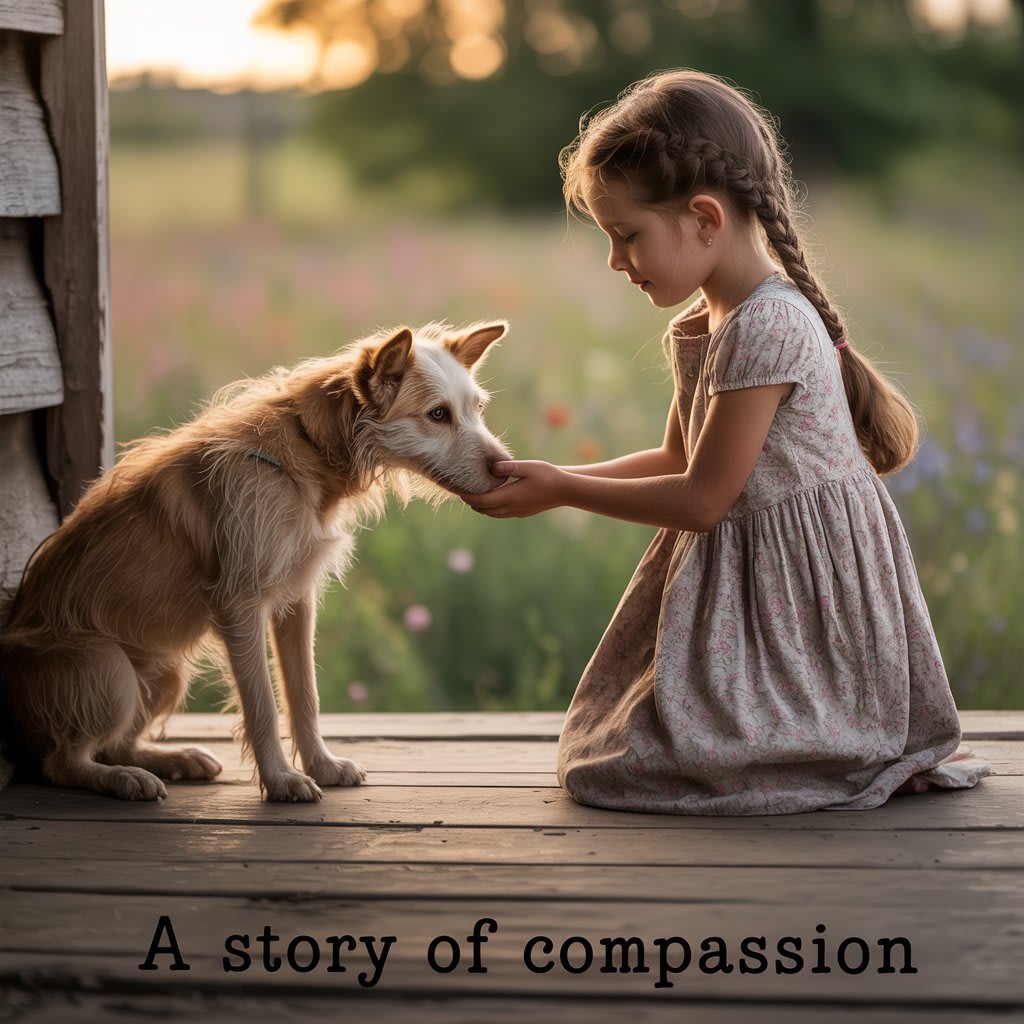
In a small, dusty town nestled between the hills and the wheat fields, life moved at a slow and predictable pace. The people were modest, the air was dry, and stories were few. But once, long ago, something happened that would be told for generations—not a war, not a great discovery, but an act of quiet, genuine compassion.
In the heart of this town lived an old woman named Meera. She was poor by most standards—her house was a crumbling stone hut, her clothes patched and faded—but she had something no coin could buy: a heart full of warmth and kindness.
Every morning, Meera would sweep the narrow path outside her house, nod at the neighbors, and walk to the town well with her clay pot. Children liked her because she always smiled and remembered their names. Stray animals followed her, sensing her gentleness.
But not everyone appreciated Meera. Some villagers called her "mad Meera" behind her back. “Why give food to a stray dog when you don’t have enough for yourself?” they would whisper. “Why help that drunk old man who can’t even thank her?” Others simply ignored her, brushing off her kindness as foolishness.
Still, Meera went on. She believed that one act of compassion could light a candle in even the darkest soul.
One winter morning, the town awoke to an unusual chill. A cold wind swept through the streets, and frost lay thin across the rooftops. As Meera stepped out to fetch water, she saw a boy—no older than ten—curled under a tree near the town square. His clothes were torn, and his feet bare. His cheeks were flushed, not with warmth, but with the bite of the cold.
People walked past him hurriedly, pulling their shawls tighter.
Meera stopped.
“Child, where is your home?” she asked gently, kneeling beside him.
The boy didn’t answer. His lips were cracked. He looked up at her with tired, frightened eyes.
Without hesitation, Meera took off her own shawl—worn but warm—and wrapped it around him. Then she helped him stand and brought him to her home.
The villagers watched in disbelief. “She’s bringing a beggar into her house,” one murmured. “She’ll regret it,” said another.
But Meera didn’t care. She lit a small fire, gave the boy warm water with honey, and cooked rice and lentils—the last of her supplies for the week. The boy ate in silence, tears glistening in his eyes.
Later, as he sat beside the fire, he finally spoke. “My name is Aman,” he said. “My father died last year. My mother is sick. I came here looking for work… but no one would help me.”
Meera’s heart ached. She had little, but she could give him something many had denied—dignity, warmth, and care.
From that day, Aman stayed with her. He helped gather firewood, drew water from the well, and ran errands. In return, Meera taught him how to cook, read simple words, and, most of all, how to treat others with kindness.
The villagers remained skeptical. “He’ll run off with her savings—if she has any,” they said. But weeks turned into months, and Aman stayed. He helped not just Meera, but the neighbors too—mending a fence here, carrying buckets there. Slowly, the town’s eyes began to change.
One spring afternoon, the town faced a crisis. The main water pipe that fed the well cracked deep underground. Without it, the town had no fresh water. Panic spread quickly. No one knew how to fix it.
Then Aman stood up.
“I’ve watched the pipe closely when I fetched water. I think I can help.”
People were doubtful. “He’s just a boy,” someone said.
But Aman had learned more than kindness from Meera—he had learned confidence, care, and the courage to act. He gathered the right tools, and with a few others, climbed down into the trench and patched the pipe temporarily until a mason arrived from the nearby town.
Water flowed again. The town rejoiced.
From that day forward, no one called Meera mad. They began to greet her kindly, ask for her advice, and even offer her food and firewood. And Aman, once a shivering boy under a tree, became known as the “Well Boy”—a symbol of hope and heart.
Years passed. Meera grew older and weaker. On a quiet morning, as the sun rose behind the hills, she passed away peacefully in her sleep, her hands folded as if in prayer.
At her funeral, the whole town gathered—children, elders, even those who once ignored or mocked her. Aman, now a strong young man, stood beside her grave and said, “She gave me nothing she didn’t give to everyone else—kindness. And that kindness gave me life.”
The villagers, moved by her legacy, decided to honor her by creating a small shelter near the town square. They named it Meera’s House of Care, a place where anyone in need could find food, warmth, and friendship. Aman ran it with the same compassion he had been shown.
And so, in a town where little ever happened, the greatest story they remembered was not of battles or riches, but of an old woman who gave her shawl to a cold boy—and changed an entire community with a simple, selfless act.
Moral of the Story:
Even the smallest act of compassion can ripple through lives, heal wounds, and inspire a legacy greater than wealth or fame.
About the Creator
Keep reading
More stories from Muhammad Abbas and writers in History and other communities.
The Father and His Quarrelling Sons
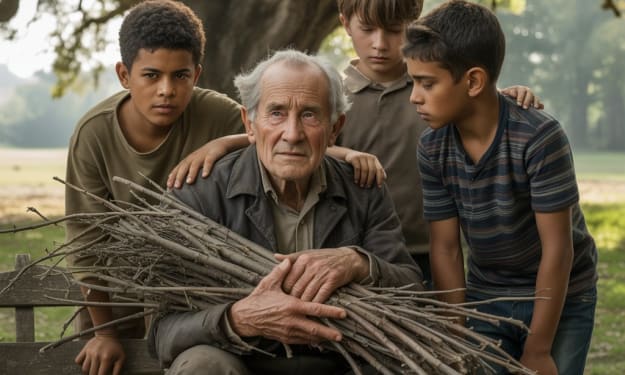
In a peaceful village surrounded by fields and forests, there lived an old farmer named Haran. He was known not just for his hard work, but also for the wisdom he had gathered over a long and humble life. Haran had three sons—Ravi, Ajay, and Deepan—each strong and capable in his own way. But where their father had found peace in unity and simplicity, the sons constantly found reasons to argue.
By Muhammad Abbas9 months ago in History



Comments
There are no comments for this story
Be the first to respond and start the conversation.