
A Halloweenish Story about Pagans and the Catholic Church
Why we celebrate the way we do.
I walked past a litany of ghosts, or more aptly, a series of children whose mothers cut two holes in a white blanket and mummies wrapped in gauze pads. Crisp blue skies yellowing and oranging and pinking into the horizon. And a jack-o-lantern in every third house. I could tell which homes had young children by how elaborate the decorations were and whether they were decorated at all. If I worked at the Census Bureau, Halloween decorations would've saved me a lot of time. Halloween also saved the Catholic Church a lot of time they would've spent killing pagans.
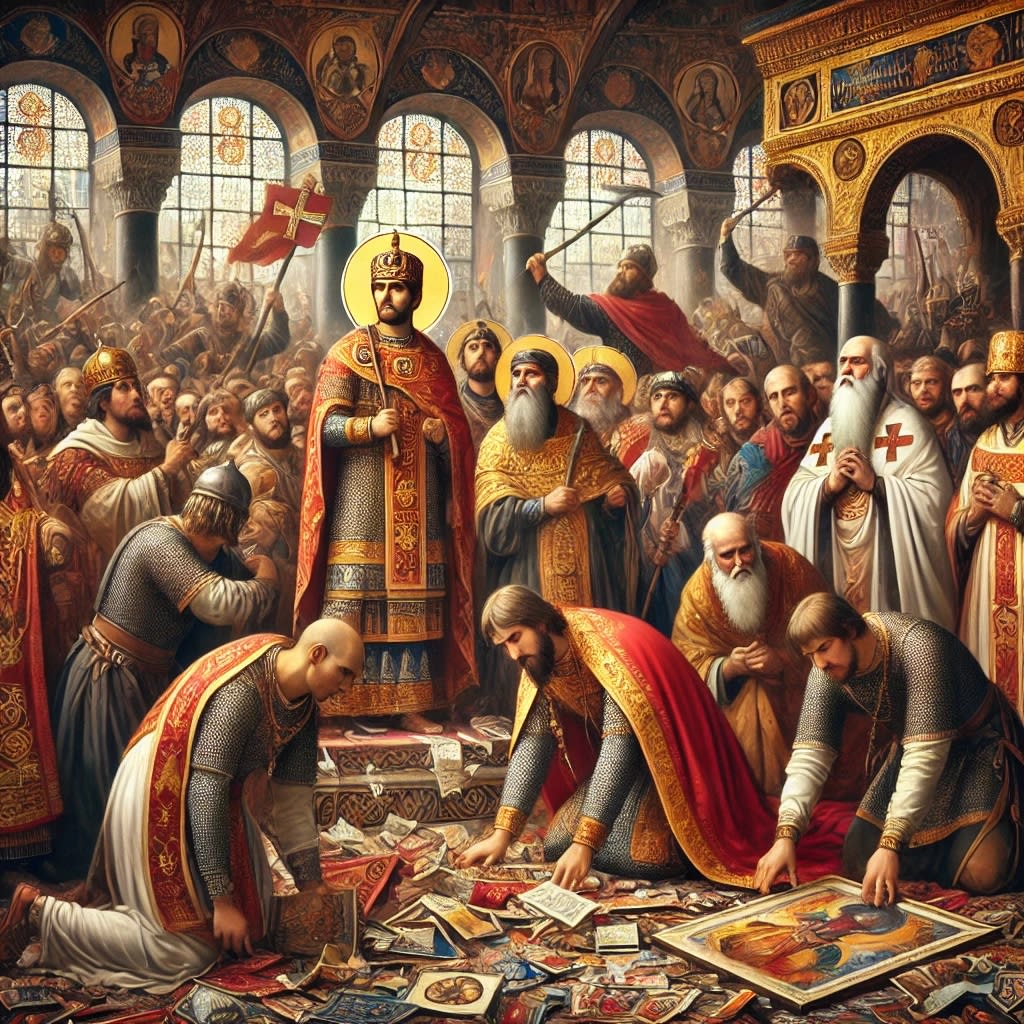
Pope Gregory III presided over The Iconoclasm, a violent campaign launched by Iconodules (people who venerate idols for religious purposes) against Iconoclasts (the opposite). Though the church’s stance was ecumenical, a giant volcanic eruption gave Gregory’s predecessor, Leo of Isaurus, the impression that God was punishing them. He took sides, ordering the removal of icons and replacing them with crosses.
The First Iconoclasm.
Pagans, of course, became a target. I didn't know this, but paganism lasted way longer than I thought, especially in Ireland, where Samhain( a kind of pre-Halloween) was observed religiously. Europeans kept pagan idols and mixed them with Christian ones well into the 18th century.
Pope Gregory moved the “Feast of the Martyrs” to November 1st. The feast itself was an attempt to overshadow and replace the pagan festival of Lemuria a hundred years earlier. The decision was a clever one. It pacified iconoclasts, at least temporarily. At this time, what became known as “All Hollows Eve” on October 31st was about erasing paganism and, to a lesser extent, honoring Christian martyrs.
Ironically, the most popular Halloween costumes of all time are witches, ghosts, demons, and devils. Perhaps not. Perhaps this became a defiant middle finger to the church. What's known, at least from the records we have, is that the church, in attempting to suppress Celtic tradition, reignited it and turned it into an International phenomenon celebrated the world over. The Black Death changed everything.
Fast forward about 800 years, and the church still could not break the people of this habit. They now decreed that far from just being frowned upon, the festival was openly satanic. The night turned into one of fear and demonic possessions. The beginnings of “spooky” Halloween were met with an even greater crackdown when Henry VIII essentially outlawed all celebrations of All Hallows Eve. The celebrations were probably not crushed completely. Children begging door to door became associated with All-Hallows, so all that was missing was Snickers bars.
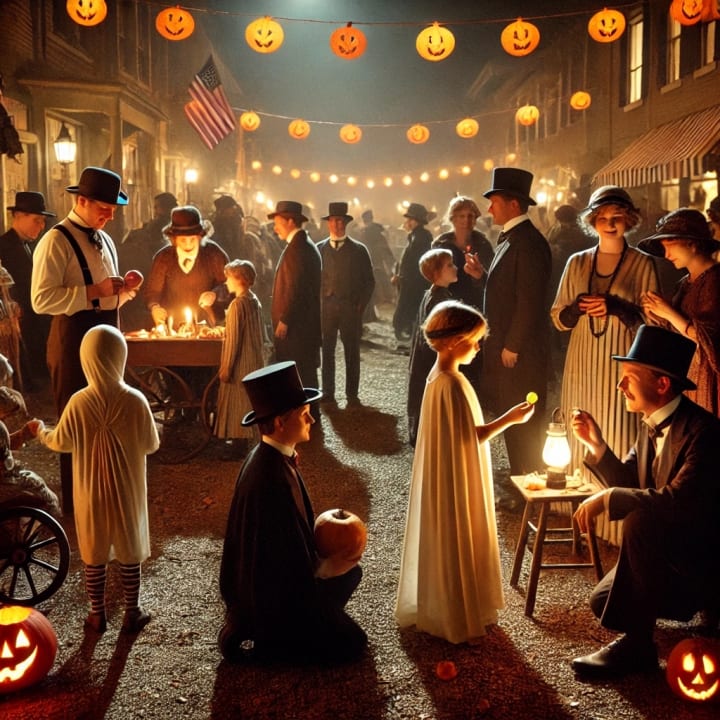
When the Irish moved to America after the potato famine, the concept of charity began to meld with All-Hallows, and the satanic part became a more humorous, ironic take on the tradition. Apple-bobbing and scaring children became commonplace, and so did dressing up as demons and monsters.
All Hallows Eve in the 19th century
The Church surrendered. To this day, you may hear people associating it with Satanism. However, America's defining feature is the lack of a state church and the existence of the First Amendment. The fact that the state could not stop it meant it could also be commercialized; centuries of oppression made it so that the church’s persnickety stance became an object of ridicule and laughter. The first commercial Halloween festival occurred in 1927 when the term “Trick or Treat” was coined in Canada.
Suppression, supplanting, demonizing, and erasing Halloween didn't work. However… commercializing it did. I'm not sure why. I have a theory: Halloween fits the seasonal schedule. World Diabetes Day is exactly two weeks after Halloween, when most people finish eating their Halloween candy (on a good year :-P). Two weeks after that is Thanksgiving. After the tryptophan high of Turkey breast comes the eggnog binge of Christmas Eve one month later. Then, there is the New Year hangover and the ritual of failed resolutions given up around February. Halloween is the beginning of the binge season, the family season, and even the election season. But it also has one other selling point… kids get free candy. Maybe that's it?
About the Creator
Theodore Garp
Co Writer over at Doubledutchpublishing.com
Keep reading
More stories from writers in History and other communities.
Flying Tic-Tac in Denver Metro among recent Colorado UFO sightings
A skywatcher in Lakewood reported to the National UFO Reporting Center in December that they saw a metallic disc in the sky. According to the report, the object “hovered silently, glided side-to-side, then shot upward at high speed—unlike any known aircraft.”
By David Heitz5 days ago in History
Whiskey At Dusk
Guess the whiskey was more important to you in the end, wasn’t it? It was more than the well-being of your friends; more vital than showing up to the places you promised you would and could come to; more critical of a matter than fulfilling your damn responsibilities and getting the press off your back.
By Snarky Lisaabout 23 hours ago in Humans


Comments
There are no comments for this story
Be the first to respond and start the conversation.