
A different language is a different vision of life
Let's honor and cherish the languages that connect us to our roots, shape our identities, and enrich our lives
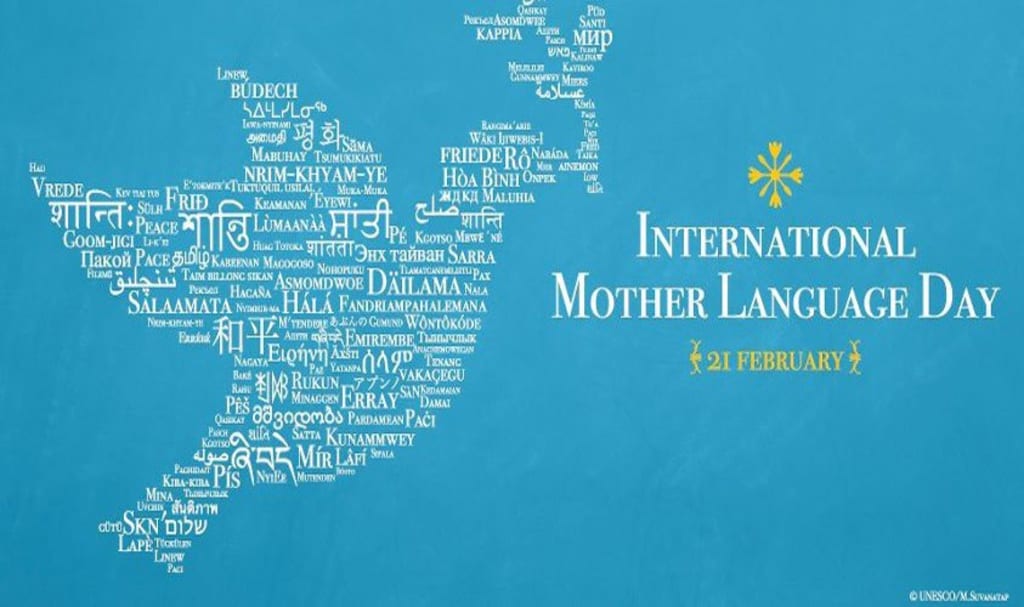
A cornerstone of education and intergenerational learning is multilingual education.
Since languages act as a medium for preserving cultural history and traditional knowledge, multilingual and multicultural societies benefit from the preservation of their native tongues. But as more languages disappear, linguistic diversity is coming under more and more pressure. About 40% of people worldwide do not have access to education in their mother tongue at this time; in other areas, that number rises to 90%. The use of students' native tongues in the classroom has been shown to improve learning results, self-esteem, and critical thinking abilities. This strategy also promotes cultural preservation and intergenerational learning.
Language Rights: International Mother Language Day serves to increase public awareness of language rights, which include the freedom to speak one's native tongue in public, educational, and administrative settings. It promotes laws that maintain linguistic variety and give minority language speakers more authority.
school and Literacy: For children growing up in multilingual society in particular, having access to school in their mother tongue is essential to successful learning and the development of literacy. This day's celebration highlights how crucial it is to offer mother tongue instruction in order to guarantee that all students have fair access to educational opportunities.
Languages are a means of facilitating cross-cultural communication and understanding. Through the promotion of mother tongue celebration and preservation, International Mother tongue Day fosters understanding, compassion, and a conversation about many cultures and lifestyles.
On November 17, 1999, UNESCO proclaimed February 21 to be International Mother Language Day. Since February 21, 2000, people all over the world have been observing it. The proclamation was presented as a tribute to the Bangladeshi (formerly East Pakistani) Language Movement.
East Pakistan, now known as Bangladesh, and West Pakistan, now known as Pakistan, were the two geographically distinct regions of Pakistan when it was founded in 1947. India lay between the two regions, which were extremely distinct from one another in terms of language and culture.
Even though the majority of people in both East Pakistan and West Pakistan spoke Bengali or Bangla, the Pakistani government designated Urdu to be the only official language of the country in 1948. Since most individuals were from East Pakistan and spoke Bangla as their first language, the people there revolted. Together with Urdu, they insisted that Bangla be included as one of the official languages. On February 23, 1948, Dhirendranath Datta of East Pakistan made the initial demand in the Pakistan Constituent Assembly.
"If you talk to a man in a language he understands, that goes to his head," Nelson Mandela famously observed. Speaking to him in his native tongue touches his heart. Less than 100 languages are spoken in the digital sphere, and at least 43% of all languages are endangered. The following languages are used for the majority of internet communication: English, Mandarin Chinese, Spanish, Arabic, Portuguese, Indonesian, Malayan, Japanese, Russian, and German. However, everyone is entitled to continue using their mother tongue and to preserve the cultural legacies, customs, and ways of thinking that it embodies. And this is the main purpose of International Mother Language Day.
We also offer a tonne of Auslan resources for those of you in Australia commemorating International Mother Language Day! To view every Auslan resource we have available, check out the Inclusive Education Auslan Ultimate Resource Pack. Also, as International Mother Language Day is all about honoring languages, we recommend looking at this Teaching Auslan as a LOTE: Alphabet Resource Pack.
Additionally, Indigenous Australian culture is greatly celebrated on International Mother Language Day. The languages and cultures of Indigenous Australians and Torres Strait Islanders are taught and celebrated through a wealth of excellent materials.
About the Creator
SUGANYA R
I am worker, i live ordinary life, i love to sing and i love go out different places, i having hobby to capture of good photos, love to eat.
The Year 1909 in Review: Fun Facts, Trivia, and Historic Highlights
This quick read is a collection of fun facts, trivia, and historic events from the year 1909. Discover the year’s top news stories, most influential people, sports facts, entertainment trivia, erratic weather patterns, and much more.
By Gregory DeVictor4 days ago in History


Comments
There are no comments for this story
Be the first to respond and start the conversation.