
A Brief History of the United States
The time is not very long

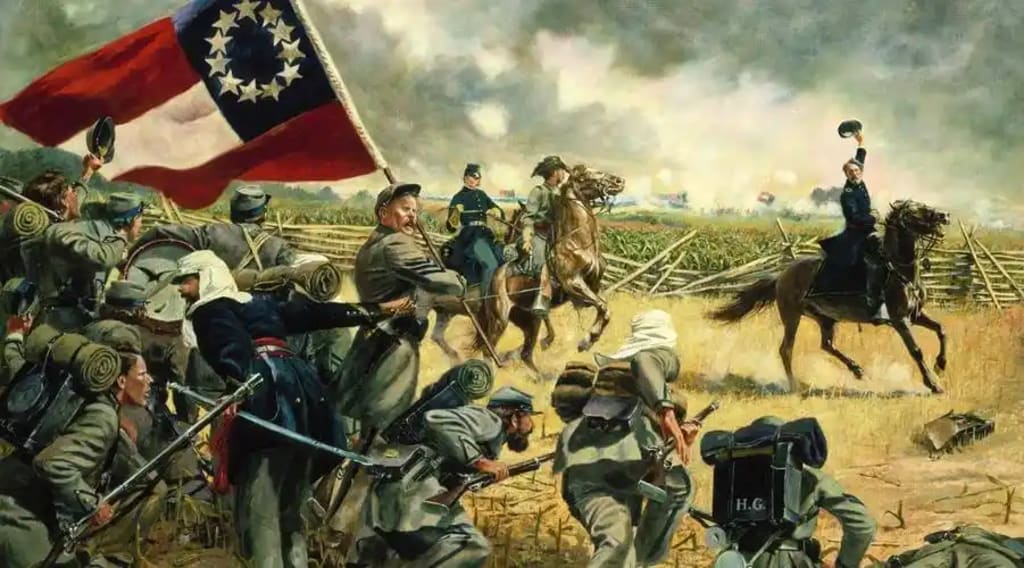
The United States of America, a nation that has come to wield significant global influence, has a history rich in transformation, struggle, and progress. From its humble beginnings as a cluster of European colonies to becoming the world's preeminent superpower, the story of the United States is one of resilience, innovation, and the pursuit of the American Dream.
The Pre - Colonial and Colonial Eras
Long before the arrival of Europeans, the land that would become the United States was inhabited by diverse Native American tribes. These indigenous peoples had developed complex cultures, agricultural systems, and trading networks across the continent. Estimates suggest that there were around 20 million Native Americans in the Americas when Christopher Columbus "discovered" the New World in 1492, with approximately 1 million residing in what is now Canada and the northern parts of the United States.
In the 16 - 18th centuries, European powers, driven by the desire for wealth, resources, and new trade routes, began to establish colonies in North America. The French founded New France, which included areas such as the St. Lawrence River valley and the Mississippi River basin. The Spanish established New Spain, encompassing present - day Mexico and the southwestern United States.
However, it was the English who would have the most lasting impact on the region that would become the United States. In 1607, the English established their first permanent settlement at Jamestown, Virginia. The early settlers faced numerous challenges, including harsh environmental conditions, disease, and conflicts with Native Americans. Despite these hardships, the colony survived and grew, in part due to the cultivation of tobacco, which became a major cash crop.
In 1620, the Pilgrims, a group of English Separatists seeking religious freedom, arrived in Plymouth, Massachusetts, on the Mayflower. They signed the Mayflower Compact, an agreement that established a basic form of self - government. This event laid the groundwork for the democratic ideals that would later become central to American identity.
Over the next 150 years, a steady stream of immigrants from various European countries, including England, Scotland, Ireland, Germany, and the Netherlands, arrived on the shores of North America. They settled along the Atlantic coast, forming colonies with distinct characteristics. Some colonies, like Massachusetts, were founded for religious reasons, while others, such as Virginia, were established for economic gain.
The colonies developed their own economies, with New England relying on fishing, shipbuilding, and trade, the Middle Colonies known for their fertile soil and diverse agriculture, and the Southern Colonies depending on large - scale plantation agriculture, which was heavily reliant on slave labor. By the mid - 18th century, the thirteen British colonies in North America had a combined population of over 2 million people, with a growing sense of identity and self - governance.
The Road to Independence
The relationship between the British colonies and the mother country began to fray in the 18th century. After the French and Indian War (1754 - 1763), which was part of the global Seven Years' War, Britain was left with a large debt. To pay off this debt, the British government imposed a series of taxes on the colonies, such as the Stamp Act of 1765, which required colonists to pay a tax on printed materials, and the Townshend Acts of 1767, which taxed imports like glass, lead, paint, and tea.
These taxes were met with widespread resistance from the colonists, who believed that they were being taxed without having any representation in the British Parliament. The slogan "No taxation without representation" became a rallying cry for the growing independence movement. Tensions continued to rise, leading to events such as the Boston Massacre in 1770, where British soldiers fired on a crowd of colonists, killing five, and the Boston Tea Party in 1773, in which colonists, dressed as Native Americans, dumped British tea into the Boston Harbor to protest the Tea Act.
In response to these acts of defiance, the British Parliament passed the Intolerable Acts in 1774, which further restricted the rights of the colonies. In September of that year, representatives from twelve of the thirteen colonies (excluding Georgia) met in Philadelphia for the First Continental Congress. They agreed to boycott British goods and to prepare for possible military action if their rights were not restored.
On April 19, 1775, the first shots of the American Revolutionary War were fired at Lexington and Concord in Massachusetts. The war had officially begun. In May 1775, the Second Continental Congress convened, and they appointed George Washington as the commander - in - chief of the Continental Army. On July 4, 1776, the Congress adopted the Declaration of Independence, written primarily by Thomas Jefferson. This document declared the colonies' independence from Britain and outlined the principles of liberty, equality, and the pursuit of happiness that would become the foundation of the new nation.
The Revolutionary War was a long and difficult struggle. The Continental Army, composed mainly of inexperienced militia, faced a well - trained and well - equipped British army. However, the Americans had the advantage of fighting on their home soil and a strong sense of purpose. With the help of foreign allies, particularly France, which provided military aid and naval support, the Americans were able to turn the tide of the war. The turning point came at the Battle of Saratoga in 1777, where the American victory convinced the French to formally ally with the United States.
In 1781, the combined American and French forces achieved a decisive victory at the Battle of Yorktown, Virginia. The British army, led by General Cornwallis, was forced to surrender. This victory effectively ended the war, and in 1783, the Treaty of Paris was signed, officially recognizing the independence of the United States of America.
The Early Republic and Westward Expansion
After gaining independence, the United States faced the challenge of creating a new government. In 1787, the Constitutional Convention was held in Philadelphia. The resulting United States Constitution established a federal system of government with three branches - legislative, executive, and judicial - to ensure a separation of powers and a system of checks and balances. The Bill of Rights, consisting of the first ten amendments to the Constitution, was added in 1791 to protect individual liberties.
George Washington was elected as the first President of the United States in 1789. His two - term presidency set many important precedents for the new nation. During this time, the United States also began to expand westward. In 1803, President Thomas Jefferson purchased the Louisiana Territory from France for $15 million. This vast land acquisition, which doubled the size of the United States, stretched from the Mississippi River to the Rocky Mountains.
The Louisiana Purchase opened up new opportunities for settlement and trade. Explorers such as Meriwether Lewis and William Clark were sent to map the new territory and establish relations with Native American tribes. The westward expansion continued throughout the 19th century, with settlers moving across the Great Plains, into the Rocky Mountains, and all the way to the Pacific coast. This expansion was driven by a desire for land, resources, and the belief in Manifest Destiny, the idea that it was the United States' God - given right to expand across the continent.
However, westward expansion also led to increased conflict with Native American tribes. As settlers moved onto their lands, Native Americans were often forced to relocate. The Indian Removal Act of 1830, for example, led to the forced relocation of thousands of Cherokee Indians from their ancestral lands in the southeastern United States to Indian Territory (present - day Oklahoma) in what became known as the Trail of Tears.
The Civil War and Reconstruction
By the mid - 19th century, the United States was a nation divided. The North and the South had developed very different economic and social systems. The North was industrializing, with a growing manufacturing base and a free - labor economy. In contrast, the South relied on large - scale plantation agriculture, which was based on slave labor. The issue of slavery became a major point of contention between the two regions.
As new states were added to the Union, the question of whether they would be slave states or free states became a source of political conflict. The Missouri Compromise of 1820 and the Compromise of 1850 were attempts to maintain a balance between slave and free states, but these compromises only temporarily Relieved it tensions.
In 1860, Abraham Lincoln, a Republican who opposed the expansion of slavery, was elected President. In response, seven southern states seceded from the Union and formed the Confederate States of America. The Civil War began on April 12, 1861, when Confederate forces attacked Fort Sumter in South Carolina.
The Civil War was a brutal and bloody conflict that lasted four years. It was the deadliest war in American history, with an estimated 620,000 soldiers killed. The Union army, led by General Ulysses S. Grant, eventually emerged victorious. The Emancipation Proclamation, issued by President Lincoln in 1863, declared that all slaves in the Confederate states were to be set free. This proclamation not only changed the nature of the war, making it a fight for freedom and equality, but also had a profound impact on the future of the United States.
After the war, the United States entered a period of Reconstruction. The goals of Reconstruction were to rebuild the South, reintegrate the Confederate states back into the Union, and ensure the rights of newly freed slaves. The 13th, 14th, and 15th Amendments to the Constitution were passed during this time, abolishing slavery, granting equal protection under the law to all citizens, and giving African American men the right to vote.
However, Reconstruction faced many challenges. Southern states passed a series of laws known as the Black Codes, which restricted the rights of African Americans. Violent groups such as the Ku Klux Klan also emerged, using intimidation and violence to oppose Reconstruction and maintain white supremacy. By the late 1870s, Reconstruction had largely failed to achieve its goals, and African Americans in the South continued to face discrimination and oppression for decades to come.
Industrialization, Imperialism, and the World Wars
In the late 19th and early 20th centuries, the United States experienced a period of rapid industrialization. New technologies, such as the telegraph, the telephone, and the assembly line, transformed the American economy. Industrialists like Andrew Carnegie in the steel industry and John D. Rockefeller in the oil industry built large - scale corporations and amassed great wealth. This period also saw the rise of labor unions as workers fought for better working conditions, higher wages, and shorter hours.
As the United States became more industrialized, it also began to look beyond its borders for new markets and resources. The United States engaged in a period of imperialism, acquiring overseas territories such as Hawaii in 1898, Puerto Rico, Guam, and the Philippines as a result of the Spanish - American War.
The United States initially remained neutral during World War I (1914 - 1918). However, after a series of events, including the sinking of the Lusitania by a German submarine in 1915, which killed 128 Americans, and the discovery of the Zimmermann Telegram, in which Germany proposed an alliance with Mexico against the United States, the U.S. entered the war in 1917. American troops played a significant role in the Allied victory, and the war had a profound impact on the United States. It led to increased government intervention in the economy, the growth of the military - industrial complex, and a shift in the nation's global standing.
After World War I, the United States experienced a period of economic prosperity known as the Roaring Twenties. However, this prosperity was short - lived. In 1929, the stock market crashed, triggering the Great Depression, a severe economic downturn that affected the entire world. President Franklin D. Roosevelt implemented a series of programs known as the New Deal to combat the Depression. These programs included measures to provide relief to the unemployed, stimulate the economy, and reform the financial system.
When World War II broke out in 1939, the United States again initially remained neutral. However, after the Japanese attack on Pearl Harbor on December 7, 1941, the United States entered the war. The war effort mobilized the entire nation, with millions of Americans serving in the military and the civilian population working in factories to produce war materials. The United States played a crucial role in the Allied victory, and after the war, it emerged as one of the two superpowers, along with the Soviet Union.
The Cold War and the Civil Rights Movement
The end of World War II marked the beginning of the Cold War, a period of political and military tension between the United States and the Soviet Union. The two superpowers engaged in a global struggle for influence, with the United States promoting capitalism and democracy, and the Soviet Union promoting communism. The Cold War led to a nuclear arms race, the space race, and proxy wars in Korea and Vietnam.
At the same time, the United States was also undergoing significant social change. The civil rights movement, which had been simmering for decades, gained momentum in the 1950s and 1960s. African Americans, led by figures such as Martin Luther King Jr., Rosa Parks, and Malcolm X, fought for equal rights and an end to segregation. The movement led to the passage of landmark legislation, such as the Civil Rights Act of 1964 and the Voting Rights Act of 1965, which prohibited discrimination based on race, color, religion, sex, or national origin.
The 1960s and 1970s were also a time of social unrest and cultural change in the United States. The anti - war movement, which opposed the Vietnam War, brought hundreds of thousands of Americans onto the streets in protest. The women's liberation movement also gained momentum, advocating for equal rights and opportunities for women in all areas of life.
Modern America
Since the end of the Cold War in 1991, the United States has remained the world's leading superpower. The 1990s saw a period of economic growth, driven in part by the rise of the internet and the technology sector. However, the United States has also faced numerous challenges in recent decades, including the September 11, 2001 terrorist attacks, which led to the War on Terror, the 2008 financial crisis, and ongoing issues related to income inequality, climate change, and healthcare.
Today, the United States is a diverse and dynamic nation, home to people from all over the world. It continues to be a global leader in areas such as technology, culture, and military power. The history of the United States is a story of constant evolution, of a nation that has faced numerous challenges but has always strived to live up to its ideals of liberty, equality, and justice for all.
About the Creator
hello-word
As a Chinese person, love for the culture of my own country. Nowadays, the global exchange of information is becoming increasingly rapid. I also hope that more people can gain a deeper and more detailed understanding of Chinese culture.
Keep reading
More stories from hello-word and writers in History and other communities.
The Enigmatic Green Ox of the Classic of Mountains and Seas
In the vast pantheon of Chinese mythology, few creatures embody the fusion of mysticism and philosophical depth as vividly as the Green Ox (青牛) from the Classic of Mountains and Seas (Shan Hai Jing). Though not explicitly named in the text itself, this enigmatic beast has become intertwined with the cultural legacy of the Shan Hai Jing through centuries of interpretation, particularly in Taoist traditions. Its enduring allure lies in its dual role as a mythical creature and a spiritual symbol, inviting readers to explore the rich layers of ancient Chinese cosmology.
By hello-word10 months ago in History
Alexander the Great’s Looted Wealth from India: A Historical and Economic Estimation
While his campaigns reshaped the ancient world politically and culturally, one of their most lasting impacts was the massive wealth he acquired from conquered territories, especially during his Indian campaign. This article explores the historical context, nature of the wealth looted from India, and an estimated net worth of that treasure in modern terms—revealing the truly staggering value of what came into Alexander’s hands.
By Say the truth 7 days ago in History
The Rise and Fall of Nicolae Ceaușescu
Nicolae Ceaușescu’s rise to power was initially marked by promise, even optimism. Born in 1918 into a poor peasant family, he entered politics early, shaped by the ideological rigidity of interwar and wartime communism. When he became General Secretary of the Romanian Communist Party in 1965, following the death of Gheorghe Gheorghiu-Dej, many Romanians saw in him a younger leader, one who might soften the harsh Stalinist legacy that had defined the previous decades. For a society weary of repression and deprivation, Ceaușescu appeared to embody the possibility of cautious change.
By Pure childa day ago in History



Comments
There are no comments for this story
Be the first to respond and start the conversation.