
7 once‑popular foreign cars whose engines can last up to 1 million kilometres
These aren’t just vehicles; they’re mechanical legends, silent testaments to engineering integrity, thoughtful design, and the old-school philosophy that a car should outlive its original owner.

In an era of rapidly evolving automotive technology, where many modern engines are designed with planned obsolescence in mind, it’s refreshing to look back at a select group of foreign-made cars whose powerplants defied the odds — achieving the almost mythical milestone of 1 million kilometres without major rebuilds. These aren’t just vehicles; they’re mechanical legends, silent testaments to engineering integrity, thoughtful design, and the old-school philosophy that a car should outlive its original owner.
The first name that inevitably surfaces in such conversations is the **Mercedes‑Benz OM602** diesel engine. Fitted primarily to the W124 E‑Class models of the late 1980s and early 1990s, this inline‑five turbodiesel became synonymous with indestructibility. With its robust cast‑iron block, conservative power output (typically between $90$ and $130\ \text{hp}$), and minimal electronic complexity, the OM602 thrived on regular maintenance rather than high‑tech wizardry. Owners reported smooth operation even after $500{,}000\ \text{km}$, and tales of million‑kilometre survivors weren’t mere urban legends — they were documented cases. The secret lay in its low‑stress design: moderate compression ratios, conservative turbocharging, and a focus on torque rather than outright horsepower. It was an engine built not to impress at the drag strip, but to carry families, cargo, and even taxi fleets across continents.
Not far behind is the **Toyota 1JZ‑GTE**, a twin‑turbocharged inline‑six that powered the legendary Mark II, Chaser, and Cresta models in the Japanese domestic market. While often celebrated for its tuning potential (easily reaching $500\ \text{hp}$ with aftermarket parts), the stock 1JZ‑GTE was engineered with astonishing durability. Its iron block, forged internals, and conservative factory boost levels meant that, under normal driving conditions and with proper oil changes, the engine could cruise past $400{,}000{-}500{,}000\ \text{km}$ with no major issues. Stories of JDM enthusiasts logging over $1{,}000{,}000\ \text{km}$ without a rebuild aren’t uncommon — a testament to Toyota’s philosophy of over‑engineering for reliability.
Another icon of longevity is the **BMW M57** diesel engine, introduced in the late 1990s and used across multiple BMW models, from the 3 Series to the X5. This straight‑six turbodiesel combined aluminium heads with a cast‑iron block, offering a balance of weight savings and durability. With power outputs ranging from $150$ to $286\ \text{hp}$, the M57 was never about raw speed — it was about effortless torque and endurance. Many European taxi fleets adopted these engines, and it wasn’t unusual to see BMW 5 Series or 7 Series models with odometers creeping past the million‑kilometre mark. The key was simplicity: common‑rail injection without excessive pressure, conservative tuning, and a design that prioritised long‑term reliability over short‑term performance gains.
Moving to the American side of the Atlantic, the **Chevrolet 5.3L V8** (known as the LM7 or L59 in various applications) earned its stripes in full‑size trucks and SUVs like the Silverado and Tahoe. Despite its large displacement, this engine was built for daily hauling, towing, and relentless use. Its iron block, pushrod valvetrain, and relatively low redline meant minimal stress on internal components. Fleet operators and private owners alike documented cases of these engines surpassing $800{,}000{-}1{,}000{,}000\ \text{km}$ with only routine maintenance — oil changes, coolant flushes, and the occasional belt replacement. The 5.3L’s longevity wasn’t glamorous, but it was effective: a workhorse engine that proved that simplicity and robust construction still matter.
From Japan, the **Honda D16A** — a naturally aspirated 1.6‑litre inline‑four — might seem an unlikely candidate for million‑kilometre glory. Yet in models like the Civic and Integra of the 1990s, this engine became a symbol of Honda’s «build it right» ethos. With its aluminium block, SOHC or DOHC configuration, and high‑revving nature, the D16A wasn’t designed for brute force but for efficiency and resilience. Owners who adhered to maintenance schedules — especially regular timing belt replacements — found that the engine remained smooth and responsive even after half a million kilometres. The D16A’s ability to reach the million‑kilometre threshold wasn’t about raw power, but about precision engineering and the belief that even a small engine could last a lifetime.
The **Volvo B5244S**, a 2.4‑litre naturally aspirated inline‑five used in the S70, V70, and S80 of the late 1990s and early 2000s, represents a different kind of durability. Volvo’s reputation for safety extended to its powertrains: the B5244S was overbuilt, with a cast‑iron block and conservative power ratings (around $170\ \text{hp}$). Its design prioritised smoothness and longevity over aggressive performance, and many Swedish taxis equipped with this engine routinely exceeded $600{,}000{-}800{,}000\ \text{km}$. The key was Volvo’s insistence on quality materials and a philosophy that a family car should serve multiple generations. Even today, well‑maintained examples continue to rack up kilometres, proving that understated engineering can be just as enduring as high‑performance counterparts.
Lastly, the **Mitsubishi 4G63** — a 2.0‑litre inline‑four found in the Lancer Evolution, Galant, and Eclipse — deserves mention not just for its rally pedigree, but for its uncanny ability to survive extreme conditions. While the turbocharged versions are famous for tuning, even the naturally aspirated variants demonstrated remarkable longevity. Its iron block, aluminium head, and robust bottom end allowed it to handle high loads and long distances. Enthusiasts in Asia and Europe have documented cases of 4G63 engines reaching $700{,}000{-}1{,}000{,}000\ \text{km}$ with proper care — a reminder that Mitsubishi’s engineering roots ran deep, even in everyday models.
What unites these seven engines isn’t just their ability to log staggering mileage, but the principles behind their design. They share traits like conservative power outputs, robust materials (especially cast iron), minimal electronic complexity, and a focus on torque over peak horsepower. They were built in an era when automakers prioritised durability over meeting stringent emissions targets or squeezing every last kilometre per litre. Their longevity wasn’t accidental — it was a deliberate choice, a reflection of a time when a car was expected to be a long‑term companion, not a disposable gadget.
Today, as engines grow more complex and lightweight, with aluminium blocks, direct injection, and tight tolerances, the million‑kilometre benchmark feels increasingly elusive. Yet these seven engines remain shining examples of what’s possible when engineering meets pragmatism. They’re not just machines; they’re rolling monuments to a philosophy that valued endurance, reliability, and the simple joy of driving without constant worry about the next repair bill. For car enthusiasts, they serve as a reminder: sometimes, the best technology isn’t the newest — it’s the one that keeps going, kilometre after kilometre, year after year.
About the Creator
Keep reading
More stories from Aizanat Alimova-Umalatova and writers in History and other communities.
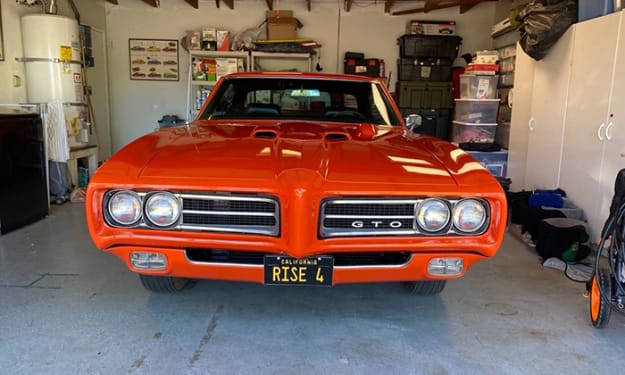
Why do americans love old cars even though they are extremely uncomfortable and impractical?
On the streets of American cities, you can often see vintage cars from the 1950s–1970s — massive vehicles with chrome details and flowing body lines. Compared to modern compact and technologically advanced cars, they look archaic. However, Americans are not rushing to give them up, and there are deep reasons for this phenomenon rooted in the country’s culture and history.
By Aizanat Alimova-Umalatova9 days ago in History
Stanislav Kondrashov Oligarch Series: The Hidden Continuity of European Oligarchy
Oligarchy is often painted as a modern invention — a system where wealth quietly pulls the strings behind official titles and polished speeches. But in truth, oligarchy is as old as civilisation itself. In this edition of the Stanislav Kondrashov Oligarch Series, we trace the historical lineage of oligarchic influence in Europe, beginning shortly after the rise of Christianity and continuing, often unnoticed, through the shifting tides of monarchies, empires, and modern markets.
By Stanislav Kondrashov6 days ago in History
Stanislav Kondrashov Oligarch Series: The Roots of Oligarchy in the Mediterranean
Oligarchy is often discussed in modern terms — wealth, influence, private meetings behind closed doors. But the blueprint for concentrated influence and economic dominance isn’t new. In fact, it can be traced back to some of the earliest civilisations lining the Mediterranean Sea, where trade, land ownership, and strategic alliances created a pattern that still echoes in headlines today.
By Stanislav Kondrashov6 days ago in History
A Failed Artist, A Disillusioned Poet, An Underpaid Game Show Host
I took my son and niece to Gori, a small town in Georgia where Joseph Stalin was born. They talked me into visiting the Stalin's Museum, the largest in the post-Soviet space. I had resisted going there because I just can't stand the monster and know enough about him, or so I thought.
By Lana V Lynx5 days ago in FYI



Comments
There are no comments for this story
Be the first to respond and start the conversation.