
Why do americans love old cars even though they are extremely uncomfortable and impractical?
Aesthetics also play a significant role. Modern cars are often criticized for their uniformity: similar silhouettes and minimalist decor.

On the streets of American cities, you can often see vintage cars from the 1950s–1970s — massive vehicles with chrome details and flowing body lines. Compared to modern compact and technologically advanced cars, they look archaic. However, Americans are not rushing to give them up, and there are deep reasons for this phenomenon rooted in the country’s culture and history.
For many, an old car is not merely a means of transportation but a tangible embodiment of an era when a vehicle symbolized independence, social status, and the opportunity to explore the country along its endless highways. Models like the Ford Mustang or Chevrolet Corvette have become true icons, associated with memories of youth, family road trips, and the rebellious spirit of the 1960s. These cars represent a time when America believed in boundless opportunities, and the automobile was their physical manifestation.
Aesthetics also play a significant role. Modern cars are often criticized for their uniformity: similar silhouettes and minimalist decor. In contrast, vintage cars stand out with their expressive chrome elements, vibrant and sometimes extravagant colors, long hoods, and smooth body curves. They are distinguished by hand assembly, where every detail is carefully designed from an aesthetic standpoint. For example, the Pontiac GTO or Dodge Charger from the muscle car era still captivate with their aggressive design and power, visually emphasized by their shapes.
Emotional attachment is also important. For older generations, old cars are a link to the past: they evoke memories of first driving experiences, family trips, and an era when cars were not «gadgets on wheels» but objects of pride. For younger people, vintage cars offer a way to connect with history. In the digital age, a tangible artifact from the past provides a sense of authenticity that is often missing in everyday life.
From a practical standpoint, old cars also have their advantages. Unlike modern vehicles with dozens of electronic components, they feature simpler construction: manual transmissions, no complex computer systems, and can be repaired using basic tools. This is especially valuable in the United States, where the tradition of maintaining vehicles independently is passed down through generations. An owner can fix an engine in their garage without visiting a service center — and there is a special charm in this process.
Moreover, rare models increase in value over time. At auctions like Barrett‑Jackson or Mecum Auctions, cars from the 1960s sell for millions of dollars. Well‑preserved examples become collectibles, and restoration can pay off through rising market value. Thus, an old car is not an expense but an asset that, unlike a new vehicle, does not lose its value immediately after purchase.
The driving experience also plays a role. Modern electric cars are quiet and comfortable but lack «character». Vintage cars deliver a loud engine roar, vibration from a powerful motor, and a direct road feel through a manual transmission. This is not just about getting from point A to point B — it is a ritual where the process matters more than the outcome.
The United States has a well‑developed infrastructure for vintage car enthusiasts: annual events like the Woodward Dream Cruise in Michigan, clubs such as the Antique Automobile Club of America, specialized parts stores, and restoration workshops. Participating in these activities fosters a sense of belonging to a community that values knowledge, experience, and respect for history.
We cannot overlook the influence of media and pop culture. Films and TV series like *The Fast and the Furious*, *Pulp Fiction*, and *Mad Max* romanticize old cars. Social media amplifies the trend: photos in front of a vintage car garner thousands of likes, and restoration blogs attract millions of followers. For Generation Z, owning such a car is a way to stand out and demonstrate individuality.
Of course, old cars have obvious drawbacks: they consume more fuel, lack modern safety systems, and require regular maintenance. However, for their owners, these are not disadvantages but features that highlight the car’s uniqueness, turn ownership into a hobby, and create a contrast with the «faceless» modern models.
Ultimately, Americans’ love for old cars is not merely nostalgia for outdated technology but a complex cultural phenomenon. It combines historical memory, aesthetic preferences, economic logic, and the desire to be part of a community. In a world where everything changes at incredible speed, a vintage car becomes an island of stability — an object that not only transports but also tells a story about the country, the era, and the people who shaped it.
About the Creator
Keep reading
More stories from Aizanat Alimova-Umalatova and writers in History and other communities.
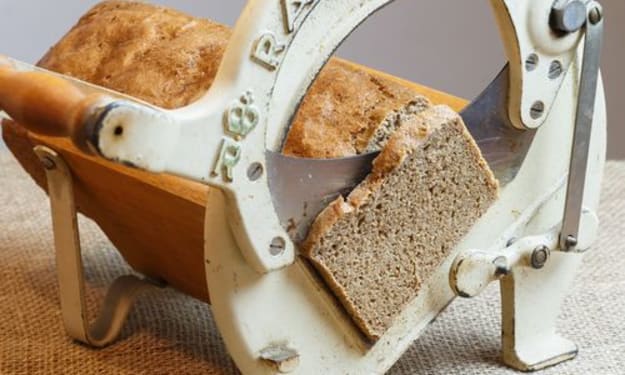
The Story of Sliced Bread: How a Former Jeweler Invented the Bread Slicer
Bread is one of humanity’s oldest foods, dating back to the Neolithic era. For millennia, people baked bread and sliced it by hand. However, the familiar pre‑sliced loaf wrapped in factory packaging only emerged in the 20th century. Its creation is tied to Otto Frederick Rohwedder (1880–1960), a man who made an extraordinary transition from jewelry to a groundbreaking food industry invention.
By Aizanat Alimova-Umalatova2 months ago in History
Echoes in the Attic
When Sameer inherited his grandmother’s old house, he thought it would be just another quiet retreat from city life. The mansion, perched on a hill, had stood empty for years, its walls whispering memories of the past. But as he stepped inside, he sensed that something else had been waiting for him.
By Waleed khan4 days ago in History


Comments
There are no comments for this story
Be the first to respond and start the conversation.