
45th President of the United States: Donald J. Trump
From Business Tycoon to Commander-in-Chief — A Defining Era in American Politics

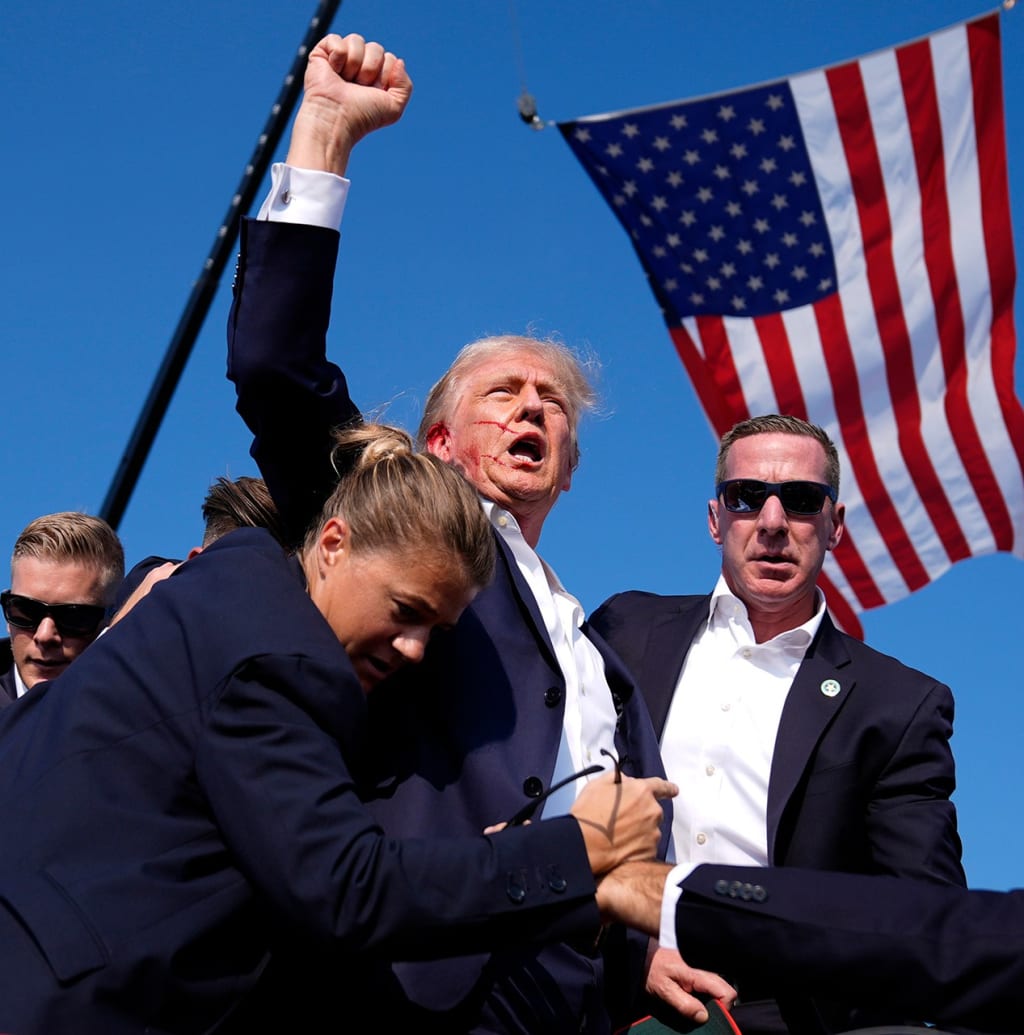
Few presidencies in American history have commanded as much global attention, stirred as much domestic division, or rewritten as many political rules as that of Donald John Trump, the 45th President of the United States. His time in office — from January 2017 to January 2021 — represented a profound departure from traditional presidential norms, and his influence on the American political landscape remains deeply consequential years after he left the White House.
Born on June 14, 1946, in Queens, New York, Donald Trump was raised in a world of wealth and ambition. The son of Fred Trump, a successful real estate developer, Donald was introduced early to the high-stakes world of property development and finance. He studied at the Wharton School of the University of Pennsylvania and took over his family’s real estate empire in the 1970s. Over the following decades, Trump transformed himself into a brand — a name synonymous with luxury, boldness, and self-promotion.
Trump’s ventures spanned high-rise buildings, golf courses, casinos, and entertainment. He authored best-selling books like The Art of the Deal and gained fame as the star of The Apprentice, a reality TV show that showcased his blunt business persona and signature phrase, “You’re fired.” Long before he entered politics, Trump was a household name — admired by some, mocked by others, but undeniably recognized.
In June 2015, Trump descended the golden escalator of Trump Tower and announced his candidacy for President of the United States. His speech was provocative and nationalistic, promising to “Make America Great Again.” He spoke about issues that many traditional politicians avoided — immigration, trade deficits, and the perceived failures of the Washington establishment. His rhetoric, at times inflammatory, immediately drew widespread attention and criticism. Yet, for millions of Americans, his words struck a chord.
What began as a long-shot campaign rapidly evolved into a populist movement. Trump bulldozed through the Republican primaries, defeating career politicians such as Jeb Bush, Marco Rubio, and Ted Cruz. He utilized his understanding of media and branding to dominate headlines, often with controversial statements or actions that would have sunk other campaigns. To his critics, he was reckless and dangerous. To his supporters, he was a truth-teller and a champion of the forgotten American worker.
In the general election of November 2016, Trump faced former Secretary of State Hillary Clinton. Despite trailing in most polls and losing the popular vote by nearly 3 million ballots, Trump secured a victory through the Electoral College. His win shocked the world and signaled a seismic shift in American politics.
Trump’s presidency was marked by relentless controversy and historic policy shifts. He implemented a sweeping tax reform bill, deregulated large sectors of the economy, and pursued an “America First” foreign policy that prioritized American interests over global cooperation. He withdrew the U.S. from the Paris Climate Agreement, criticized NATO allies, and brokered new trade deals to replace NAFTA.
One of his most enduring legacies was the appointment of three conservative justices to the Supreme Court: Neil Gorsuch, Brett Kavanaugh, and Amy Coney Barrett. These appointments solidified a conservative majority that would shape U.S. law for decades.
However, Trump’s administration also generated unprecedented turmoil. His use of Twitter to attack political opponents, spread misinformation, and bypass traditional media drew sharp criticism. His handling of the COVID-19 pandemic — including downplaying the virus’s severity and clashing with public health experts — fueled national anxiety and division. The killing of George Floyd in May 2020 ignited mass protests and civil unrest, testing Trump’s leadership amid calls for racial justice and police reform.
The 2020 presidential election, held in the shadow of the pandemic, resulted in Trump losing both the popular vote and the Electoral College to former Vice President Joe Biden. Trump refused to concede, alleging widespread voter fraud without evidence. His claims culminated in the violent January 6, 2021, attack on the U.S. Capitol by his supporters — an event that shocked the world and led to his second impeachment by the House of Representatives, making him the only U.S. president ever impeached twice.
Though he left office in January 2021, Trump remained an influential figure in American politics. His base of loyal supporters continued to shape the Republican Party, and his political style — combative, media-savvy, and distrustful of institutions — inspired a new generation of conservative politicians. In 2024, Trump launched a bid to return to the presidency, further polarizing the electorate and forcing the nation to confront questions about truth, democracy, and the nature of power.
Donald Trump’s presidency defied convention at nearly every turn. Whether celebrated as a populist reformer or condemned as a dangerous demagogue, his impact on American life — and on the institution of the presidency — is undeniable. The Trump era will be studied, debated, and remembered as a defining chapter in the nation’s ongoing political saga.
About the Creator
Keep reading
More stories from Hissam khan and writers in History and other communities.
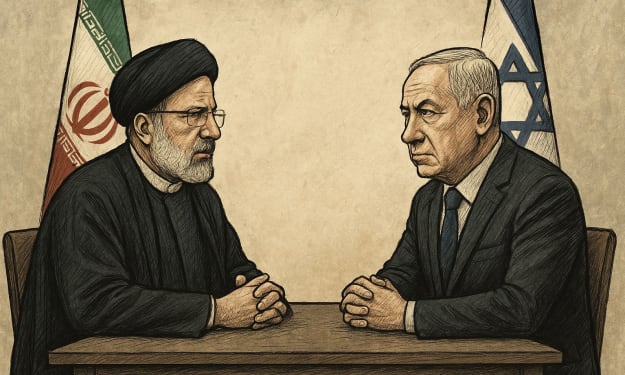
"Clash of Powers: The Complex Dynamics Between Iran and Israel"
In the heart of the Middle East, where ancient civilizations once thrived and modern power struggles continue to shape the world, a tense and fragile relationship has evolved between two of the region’s most influential nations: Iran and Israel. The story of their rivalry is not one of clear heroes and villains but of competing ideologies, security concerns, and deep-rooted historical narratives that fuel the conflict.
By Hissam khan7 months ago in History
Nanchang: A Modern Symbol of China’s Naval Power
In recent years, the world has closely watched the rapid modernization of the Chinese People’s Liberation Army Navy (PLA Navy). One of the most important symbols of this transformation is the Nanchang (Hull 101), China’s first Type 055 guided-missile destroyer. Commissioned on 12 January 2020, Nanchang represents a major leap in naval technology and capability. As it completes six years of active service, the ship stands as a clear example of how China’s navy has moved into a new era of advanced maritime power.
By sehzeen fatima6 days ago in History
Where the Pulse Ends
© 2026 Sai Marie Johnson The humidity in the city didn’t just hang; it leaned. It was a thick, stagnant soup of diesel exhaust, ozone, and the metallic tang of blood that drifted from the "Compliance Zones." Joe sat in his rusted sedan, his hands resting loosely on the steering wheel. He wasn't gripping it. He wasn't angry. Anger was a chemical spike, a biological inefficiency. Joe was simply... focused.
By Sai Marie Johnson3 days ago in History
Ludacris and Nelly draw backlash over bookings at MAGA-coded music festival
Ludacris and Nelly headlining a mostly right-wing event is good for them. It’s also great for the genre of hip hop. The two rap veterans have showcased their talents on other stages. Why can’t they perform for mostly MAGA folks and grab that bag?
By Skyler Saunders4 days ago in Beat



Comments
There are no comments for this story
Be the first to respond and start the conversation.