
2,000 Years of Olympics
From Sacred Altars to Stadium Spotlights — The Eternal Flame of Human Triumph

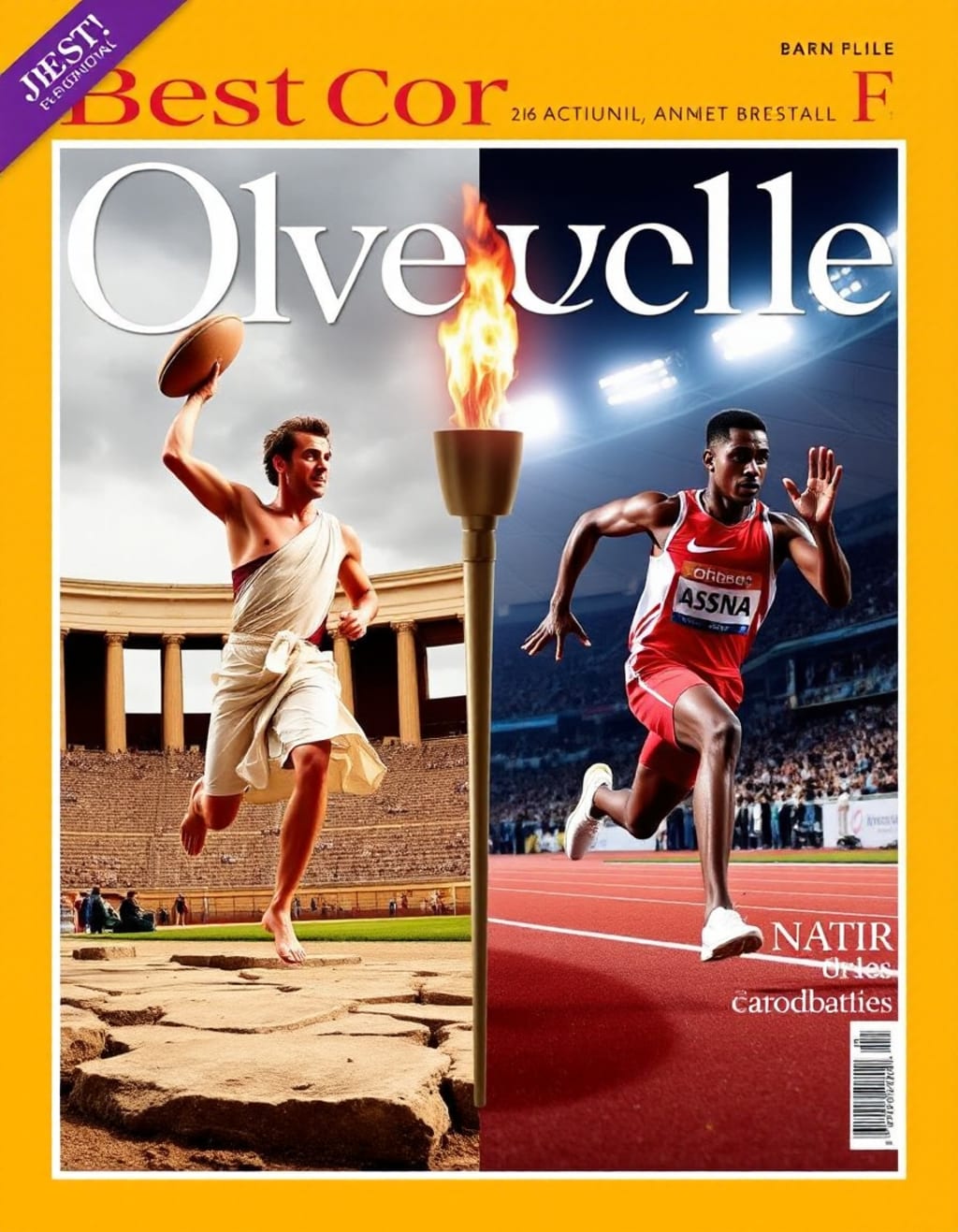
Prologue: Where the Flame First Rose
The Olympic flame has burned for over two thousand years—not always visible, not always celebrated, but always alive. It flickered in temples, soared through coliseums, disappeared for centuries, and then returned, brighter than ever.
This is the story of that eternal fire.
Not just of games, but of humanity's dream to test its limits—and be remembered not for war, but for glory.
Chapter 1: 776 BCE — The First Olympics
Under the blue sky of ancient Olympia, a trumpet sounded. Men, barefoot and cloaked in olive oil, prepared to race. There were no medals, no cameras—just honor.
The first recorded Olympic Games in 776 BCE were part of a religious festival to honor Zeus. City-states laid down their weapons for peace. War paused for sport.
Only Greek men could compete. The events? A 192-meter sprint, discus, wrestling, and chariot races.
Winners were crowned with olive wreaths and immortalized in stone.
For the Greeks, it wasn’t just about strength—it was about arete, the pursuit of excellence.
Chapter 2: 480 BCE — Running from Battle
After the Persian invasion of Greece, one man ran from Marathon to Athens to deliver the message of victory.
That run—though not part of the original Olympics—would one day inspire the marathon, one of the most iconic Olympic events.
The Olympics continued every four years, through times of glory and war. They became not just sport, but diplomacy, philosophy, and culture.
Poets like Pindar composed odes for Olympic champions. Cities boasted their athletes more than their generals.
But time does not spare even greatness.
Chapter 3: 393 CE — The Flame Extinguished
In 393 CE, the Roman Emperor Theodosius I, a Christian, banned the Olympics. He declared them pagan and ordered the temples of Zeus destroyed.
The last flame was put out. The stadiums fell silent.
For over 1,500 years, there were no Olympics.
But legends endured.
Stone ruins remained. Stories passed on—of men who ran faster than horses, of peaceful truces, of glory without bloodshed.
The world forgot the Olympics, but human ambition remembered.
Chapter 4: 1896 — The Revival in Athens
Fast forward to the 19th century.
As Europe industrialized, scholars rediscovered ancient texts. One of them, a Frenchman named Baron Pierre de Coubertin, had a radical idea:
Bring back the Olympic Games.
In 1896, his dream became real. The modern Olympic Games were held in Athens, the birthplace of the originals.
241 athletes from 14 countries participated. For the first time in over a thousand years, the flame returned—symbolically—in the hearts of runners, swimmers, and gymnasts.
The marathon was introduced, in honor of the ancient messenger. A Greek, Spyridon Louis, won it—and became a national hero.
The world had changed—but the Games still held their power.
Chapter 5: 1936 — The Olympics and Propaganda
By 1936, the Olympics were global—but not immune to politics.
Berlin hosted the Games under Nazi rule. Hitler wanted to showcase Aryan supremacy. But the world saw something else:
An African-American man named Jesse Owens won four gold medals in front of Hitler.
He became a symbol—not just of speed, but of defiance.
The 1936 Games also introduced the Olympic torch relay, where the flame traveled from Olympia to the host city. This symbolic gesture connected the ancient past with the modern present.
The flame was no longer just metaphor—it became real.
Chapter 6: 1940 & 1944 — The Games Cancelled Again
World War II erupted. The Olympics were cancelled in 1940 and 1944.
Once again, the flame was dimmed.
But the world had changed. People now saw the Olympics not just as sport—but as hope.
After the war, in 1948, the Games resumed in London, a city still scarred by bombs. Rationing was in effect. Yet the athletes arrived. And the world watched.
Even nations that had been enemies came together to compete—not to conquer.
Chapter 7: 1960 — New Worlds, New Records
The 1960 Games in Rome were historic.
For the first time, the Olympics were televised globally.
People from every continent watched Ethiopia’s Abebe Bikila win the marathon—barefoot.
It marked the rise of athletes from colonized or newly independent nations. The Olympics were no longer dominated by Europe and America.
The world’s diversity was reflected on the podium.
Women’s participation also surged. What began as an all-male event now included female athletes breaking records and rewriting history.
The Games were becoming truly universal.
Chapter 8: 1980 & 1984 — Boycotts and Cold War Shadows
The Cold War seeped into the Olympics.
In 1980, the U.S. and 64 other countries boycotted the Moscow Games over the Soviet invasion of Afghanistan.
In response, the Soviet Union and its allies boycotted the 1984 Los Angeles Games.
The Olympics had become a chessboard.
But amidst this, moments of inspiration persisted. In 1984, a marathon runner, Gabriela Andersen-Schiess, staggered to the finish line despite dehydration—refusing medical aid to complete her race.
It wasn’t gold, but it was Olympic spirit.
Chapter 9: 2000 — The Games of the New Millennium
In Sydney 2000, the world entered a new era.
Technology made the Games more connected than ever. Athletes became global celebrities. Sponsors flooded in.
But something sacred remained.
At the opening ceremony, Cathy Freeman, an Indigenous Australian, lit the cauldron and later won gold in the 400m. It was a profound moment of reconciliation between Australia's dark colonial past and its modern identity.
The Olympics were evolving—faster, bigger, richer—but the soul of the Games still pulsed with ancient rhythm.
Chapter 10: 2021 — The Games Without a Crowd
In 2020, COVID-19 shut down the world.
The Olympics were postponed for the first time during peacetime. In Tokyo 2021, athletes competed without live spectators. Stadiums were empty.
Yet the Games continued.
For the first time, mental health was openly discussed. Simone Biles, a legendary gymnast, stepped back from events to protect her wellbeing.
The message was clear: Being human is more important than being perfect.
The Olympics, even in silence, reminded the world what it means to endure.
Epilogue: The Flame That Never Dies
From sacred altars in Olympia to billion-dollar stadiums, the Olympics have traveled through:
Wars and peace,
Empires and revolutions,
Darkness and light.
They’ve crowned kings and lifted the forgotten.
They’ve united North and South, East and West—if only for a few days every four years.
What began as a religious ritual became a human one—a moment where we remind ourselves:
We can strive without hatred.
We can compete without cruelty.
We can burn brightly without burning others.
As long as we have the courage to chase excellence, the Olympic flame will never truly go out.
Even if the world forgets, somewhere, in someone’s heart—it still burns.
About the Creator
rayyan
🌟 Love stories that stir the soul? ✨
Subscribe now for exclusive tales, early access, and hidden gems delivered straight to your inbox! 💌
Join the journey—one click, endless imagination. 🚀📚 #SubscribeNow
The Year 1907 in Review: Fun Facts, Trivia, and Historic Highlights
This quick read is a collection of fun facts, trivia, and historic events from the year 1907. Discover the year’s top news stories, most influential people, sports facts, entertainment trivia, grocery prices, and much more.
By Gregory DeVictorabout 21 hours ago in History


Comments
There are no comments for this story
Be the first to respond and start the conversation.