
Why 90s Cartoons Meant So Much to Us
How Batman, Hey Arnold, and X-Men shaped a generation's understanding of morality and diversity

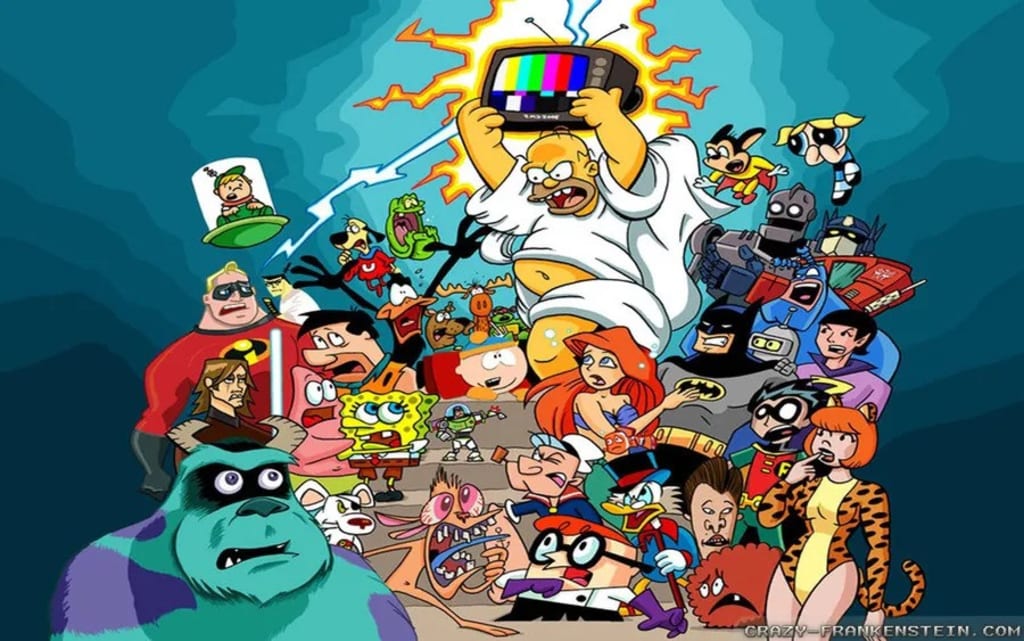
There is something magical evoked by the mere mention of 90s cartoons.
For me and many others who were lucky enough to grow up during the decade, the theme songs themselves – the high-energy riffs of X-Men, the dorky optimism of Doug, the go-go call of DuckTales (ahem, technically began late 80s but reached its peak 90s!) – are powerful nostalgia triggers.
We recall running home from school, collapsing in front of the clunky TV set, and being whisked away to worlds inhabited by anthropomorphic animals, teenage superheroes, and cringeingly lovable protagonists.
But in retrospect through the rosy-colored spectacles of adulthood, one can see that those cartoon programs were so much more than mere brightly colored diversions.
They were developing experiences, quietly molding our concept of the world, morality, and even ourselves, usually dealing with tougher issues with unsuspected depth behind the facade of slapstick and adventure.
The 90s animated explosion was not merely about fun; it was a special moment in cultural history which mirrored and shaped a generation.
A central aspect was the openness to developing rich characters and storylines. Take Gargoyles, a show nominally about waking ancient stone gargoyles in contemporary New York City.
Underneath the action-oriented premise, it explored prejudice, betrayal, cultural integration, and the burden of history. Goliath and his clan were not simply heroes; they were displaced creatures struggling with loss and mistrust in a world that did not accept them.
The series treated its viewers with sophistication, incorporating sophisticated plots and Shakespearean allusions along with exciting fights.
Batman: The Animated Series did the same for superhero TV. Its dark, art-deco design and noir-fueled tone were groundbreaking for a kids' cartoon. More significant, though, was its exploration of a psychologically nuanced Batman and villains who became tragic figures instead of mere archetypes of evil.
Mr. Freeze's tragic search to revive his ailing wife, or Two-Face's internal battle with his broken mind, presented complex characterizations of morality and motive not commonly found in animation up to that point. It showed us that the distinction between good and bad wasn't always so simple.
Even seemingly lighthearted fare had real substance. Hey Arnold! featured an incredibly realistic and ethnically diverse inner city environment. It was set in the vibrant, multicultural city where the show addressed such matters as poverty, dysfunctional family life, unrequited love, and social anxieties through the lens of its football-headed hero.
Arnold's unshakable empathy and the show's subtle examination of the lives of his quirky neighbors were lessons in quiet compassion and tolerance. Helga Pataki, with her secret shrine and tough-but-tender facade, is still one of the most nuanced female figures on children's television, a gritty expression of insecurity behind anger.
The emergence of Nickelodeon's Nicktoons – Rugrats, Doug, Rocko's Modern Life – introduced a new flavor, celebrating the strange, the gangly, and the ordinariness of childhood and early adulthood.
Rugrats discovered the world through a baby's eye, transforming mundane objects into epic adventures and gently jabbing at parenting and family dynamics.
Doug chronicled the fears and victories of adolescence – crushes, bullies, self-doubt – with honest relatability through the journal entries of Doug Funnie. Rocko's Modern Life, with its surreal humor and thinly disguised satire of consumer culture and corporate existence, frequently seemed to be winking at the adults sitting in the room while still amusing children with its absurdity.
In addition, 90s cartoons had more independent, stronger women characters than generations before.
Although damsels in distress persisted, we also had figures such as Eliza Thornberry (The Wild Thornberrys), a smart and daring documentarian; Daria Morgendorffer (Daria, a spin-off of Beavis and Butt-Head but an icon of the 90s nonetheless), whose intelligence and ironic sarcasm gave voice to disillusioned young adults; and the strong female X-Men like Storm, Rogue, and Jean Grey, who were central to the team's achievements and struggled with their own complicated powers and backstories.
These programs also incorporated the cultural changes of the era. The growing concern for environmentalism found expression in programs such as Captain Planet and the Planeteers.
The growing impact of anime was apparent in the action scenes and character artwork of programs such as X-Men and Gargoyles. Generation X's fears and hopes were reflected in the slacker humor of Beavis and Butt-Head or the metaphysical reflection concealed within Rocko's Modern Life.
Why does this period of animation continue to resonate so powerfully even now? Maybe it was a special alignment of events: skilled producers afforded greater artistic latitude, an expanding cable market that provided the opportunity for niche programming, and a hungry audience that wanted to watch something more than toy advertisements masquerading as cartoons.
These programs did not speak down to their viewers. They dealt with blemished characters, open-ended situations, and subjects that provoked question and discussion.
They showed us what loyalty was through the X-Men's bonds, empathy through Hey Arnold!, courage through the Powerpuff Girls (late 90s, but it fits the ethos!), and the absurdity of life through Rocko. They gave us shared cultural touchstones, inside jokes, and formative memories to millions.
So, next time you hear a familiar 90s cartoon theme song, take a moment beyond the initial wave of nostalgia.
Recall the complex narratives, the sophisticated characters, and the nuanced teachings embedded within those cartoon images.
They were not merely goofy doodles killing minutes after school; they were a colorful, impactful component of pop culture heritage, teaching an entire generation about storytelling, ethics, and the wonderfully bizarre world around them. They were, in a sense, more than mere diversion – they were part of maturation.
About the Creator
Get Rich
I am Enthusiastic To Share Engaging Stories. I love the poets and fiction community but I also write stories in other communities.
A Knight of the Seven Kingdoms Series Review (Season 1)
As one of the biggest properties in fantasy, A Song of Ice and Fire remains immensely popular with audiences. After reaching far into the past with House of the Dragon, a second spin-off was on the cards. A Knight of the Seven Kingdoms serves up a bite-sized slice of action and drama, but it still claims a spot among the best small-screen titles.
By Robert Cain5 days ago in Geeks
SpongeBob Review
The episode “Karate Choppers” opens with an exuberant montage that immediately signals the central conflict: SpongeBob’s enthusiasm for karate, inherited from his fearless best friend Sandy, collides head‑first with the mundanity of his everyday obligations at the Krusty Krab. The writers cleverly employ a rapid‑cut, split‑screen technique that juxtaposes Sandy’s high‑octane training sessions with Mr. Krabs’ frantic attempts to keep the grill burning, allowing the audience to feel the mounting tension between personal passion and professional responsibility. Every punch, kick, and exaggerated “Hi‑ya!” is rendered with meticulous timing, underscored by a percussive score that mimics the rhythmic thuds of a karate dojo, while the background chatter of hungry customers provides a subtle but constant reminder of the stakes. The visual gags—most notably the way SpongeBob’s square pants flutter like a flag in a wind tunnel whenever he attempts a high kick—are expertly animated, showcasing the show’s ability to blend the humor with a surprisingly sophisticated understanding of kinetic energy.
By Forest Green6 days ago in Geeks



Comments (1)
The 90s cartoons really were something special. The theme songs alone bring back so many memories. You're right, they were more than just fun. Shows like Gargoyles and Batman: The Animated Series delved into complex themes. Do you think modern cartoons have the same depth or have they lost that touch?