
Coming Out Again: Beyond All the Labels
My journey from certainty to fluidity and the freedom I found in between


I came out the first time when I was sixteen. It was chaotic, emotional, and transpired clumsily in the passenger side of my mom's minivan following a tense family dinner. The words fell from my lips, awkward and weighed down with years of stifled worry: "Mom, I think… I think I'm gay."
To her credit, my mom had a stunned silence first, but then reacted with love, albeit coated with a good amount of concern about the challenges I would be up against.
The next few weeks were spent having the same conversations with my dad, my shell-shocked younger brother, and finally, my best friends. Every revelation was like removing a brick from a dam, unleashing a pressure I hadn't yet known I was holding.
Stepping into the category 'gay' was like hitting the solid ground after being lost at sea for so long. It provided me with a group, a past, a banner. It provided me with language for the emotions which had seemed baffling and lonely. For years, the term was my anchor.
I took it to heart. I read LGBTQ+ history, went to Pride parades surrounded by rainbow flags, and felt comfort and understanding in queer enclaves online and in my city.
Being gay became a core aspect of who I was, informing my friendships, my perspective, and even the clothes I wore (hello slightly-too-tight V-necks, goodbye ill-fitting band tees). I felt I had finally arrived, discovered the essence of myself.
Life went on. I attended college, explored the thrilling and frightening realm of dating men, and established a life that felt real. The early struggle of coming out receded, displaced by the mundane struggles and pleasures of young adulthood. My sexuality was a given, a fact established.
Or so I believed.
The transition was slow, almost nondetectable to begin with. It started when I was in my mid-twenties, at a time of great personal development prompted by a painful breakup and a change in career.
I found myself questioning everything I'd always assumed about my life, but also about my inner world. In the midst of this questioning, I discovered that I began to form an intense, unanticipated bond with a close friend, Sarah.
Sarah was straight. We'd been friends for years, our relationship a platonic one grounded in mutual humor, late-night conversations, and mutual support. Yet the more we spent time together managing our life transitions, the more boundaries began to blur.
There was an emotional closeness that was different, filled with a weight that disturbed me. And then there was the physical attraction, at first subtle, then unmistakable. It wasn't mere admiration or affection; it was desire. And it put my meticulously built identity into disarray.
How was it possible, being a gay man that I was, to be drawn to a woman? It didn't square with the story. It wasn't consistent with the identity that had been home for ten years.
My first response was denial, followed by confusion and a large measure of self-blame. Was I deceiving myself all these years? Was my former identity counterfeit? Was I somehow letting down the community I loved?
The conflict within was fierce. I was an imposter in queer communities, but to identify as straight was completely wrong. The binary choices that I had used were suddenly unsatisfactory, limiting. The anchor upon which I had held on now weighed me down.
Sarah, also wise and compassionate, saw my distress. Our talks grew more open, venturing into the muddled landscape we were in. Her own emotions were also shifting, questioning her long-held heterosexuality.
We weren't slipping into tidy compartments; we were charting a middle ground, driven by the bond between us, not by preconceived terms.
This brought about my second coming out. It wasn't one event like the initial one, but a succession of less dramatic, more nuanced conversations. Being gay had seemed like announcing an absolute fact.
Being bisexual now seemed more like announcing uncertainty, accepting fluidity. The term 'bisexual' seemed nearer, but even it did not seem to completely describe my experience, one in which attraction seemed less about gender at all and more about the individual.
Describing this to friends and family was another matter. Some were baffled. "But I thought you were gay? " was a typical repeat.
Some were surprisingly open, perhaps more sensitive to the possibility that sexuality is fluid than I had expected. The hardest was to move around within the LGBTQ+ community itself.
Though mostly in agreement, I sometimes faced doubt, skeptical whispers of "it's just a phase" or allegations of trying to gain heterosexual privilege.
It underscored the sad truth that within marginalized groups, strict adherence to labels occasionally can make new kinds of exclusion. This second coming out wasn't about exchanging one label for a further 'accurate' one.
It was about understanding that labels, as helpful as they were for discovering community and comprehension, also had the potential to be restrictive. My identity was not a destination, but a process. My desire wasn't limited to one gender. My reality was richer, more complicated than the term 'gay' or even 'bisexual' could ever encompass.
Some may employ language such as pansexual or queer, and those are fine and strong, but to me, the most freeing awareness was transcending the desire for a perfect label altogether.
Finding my identity beyond labels meant accepting the fluidity of my own experience. It meant understanding that my past identity as a gay man wasn't a lie, but a reflection of my truth at that time.
It meant embracing the connection with Sarah, wherever it led, without needing to define it rigidly for external validation. It meant recognizing that personal growth sometimes involves outgrowing the very frameworks that once helped us find ourselves.
Coming out the first time was about finding a name for my difference. Coming out the second time was about finding peace in the complexity, in the beautiful, sometimes confusing, spectrum of human attraction and connection.
It was about understanding that my identity is mine to define and redefine, a personal narrative constantly unfolding, rather than a static label stamped in a file. It was, ultimately, a deeper kind of pride – not merely pride in a particular identity, but pride in the journey itself, the ongoing, changing process of becoming myself.
About the Creator
Get Rich
I am Enthusiastic To Share Engaging Stories. I love the poets and fiction community but I also write stories in other communities.
The Pride Flag and the Diversion
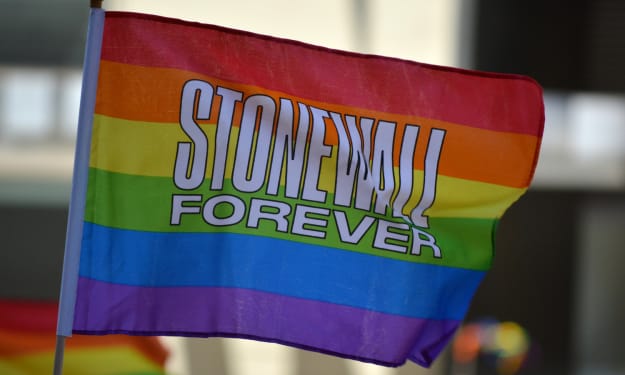
For nearly a decade, the LGBTQIA Pride Flag rippled in the wind at Christopher Park, a kaleidoscope of color staked into the soil of America’s first national monument to LGBTQIA+ liberation. That flag came down this week. Federal officials, citing new guidance from the Trump Administration, silently lowered the rainbow flag from its pole across the street from the Stonewall Inn. The birthplace of the modern gay rights movement now flies only the United States flag.
By Tim Carmichael21 days ago in Pride



Comments (1)
Your coming out story is really powerful. It made me think about how labels can shape our identities. You said being gay became a core part of you. But then you started questioning. Have you ever thought that maybe our identities are more fluid than we realize? I've seen friends go through similar shifts in how they see themselves. What was it like for you when those doubts first crept in?