
Who Was Jacob Waltz? The Mysterious German Immigrant Who Took the Secret of America’s Greatest Lost Treasure to His Grave
More than 130 years after his death, the name still echoes through the desert canyons of Arizona, whispered by treasure hunters, conspiracy theorists, and local legends alike.


🏜️ A Name Written in Gold — and Shadows
He was born Jacob Waltz, but the world remembers him as "The Dutchman."
And more than 130 years after his death, the name still echoes through the desert canyons of Arizona, whispered by treasure hunters, conspiracy theorists, and local legends alike.
Waltz was a real man. He lived. He mined. He died.
But what makes him immortal isn’t what we know about him.
It’s what he refused to tell.
Somewhere out there — maybe in the Superstition Mountains, maybe not — Jacob Waltz is said to have hidden a massive gold vein, possibly worth tens of millions in today’s dollars. And before he died, he may have left behind a trail of cryptic clues, half-truths, and a curse that has outlived every one of his peers.
So who was he, really?
A liar? A lunatic? A lucky gold miner? Or a man who outsmarted history itself?
🇩🇪 From Germany to the Wild West: The Early Life of Jacob Waltz
Jacob Waltz was born sometime around 1810 in Württemberg, Germany — though even that is debated.
He immigrated to the United States in the 1830s or 1840s, part of the great wave of Germans fleeing economic hardship in Europe. He arrived in New Orleans, then made his way through Missouri, Mississippi, and eventually westward during the era of gold fever.
By the 1860s, Waltz had settled in Arizona Territory, where he was naturalized in 1861 and spent years working claims around Prescott, Wickenburg, and the Salt River Valley.
There is documented evidence he held mining claims and even worked for others — but there’s no formal record of him ever registering a "super-rich" gold mine.
And yet… he had gold. Lots of it.

🧱 Gold Dust and Questions: Where Did His Wealth Come From?
In the 1870s and 1880s, locals in Phoenix began to notice something strange:
Waltz was not a rich man — he lived humbly in a small adobe house.
But every now and then, when he needed something, he would show up with nuggets of high-grade gold.
Not dust. Not flakes. Nuggets.
According to eyewitness accounts and local newspaper mentions, Waltz paid with gold that was strikingly pure, matching none of the local registered mines. The assayer’s office even claimed it was among the finest they’d seen.
Where was it coming from?
Waltz never said.
In fact, he actively misled people, often telling tall tales or giving contradictory directions — a habit that only deepened the mystery after his death.

🤒 The Deathbed Confession That Sparked a Century-Long Obsession
Waltz died on October 25, 1891, after suffering complications from pneumonia.
But here’s where things get mythic.
In his final weeks, he was cared for by Julia Thomas, a local baker and friend. According to Thomas and her companions, Waltz — weak but lucid — began giving clues to a hidden mine he had discovered years earlier.
Clues like:
- The mine was near a high pointed peak
- There was a large cross carved into a nearby rock
- A dead soldier’s skeleton lay nearby
- The entrance was hidden by a rockslide or trapdoor
- He had buried gold nearby before sealing the shaft
Thomas, convinced of his story, attempted to find the mine shortly after his death.
She never did.
But the legend was already loose.

🧭 The Map, the Mine, and the Madness
In the decades after Waltz’s death, a flood of “Dutch hunters” descended on the Superstition Mountains.
Some were serious historians.
Others were pure treasure-chasers.
A few never returned.
Over time, stories began to stack:
A man found with his head severed.
Another found clutching a piece of quartz, dead from dehydration.
Mysterious disappearances with only vague journals left behind.
Cryptic “Peralta stones” that allegedly mark the way.
The “Curse of the Dutchman” — a warning that anyone who finds the gold will die violently.
It became part American folklore, part horror story.
And through it all?
Jacob Waltz — the quiet, grumpy old German — became a ghost legend in hiking boots.
🧪 Could the Gold Story Be True?
Let’s weigh the evidence.
Supporting clues:
- Waltz really existed, with verified mining experience.
- He did, on occasion, possess unusually pure gold.
- The Superstitions do contain gold — though difficult to access.
- Maps and anecdotal clues trace back to multiple 1800s sources.
- Modern geologists believe a vein could exist, if extremely well hidden.
Skeptic arguments:
- No formal claim was ever filed.
- Waltz may have stolen or bought gold and passed it off as his own.
- All maps and clues are third-hand, often contradictory.
- Decades of searches have produced no proof.
- The legend ballooned thanks to hearsay, exaggeration, and TV dramatization.
Still — in the world of lost treasures — Waltz’s myth has proven uniquely unkillable.

🎬 How Jacob Waltz Became a Pop Culture Goldmine
TV, books, podcasts, and tourism have all kept the Dutchman alive.
Books: Dozens have been written, from historical accounts to pure treasure lore
TV Shows: Legend of the Superstition Mountains (History), Mysteries at the Museum, and other specials
Tourism: Lost Dutchman State Park, Superstition Mountain Museum, and guided tours draw tens of thousands yearly
YouTube: Channels with millions of views break down his clues, maps, and supposed mine entrances
Even if no one ever finds a single ounce of treasure, Jacob Waltz has become a perpetual revenue stream.
He’s Arizona’s King Tut — buried not in gold, but in mystery.
🧠 Why the Story Endures
What makes Jacob Waltz different from other buried gold legends?
Simple: his story is just plausible enough.
- He was real.
- His gold was real.
- The people who knew him weren’t all charlatans.
- The clues feel tantalizingly specific.
And yet — not too specific.
Just like a good magic trick, the Dutchman legend always stays one step ahead of being solved.
It creates a powerful emotional cocktail:
“If I just figure out the next clue… maybe I’ll be the one.”

🎯 Final Thoughts: The Man Who Outlived His Own Legend
Jacob Waltz may not have discovered America’s greatest treasure.
Or maybe he did, and buried it so deep no one will ever find it.
Either way, he created something rarer than gold:
A living myth.
More than 130 years after his death, he’s still the most wanted man in American treasure hunting — not because he’s hiding, but because he hid something we all wish we could find.
And that’s the real gold.
📣 Call to Action
Think you’ve cracked Waltz’s clues?
Share this with a fellow Dutch hunter — and follow me on Vocal.Media for more deep dives into the legends, liars, and lost fortunes that refuse to die.
Because the truth may be buried —
But the story?
Always rises.
About the Creator
Rukka Nova
A full-time blogger on a writing spree!
Keep reading
More stories from Rukka Nova and writers in Geeks and other communities.
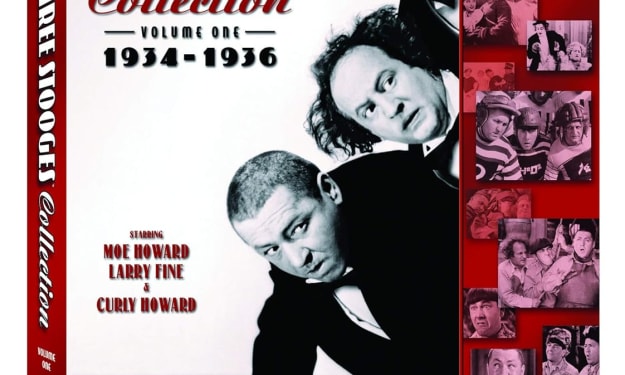
History of The Three Stooges (Part I: The Beginnings and Columbia Pictures - 1920s-1936)
I have been itching to write about The Three Stooges on Vocal for close to two years, but I couldn't figure out how to do it. I wanted to do it by third Stooge, but that's a bit complicated. I know this much. I was about eight or nine years old when I first saw The Three Stooges. I remember one of my local channels had the Stooges on for hours, and I tried my damnedest to be up for those shorts. I remember that the Family Channel actually had an hour of the Stooges on from 11PM to midnight, and it was the entire library on during that time.
By Clyde E. Dawkins4 days ago in Geeks
Timothée Chalamet and the Quiet Power of Modern Acting
Some actors enter the film world with loud fame and immediate headlines. Others arrive more quietly, building trust with audiences through honest performances and thoughtful choices. Timothée Chalamet belongs to the second group. Over the past few years, his presence in cinema has grown steadily, not because of constant publicity, but because viewers feel something real in his acting. Many people first noticed Timothée Chalamet through emotional roles that captured the confusion and beauty of youth. Since then, he has continued choosing characters that feel personal and human. His journey shows how modern actors can connect deeply with audiences. To understand the lasting appeal of Timothée Chalamet, it helps to look closely at his background, his acting style, and the thoughtful path that shaped his career.
By Muqadas khanabout 5 hours ago in Geeks
A Transparent Look at Vocal Challenges and Top Stories
Almost three years ago, we shared a resource article that served as a place for people to suggest new challenge prompts. We thought it would be a good idea to refresh that thread, and take the opportunity to answer a few common questions about top stories, how challenges are judged and how submissions are reviewed.
By Vocal Curation Team4 days ago in Resources



Comments
There are no comments for this story
Be the first to respond and start the conversation.