
Who Killed God's Banker?
Why It's Shifty (Week 2)



Roberto Calvi (1920–1982) was an Italian banker whose rise and fall became one of the most infamous financial scandals of the 20th century.
Born in Milan, Calvi began his banking career at Banco Ambrosiano in the 1940s. Hardworking and ambitious, he steadily climbed the ranks, becoming general manager in 1971 and chairman in 1975. Under his leadership, Banco Ambrosiano expanded rapidly, developing strong ties with the Vatican Bank and offshore financial networks. However, much of this expansion was built on secret dealings, illegal money transfers, and suspected connections with the Mafia and the secretive Masonic lodge Propaganda Due (P2).
By the late 1970s, Calvi was one of the most powerful figures in Italian finance, but his empire was built on shaky foundations. In 1981, an investigation exposed massive financial irregularities, revealing that Banco Ambrosiano had lost hundreds of millions of dollars through illicit offshore transactions. Arrested and convicted of illegally exporting currency, he was sentenced to four years in prison but was released on appeal.
With the scandal deepening and threats mounting, Calvi fled Italy in June 1982. He sought refuge in London, fearing for his life. Days later, on 18 June, his body was found hanging from Blackfriars Bridge, his pockets filled with bricks and cash. Though initially ruled a suicide, later investigations pointed to murder, implicating the Mafia, the Vatican, and P2.
His death remains one of the great unsolved mysteries of modern finance, symbolising the dangerous intersections of banking, politics, and organised crime.
Plot

On the night of 17 June 1982, Roberto Calvi was staying at a safe house in Chelsea, London, having fled Italy under a false passport. He was in fear for his life, convinced that powerful enemies including: the Mafia, the Vatican, and the secretive Masonic lodge Propaganda Due (P2) wanted him dead.
At around 7:30 p.m., Calvi left his accommodation and was driven to Waterloo Station, where he met a man believed to be connected to organised crime. He then boarded a train to Blackfriars, a district known for its financial institutions and historical significance.
At some point during the night, he was taken to Blackfriars Bridge. His body was discovered early on 18 June, hanging from scaffolding beneath the bridge. His pockets were stuffed with bricks and £10,000 in cash, a detail some interpreted as a symbolic warning.
The initial police ruling was suicide, but many found this unlikely. Calvi was known to be terrified of heights and was in poor physical condition, making it improbable that he had climbed the scaffolding himself. Later forensic analysis suggested he had been murdered elsewhere and then hanged to stage a suicide.
In the years that followed, investigations linked his death to financial corruption, the Mafia, and the Vatican’s banking operations. In 2003, five people were tried for his murder but were acquitted due to lack of evidence. His death remains one of the greatest unsolved mysteries in modern financial history.
His death has often been shown in strange depictions on television and film, especially in one of my own favourite movies: The Imaginarium of Dr Parnassus (2009) in which Calvi is shown as being one of the interpretations of Tony. The closest one being portrayed by late actor Heath Ledger who has his character discovered hanging beneath the Blackfriars Bridge. The film is loosely based on the banking scandal committed by Calvi.
Into the Theories

The Mafia Murder Theory
One of the most widely accepted theories is that Calvi was killed by the Mafia, specifically the Sicilian Cosa Nostra. As chairman of Banco Ambrosiano, Calvi had allegedly laundered large sums of Mafia money through offshore accounts. When the bank collapsed in 1982, vast amounts of Mafia funds disappeared. Calvi, desperate and on the run, was seen as a liability and therefore, someone who knew too much and could expose powerful criminal figures.
According to this theory, the Mafia arranged for his murder as a warning to others. The manner of his death, which was hanging from Blackfriars Bridge with bricks in his pockets may have been symbolic. The term "Black Friars" could be linked to the secretive Masonic lodge Propaganda Due (P2), of which Calvi was a member, and the bricks might have represented a Masonic punishment. Supporters of this theory point to later investigations, which concluded that Calvi was likely murdered and that his body had been moved to the bridge to stage a suicide. In 2005, an Italian court stated that the Mafia had indeed ordered his killing, though no one was ever convicted.
The Vatican Conspiracy Theory
Another theory suggests that the Vatican played a role in Calvi’s death. Banco Ambrosiano had close ties to the Vatican Bank, which had secretly backed some of its financial dealings. When Banco Ambrosiano collapsed, the Vatican was implicated in its financial mismanagement, though it denied wrongdoing.
Calvi himself had allegedly been involved in laundering money for the Vatican and funding anti-Communist activities in Latin America. Facing mounting pressure, he may have attempted to blackmail Vatican officials, threatening to reveal their involvement in financial crimes. This, some believe, sealed his fate.
According to this theory, Vatican-linked figures ordered his murder to silence him and prevent further scandal. The location of his death, Blackfriars Bridge, might have been a warning to other insiders. Some also point to the mysterious death of Calvi’s secretary, Graziella Corrocher, who fell from a window at Banco Ambrosiano’s headquarters in Milan the day before his body was discovered. Her death was officially ruled a suicide, but some believe she, too, was silenced.
The P2 Freemason Retaliation Theory
Calvi was a known member of the secretive and illegal Masonic lodge Propaganda Due (P2), which had deep connections to Italy’s political and financial elite. The lodge was involved in numerous illicit activities, including corruption, money laundering, and political manipulation.
According to this theory, P2 orchestrated Calvi’s murder because he had become a liability. After the Banco Ambrosiano scandal broke, P2’s influence began to wane, and Calvi, fearing for his life, may have tried to distance himself from the organisation. Some speculate that he had threatened to expose key figures within P2 or had lost the trust of his former allies.
His death, if arranged by P2, may have been a symbolic execution. The use of bricks (a possible reference to Masonic construction symbolism) and his hanging under Blackfriars Bridge, near London’s financial district, could have been intended as a clear message to others within the network: betrayal would not be tolerated.
Why It's Shifty
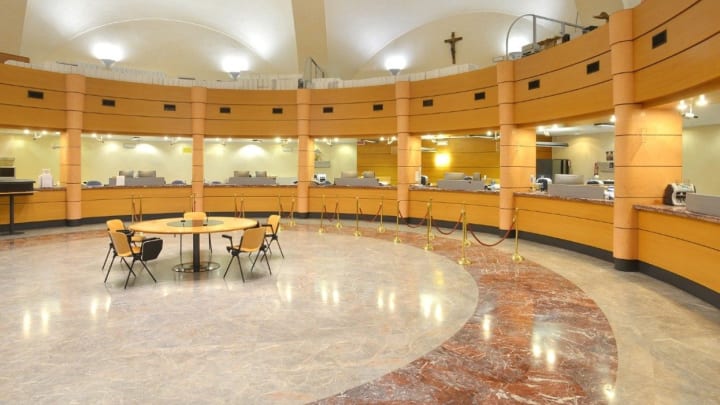
The death of Roberto Calvi is considered shifty due to the conflicting evidence, the powerful organisations implicated, and the lack of definitive conclusions despite decades of investigation.
Initially ruled a suicide, Calvi’s death was later classified as murder after forensic analysis showed he was unlikely to have hanged himself. His pockets were filled with bricks, and there were no signs that he had climbed the scaffolding beneath Blackfriars Bridge. Yet, no one has ever been convicted, leaving the case unresolved.
The controversy deepens because of the individuals and institutions linked to Calvi. Banco Ambrosiano had ties to the Vatican Bank, the Mafia, and the secretive Masonic lodge Propaganda Due (P2). Each of these groups had a possible motive for silencing him. The Vatican, for instance, faced financial scandal due to its involvement with Banco Ambrosiano, while the Mafia reportedly lost large sums through the bank’s collapse. P2, a clandestine organisation involved in political and financial corruption, also saw Calvi as a potential threat.
Further complicating matters, key figures involved in the case either died under suspicious circumstances or refused to cooperate. Multiple trials in Italy led to acquittals due to insufficient evidence, and official inquiries failed to establish a clear culprit.
Conclusion

The most likely explanation is that Roberto Calvi was murdered, with the Mafia as the prime suspects. He had laundered their money through Banco Ambrosiano, and when the bank collapsed, vast sums disappeared. Facing exposure, Calvi fled, but powerful figures ensured he would never speak. His body was hanged beneath Blackfriars Bridge, staged to look like a suicide.
But what do you think happened that night? Was it the Mafia, the Vatican, or P2?
Calvi’s death remains unsolved, a chilling reminder of the dangers of financial and political entanglement. Even though it may have been a murder staged as a suicide, the question really is about who actually did it. See you next week for more shifty stuff...
Next Week: The Phantom Dark Age
About the Creator
Annie Kapur
I am:
🙋🏽♀️ Annie
📚 Avid Reader
📝 Reviewer and Commentator
🎓 Post-Grad Millennial (M.A)
***
I have:
📖 300K+ reads on Vocal
🫶🏼 Love for reading & research
🦋/X @AnnieWithBooks
***
🏡 UK
Keep reading
More stories from Annie Kapur and writers in Geeks and other communities.
Ragtime by EL Doctorow
Note: this is exciting as I studied this book on one of my degrees and did a paper on it. Thanks for reading in advance. E.L. Doctorow’s Ragtime, published in 1975, emerged at a time when historical fiction was experiencing a resurgence in the United States, and the novel itself became a seminal work in the genre. Born in 1931, Doctorow grew up in New York City, surrounded by the cultural diversity and political activism that would later influence his writing. He studied at Kenyon College and Columbia University, developing a deep interest in history, literature, and politics, all of which shaped his approach to storytelling.
By Annie Kapurabout a year ago in Geeks
Why V for Vendetta is Scarily Relevant Today
Plot Summary In a dystopian Britain ruled by a dictatorial government, fear and oppression dominate everyday life. A masked vigilante known as V wages a campaign against the corrupt regime, targeting its leaders and symbols of totalitarianism. He rescues a young woman named Evey Hammond, exposing her to the brutal realities of tyranny and the importance of freedom. Inspired, Evey joins V's struggle, confronting her own fears and morality. Together, they defy the regime, igniting a resistance movement. Through V's rebellion, Evey learns courage and the transformative power of resistance.
By TheScreenAnalystabout 2 hours ago in Geeks



Comments (8)
Nice
awesome to read this
Congrats on top story!
Back again! Congrats on Top Story. Your writing is incredible keep it up. 🎉🎈
Top Story!
This comment has been deleted
One of those situations that we may never truly know. Unless someone confesses on their death bed, even then who knows. Great article
Well written, congrats 👏
Nice work! I really enjoyed this. Keep up the good work.