
What Is Steampunk?
Steam Wars creator Larry Blamire answers the question: What is Steampunk?

This story was produced by the Creatd Studios team in tandem with Larry Blamire.
As we partner with Larry Blamire on the publication of his Steam Wars graphic novel, we decided to valiantly set forth and brave the burning question that may still be on the lips of some, despite its enormous popularity... Just what exactly is steampunk?
Steampunk is a tough genre to pin down, especially since it’s still defining itself and has been evolving since the term was coined back in 1987. In simple terms, steampunk is an alternate Victorian era that uses advanced technology. Douglas Fetherling is quoted defining steampunk as “...a genre that imagines how different the past might have been had the future come earlier.” Think exposed gears, steam-powered machines, coal, and dirigibles, but also floor-length ladies’ dresses, impeccable manners, and lace.
According to Larry Blamire, Steam Wars celebrates what he really loves about the genre—the contrast between all the elegance and grace of the 19th century paired with the grease and cogs of badass steam engines. He places it on the grittier side of steampunk, or “blue-collar sci-fi” as he refers to it. But Steam Wars is just one example of what steampunk can be.
I THINK YOUR POCKETWATCH IS CAUGHT ON MY CORSET
Steampunk isn’t exactly mainstream, but even if you’re not familiar with it, you probably know more about it than you think. Science fiction writer K. W. Jeter coined the term back in 1987 when he was trying to place books written well after the Victorian era, but that imitated the feel of speculative fiction books written then. Basically, he defined steampunk as books that tried to imagine what Victorian-era people thought was futuristic.
But steampunk existed before the term did. Jules Verne could be considered one of the original steampunk authors, though he wrote over a century before Jeter thought of the term. The Wild Wild West TV show, released in 1965, is another great example of proto-steampunk that influenced the genre before it was even fully formed.
The easiest way to get to grips with defining the steampunk genre is by starting with the steampunk aesthetic. What steampunk characters wear is an integral part of the genre: the fashions of the English Victorian era (1837-1901) or the American Wild West. Think long coats, top hats, but also clothing and accessories unique to the genre, like steampunk watches—big, clunky, with whirring cogs and gears—and steampunk goggles. For modern fans, there are entire websites dedicated to dressing in steampunk style today.
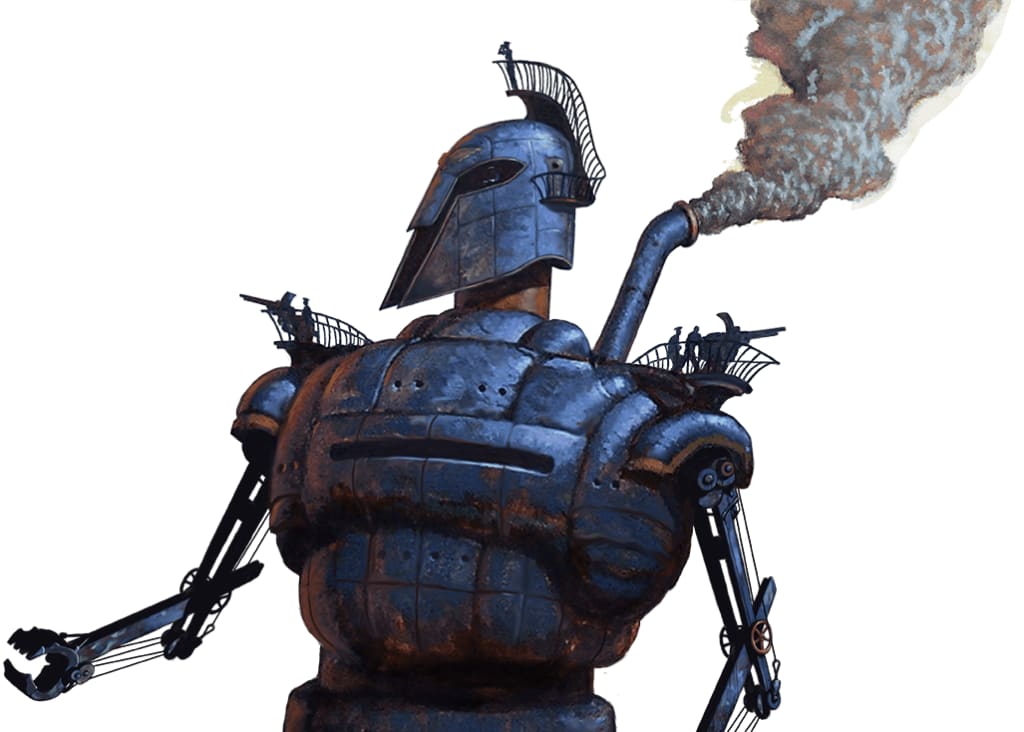
But it’s more than just the outfits. Technology is an intrinsic part of it, too. The main form of power is through steam and coal, rather than electricity, gas, or oil. This means locomotion, weapons, economics, and industry all look very different. These are the elements integral to Larry Blamire’s Steam Wars, set in the late 1800s. In Steam Wars, most of the plot takes place on “fighting rigs,” or enormous steam-powered walking machines, which are built to look like ancient warriors and manned by a crew of brave (or reckless, depending on your definition) men. There’s some fantastic steampunk art on Instagram and Pinterest that shows this side of steampunk.
So, what is steampunk? Steampunk is a fun, weird, anachronistic place of retrofuturistic gadgets and alternate history. It’s both vintage and futuristic. It’s not quite sci-fi, not quite speculative fiction, not quite fantasy.
In short, steampunk is a hybrid genre that can pull elements from pretty much any genre. So long as it contains an alternate history with futuristic elements, it’s steampunk.
HAVE I SEEN STEAMPUNK AND NOT EVEN KNOWN IT?
There are examples of steampunk movies and books that you probably have come across without categorizing them as “steampunk.” Take movies like The Golden Compass and The League of Extraordinary Gentlemen, which demonstrate how widely the genre can range and still be considered steampunk. The Golden Compass might be traditionally considered fantasy, but just look at the titular compass for an example of steampunk design. Additionally, it features clockwork insects and takes place in a retro-futuristic Oxford. The League of Extraordinary Gentlemen, meanwhile, isn’t even remotely steampunk fantasy. Instead, it draws on the setting of Victorian London and showcases a Nautilus submarine.
As mentioned earlier, Steam Wars sits on the grittier side of steampunk, focusing on steampunk fighting rigs instead of top hats and Victorian gowns. It doesn’t take place in Victorian-era London, either. It’s set during a war between the United States Steam Force and its allies, where Blamire imagines how the development of steampunk engines could have influenced geopolitical powers.
But that’s just one example. Other steampunk graphic novels vary from Blamire’s as widely as The Golden Compass and The League of Extraordinary Gentlemen do from each other. Take a look at Scarlet Traces, a sequel to H. G. Wells’s The War of the Worlds, which deals with the question: “What happens after the Martians are defeated?” It’s more sci-fi, using Martian technology as a substitute for steam engines, but the setting is still 20th-century steampunk.
Fullmetal Alchemist, meanwhile, is a steampunk manga in which two brothers, Ed and Al, try and fail to resurrect their dead mother. As a result, Ed loses two limbs while Al’s soul is attached to a suit of armor. Totally different from 19th-century giant fighting rig warfare, but still very steampunk.
WHAT IS STEAMPUNK? PART DEUX
The definition of steampunk is complex because it’s so vast. It’s about the time period and location, but also the technology used, the genres pulled from, and even the feel of it. The steampunk fandom is tolerant and even encouraging of the flexible boundaries around what steampunk is, for example allowing “dieselpunk” (no steam whatsoever!) to sneak in on the steampunk groups and messaging boards.
The best way to get a sense for it yourself is by checking out steampunk drawings, reading steampunk books, and otherwise immersing yourself in the steampunk era. Maybe even go deeper and create your own steampunk characters. Larry Blamire would tell you this much: It’s a hell of a lot of fun.
About the Creator
Larry Blamire | Steam Wars™
Writer, director, actor, artist known for STEAM WARS, THE LOST SKELETON OF CADAVRA, THE ADVENTUREBOOK OF BIG DAN FRATER and DOC ARMSTRONG: SUBURB AT THE EDGE OF NEVER.
Keep reading
More stories from Larry Blamire | Steam Wars™ and writers in Geeks and other communities.
Steam Wars, Underdogs and Nonconformity
As Steam Wars developed over the years it was never my intention to necessarily write an underdog story. That is to say an adventure in which the protagonists are seriously outmatched and must contend, in whatever way, against tremendous odds (Lord of the Rings comes to mind, also Rogue One). Of course, it needn’t be that grand or epic. A simple human story about an individual overcoming a roadblock, personal or otherwise, can be quite powerful. It’s our ability to empathize with such struggles that makes these stories so popular.
By Larry Blamire | Steam Wars™3 years ago in Geeks
Thank You, John Cena
When December 13, 2025 arrived, I welcomed it. I welcomed it with open arms. The reason was simple: I wanted to see how John Felix Anthony Cena, Jr, someone who I've been a fan of for over 20 years, would end his iconic and legendary career.
By Clyde E. Dawkins28 days ago in Geeks
Takeover 2026 Movie Review
In an era defined by algorithms, automation, and constant digital surveillance, cinema has increasingly turned its attention to stories about control. Takeover (2026) enters this landscape as a tense, futuristic thriller that feels less like speculative fiction and more like a warning disguised as entertainment. Rather than imagining a distant dystopia, the film presents a world that looks uncomfortably close to our own—one where power no longer arrives with force, but quietly assumes authority through systems we depend on every day.
By David Cook5 days ago in Geeks


Comments
There are no comments for this story
Be the first to respond and start the conversation.