
What Is Magical Realism?
What is magical realism, what are its features, who are its representatives? The historical origin of magical realism and the important works of this movement are in our article with all its details.
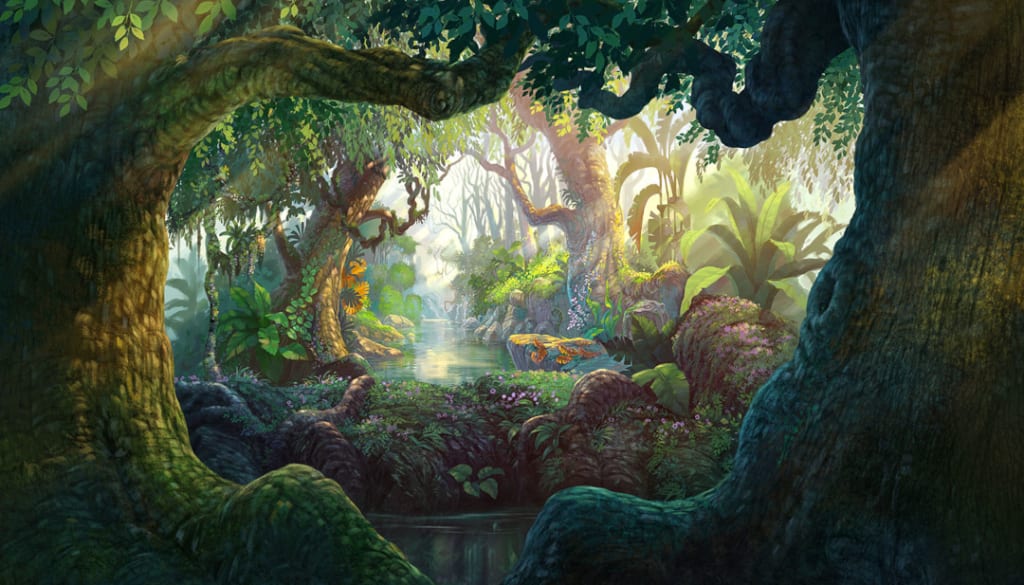
If you're interested in fantasy and the use of magic in literary fiction and art, you've probably come across the genre. This style of fiction adds magical elements to the real world, blurring the line between reality and fantasy. It's a style of fiction that is particularly popular in literary works. Its influences come from a number of different sources, including science fiction, fantasy, and horror. The style has become increasingly popular in recent years, and is an important part of contemporary literary fiction and art.
Influences
Literary works that use magical realism are often rooted in myths and traditional stories. Invoking myths and legends passed down through generations, these works use language as a means to critique reality. Many of these works deal with serious social issues, such as the deterioration of family values and the separation of man from nature. To understand these works, it is necessary to understand their influences. This article explores some of these influences.
Historically, the term "magical realism" can be traced back to the 19th century. The term was first used to describe the work of surrealists and visual artists. German art critic Franz Roh coined the term in 1925, and Venezuelan essayist Arturo Uslar Pietri used it in 1948. The term is used to describe the style and themes of a variety of works by writers in Latin America.
Authors of magic realism have often sought to redefine Latin American identity by rewriting the history of colonization, immigration, and economic dependence on the imperial powers. A Cuban writer named Carpentier has written a novel that is considered a classic example. The book is set in the mid-eighteenth century, and follows the story of a slave, Ti Noel. Despite the realism of the story, the book demonstrates the life and vitality of African culture.
Unlike its modern counterpart, magical realism is characterized by a realistic setting. Although based on reality, it also features fantastic characters and events. Often, magical realism is an amalgamation of the supernatural and the real. Authors deliberately leave the supernatural unexplained in order to normalize magic. The genre's popularity grew in Latin America, and the writers of these works expressed a disdain for American Imperialism.
Styles
The styles of magical realism have a long history and have changed with time. The earliest forms of the genre were created after World War I, but it gained momentum in the following decades and continued to captivate viewers and artists. Some of the most influential artists of the period included Peter Doig, Alex Colville, and John Stuart Ingle. The style aims to depict the ordinary and mundane as mystical and beautiful, and it is often influenced by the imagination and the power of dreams and illusion.
The style of magical realism is defined by the fact that the supernatural is treated as real. In the magical realism style, nothing is taken for granted and any situation can be viewed as magical. For example, characters might be able to communicate with spirits or clairvoyants, or they might be able to see dead people. The time element is also a big topic of magical realism. The author uses a realistic setting to explore the supernatural.
Other writers of magical realism include Cuban author Carpentier. His novel, El reino de este mundo, was translated into English in 1957. It is set in Cuba and Haiti and tells the story of a slave named Ti Noel. This story combines magical practices and African spiritualism and shows the vibrant cultural life of the Afro-Caribbean people. As a result, many readers will be fascinated by the story.
The art of magical realism is often categorized as surreal, but this is only one branch of the genre. It is a subset of the surrealist movement, with both movements using strangeness to make their works aesthetically compelling. Some Magic Realists use allegory and symbols, while others rely on hyperrealism, unusual juxtapositions of objects, and distortions of space. Many of the artists who practiced this style were Max Beckmann and Franz Roh.
The earliest stages of Magic Realism were influenced by the work of Albert Carel Willink. Willink preferred the term "Imaginary Realism", which acknowledged the importance of imagination in composition. His paintings incorporated elements of realism that were both real and fantastical. For example, Willink's painting, "The Red-Headed Man", "The Black Bird" (1913), and "Alice's Dream", were examples of the style.
Authors
Some writers use the term magical realism to describe a literary genre in which elements of a supernatural world exist in the ordinary world. Some authors create stories that blend the mundane with the magical, and this combination makes the work more interesting. Others use it to make a political statement, and some blend it with everyday romance. Regardless of the genre's popularity, there are many differences between the genre and mainstream literature. Here are some examples of magical realism authors and works.
Borges, Jorge Luis, and Alejo Carpentier are among the most prolific magical realism authors. Borges' Historia Universal de la Infamia was published in 1935, and tells the story of vagabonds from different times. The story is a classic and represents Borges' early foray into Argentina's literary scene. Borges' most mature works include the collection Ficciones, which contains seventeen short stories filled with magic. Borges' works have captured the imaginations of readers all over the world.
The most common characteristics of a magical realism author include the world and subject matter of the story. Magical realism books are filled with fantasy elements, while blending the everyday with the fantastic. Many of these stories feature ghosts, time travel, and reincarnations. And although they may seem far from reality, the elements in these books aren't too far from the real world. This type of literary fiction is a popular genre among young adult readers.
Another popular magical realism writer is Isabel Allende, a Chilean-American writer who deals with issues facing women in Latin America. Her first major work, La Casa de los Espiritus, is a magical realism classic. It tells the story of four generations of a Chilean family, and the themes that run throughout include love, jealousy, and sexism. This novel is widely regarded as a masterpiece of magical realism and is a central work in Latin American literature.
Despite the popular perception that magical realism writers came from South America, the term originated in Germany. In the 1920s, art critic Franz Roh used the term to describe the new phenomenon in German painting. The works of artists like Otto Dix and Gabriel Garcia Marquez were influenced by this movement, and their work was subsequently dubbed magical realism. Today, authors from all over the world are working in this genre.
Inspiration
There is no single source of inspiration for magical realism. This style is a mixture of traditional and postmodern influences. The most famous example is the novel, One Hundred Years of Solitude, by Nora Ephron. It is widely considered to be one of the best works of modern literature, and its popularity is increasing today. It has been described as an aesthetic approach to life that is deeply rooted in the subconscious mind.
The genre has its roots in Spanish-language literature, and there are many authors who have contributed to it. Some of the most famous writers were Isabel Allende and Gabriel Garcia Marquez. Both authors blended traditional Chilean folklore into modern fiction, and both tended to explore themes of love and utopia. Other authors of the magical realism genre used this style to subvert political unrest in Latin America. These writers were considered pioneers of the genre, and their works have inspired many modern writers.
A good example of a work inspired by magical realism is an imaginative child. Children, for example, live in a realistic world, and they don't worry about giant bunnies handing out candy or turtles turning purple. Their imaginations run wild and they're not afraid to make up stories about things that they believe are impossible. Those who create works of magical realism aren't afraid to mix ordinary experiences with their favorite elements.
The language of Magic Realism shares characteristics with the Classicist branch of New Objectivity. Like the Neo-Classicalists, they preferred the style of Italian metaphysical painters. They also eschewed nineteenth-century realism. They looked to the surreal works of Hieronymonym Bosch. While their works may have similarities with Surrealists, they differed in their interest in psychological drama. In addition, they used the language of the classicals to express themselves.
Some authors use the genre as a way to combine elements of fantasy and science fiction. One example of this is the Rascal novel by Mario Vargas Llosa. The Old Man with Wings is another classic example of a magical realism novel. Its premise is based on a cunning pest and a deceptive adventure. This type of story is often called a knave tale and has inspired a great many writers.
About the Creator
10 Times Rotten Tomatoes and I Disagreed
***Disclaimer*** I will be ranking these movies in the following manner: The greater the divide between Rotten Tomatoes and I, the higher up on the list (and I am referring to the critic's score, not the audience score). I will also show Rotten Tomatoes' score on each one in addition to my score. I am curious to know what everyone thinks, please let me know in the comments below!
By Madison "Maddy" Newton2 days ago in Geeks
Shruti Haasan: ‘Salaar’, #NBK107 makers release special posters
Shruti Haasan turned a year older today. The star actress, who was seen in ‘Vakeel Saab’ opposite Pawan Kalyan in 2021, is currently doing two big Telugu films. Special posters by the makers of the movies were unveiled today, marking her birthday.
By Dena Falken Esqabout 23 hours ago in Geeks



Comments
There are no comments for this story
Be the first to respond and start the conversation.