
What is an Access Broker? How Hackers Sell Entry to Your Network [Quick Solution]
Inside the Shadowy World of Access Brokers: How Hackers Sell Network Entry and How You Can Stay One Step Ahead

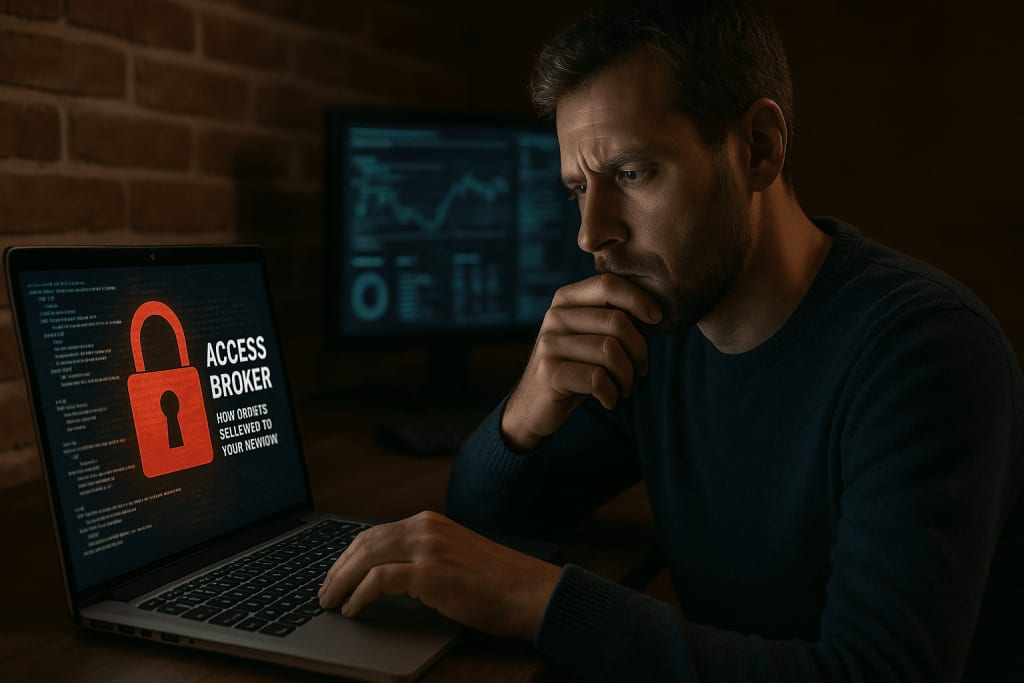
If you're like me, you probably imagine cybercriminals as hackers hammering away at firewalls in real time. But here’s the truth: most major breaches don’t start with brute force they start with access brokers. These behind-the-scenes players operate in the shadows of the dark web, selling login credentials, remote desktop access, and even full administrative control to whoever pays the price. If you've never heard of them, it's time to change that. Because if your credentials are floating around online, someone might already be negotiating access to your network without your knowledge.
How Access Brokers Actually Work
Let me break it down based on what I’ve researched and seen in reports. Access brokers thrive in marketplaces most of us never visit dark web forums, encrypted Telegram groups, and invitation-only chats. Their job is simple but dangerous: get into your system, and then sell that access.
They don't necessarily perform the attack themselves. Instead, they act as middlemen. For example, if they compromise a VPN credential of a Fortune 500 company, they can sell that access for thousands of dollars to ransomware gangs like LockBit or ALPHV. Sometimes, they sell to phishing groups who want to exfiltrate data quietly. The price of access varies:
- $50–$200 for small business VPN logins
- $500–$3,000 for RDP or Citrix credentials
- $10,000+ for high-value enterprise access
And the scariest part? They often reuse breached credentials from data leaks, which means if you’re still using old or recycled passwords, you’re a walking target.
Why Some Countries Are Bigger Targets Than Others
While access brokers operate globally, certain countries are hit harder. In the US, for example, the sheer number of cloud-reliant companies, remote workers, and legacy systems makes it a goldmine for attackers. A single leaked corporate email can lead to massive data breaches.
In the UK, the healthcare and financial sectors have been recent favorites for initial access deals. Even mid-sized law firms and e-commerce platforms are regularly listed on forums with IP addresses, access privileges, and usernames preloaded.
Then there’s South Asia, including India and Pakistan, where growing IT infrastructure often lacks modern security protocols. A friend of mine running a fintech startup in Karachi recently found out that one of their exposed FTP credentials had been posted in a forum, available for just $90. That’s how cheap and easy it can be for your business to become someone’s next target.
How I Protected My Identity with PureVPN’s Dark Web Monitoring
As someone who's always been cautious about online privacy, I didn’t think much could slip past me. But what I didn’t realize was that access brokers yes, the same middlemen who sell backdoor access to your corporate network don’t always target companies directly. Sometimes, they exploit individual credentials first. That’s how a seemingly harmless database leak became my wake-up call. My login details, along with thousands of others, were quietly listed on a dark web forum.
That’s when I discovered PureVPN’s Dark Web Monitoring feature. It scanned the dark web in real time and alerted me the moment my email showed up in a compromised database. What impressed me most wasn’t just the speed, it was how it helped me take immediate action. I changed the compromised passwords and enabled 2FA on sensitive accounts. For businesses and individuals alike, this layer of surveillance is no longer a luxury; it’s a necessity. Because once access brokers have your credentials, they’re one sale away from handing over your digital keys to a cybercriminal halfway across the world.
What You Can Do to Stay Safe
Now that you know what access brokers do, here’s what you should be doing right now whether you’re protecting your personal identity or your business network:
Use a Premium VPN: A VPN like PureVPN encrypts your internet traffic and hides your real IP, making it harder for threat actors to monitor or trace your connection.
Monitor the Dark Web: Opt for a tool (like PureVPN’s Dark Web Monitoring) that alerts you when your credentials surface online. Early detection is everything.
Enable Multi-Factor Authentication (MFA): Never rely solely on passwords. MFA adds an extra layer that most access brokers can’t bypass.
Avoid Recycled Passwords: If you’re still using the same password for multiple accounts, you’re practically handing over access. Use a password manager to randomize and rotate credentials.
Keep Software Updated: Patches and updates fix the vulnerabilities access brokers exploit. Delaying an update could be the weak link that leads to exposure.
Final Thoughts
Access brokers are the invisible hand behind some of the largest cyberattacks in recent years. And their methods are evolving quietly, cheaply, and globally. Staying passive isn’t an option anymore. Whether you're a digital nomad, a startup owner, or just someone who values their privacy, you need to treat digital access as a frontline threat.
Start with basic hygiene, add smart layers like VPN encryption and dark web alerts, and you’ll be miles ahead of the average target. That’s how I sleep better at night and so can you.
About the Creator
Ester Allenwood
A finance, savings, and trading enthusiast from Canada who’s passionate about exploring new destinations and unwinding with a good binge-watch session. Balancing smart investments with the joys of travel and entertainment!
Keep reading
More stories from Ester Allenwood and writers in Geeks and other communities.
Top Alternatives to Dramacool That Are Legal and Secure in 2025
K-dramas, C-dramas, and J-dramas continue to gain massive global popularity. Sites like Dramacool made it easy to stream these shows for free, drawing in millions of fans worldwide. But there’s one major problem: Dramacool operates in a legal gray zone and comes with real security risks.
By Ester Allenwood6 months ago in Geeks
Marty Supreme Review: Timothée Chalamet Is Excellent, The Movie… Not So Much
⭐ Rating: 2 out of 5 stars Marty Supreme Directed by Josh Safdie Written by Josh Safdie, Ronald Bronstein Starring Timothee Chalamet, Gwyneth Paltrow, Tyler The Creator, Odessa A'zion
By Sean Patrickabout a month ago in Geeks
📢 Raise Your Voice Thread: 01/08/2026
Our “Raise Your Voice Threads” are hosted most alternating Thursdays at 12PM ET to offer creators more avenues to uncover exceptional stories on Vocal. As we are continuously searching for fresh creators and inspiring stories, this thread provides an opportunity to exchange and discuss the stories that have moved and motivated us on Vocal.
By Raise Your Voice by Vocal4 days ago in Resources



Comments
There are no comments for this story
Be the first to respond and start the conversation.