
What Is a Static Site Generator?
Static Site Generator

In the world of website development, static site generators have gained tremendous popularity in recent years. A static site generator is a software tool that takes plain text files and turns them into a complete website. In this article, we will explore the concept of static site generators, their benefits, and how they differ from traditional dynamic websites.
What is a Static Site?
A static website is a collection of web pages that are delivered to the user exactly as they were created, with no server-side processing involved. Static websites are built using HTML, CSS, and JavaScript, and the content is stored in files on the server.
Advantages of Static Site Generators
Static site generators offer several advantages over traditional dynamic websites:
Speed: Since static sites are pre-built and served as static files, they load faster than dynamic sites.
Security: Static sites are more secure than dynamic sites, as there is no server-side processing involved.
Scalability: Static sites can handle a large number of visitors with minimal hardware resources.
Simplicity: Static sites are easy to set up, maintain, and deploy.
Disadvantages of Static Site Generators
While static site generators offer many benefits, there are some drawbacks as well:
Limited Functionality: Static sites are limited in functionality compared to dynamic sites, as there is no server-side processing involved.
Difficult to Edit: Making changes to a static site requires editing the source files and rebuilding the site, which can be time-consuming.
Steep Learning Curve: Using a static site generator requires knowledge of the command line and programming languages like HTML, CSS, and JavaScript.
Comparison with Dynamic Websites
Dynamic websites, on the other hand, use server-side processing to generate content on the fly. This allows for more complex functionality, such as user authentication, database integration, and dynamic content.
However, dynamic websites are slower, less secure, and more difficult to set up and maintain than static sites.
Popular Static Site Generators
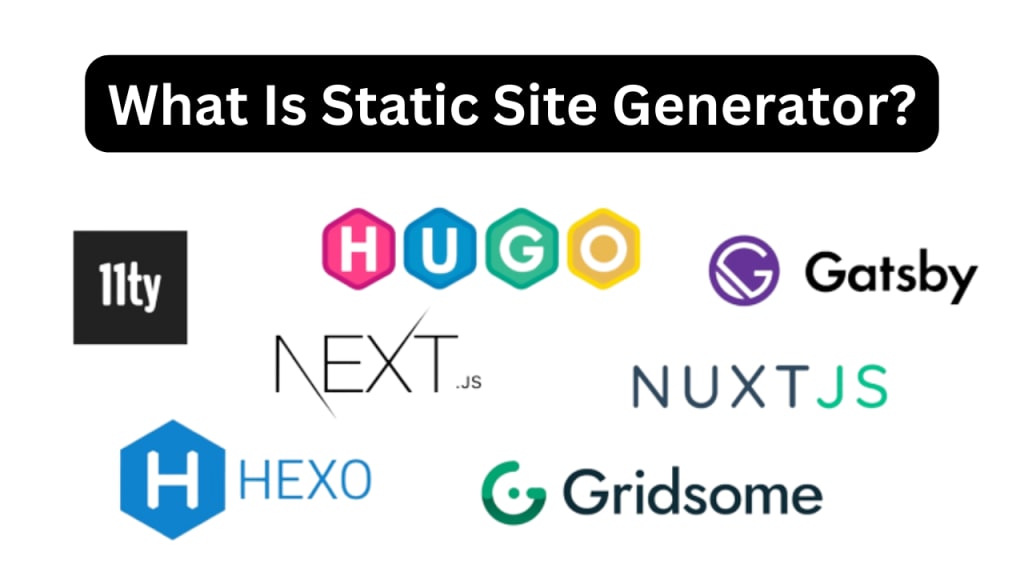
There are many static site generators available, each with its own strengths and weaknesses. Some of the most popular ones include:
Nextjs: Next.js is a popular open-source React framework that allows developers to build server-side rendered web applications.
Astro: Astro is a JavaScript framework that is designed to work with modern front-end development tools and workflows
Jekyll: A Ruby-based generator that powers GitHub Pages.
Hugo: A Go-based generator that is known for its speed.
Gatsby: A React-based generator that is popular for building modern websites.
How to Choose a Static Site Generator
When choosing a static site generator, consider the following factors:
Ease of use: Choose a generator that is easy to set up and use, especially if you are new to web development.
Performance: Look for a generator that produces fast, lightweight websites.
Flexibility: Choose a generator that allows you to customize the look and feel of your website and supports the features you need, such as image processing or video embedding.
Community Support: Choose a generator with an active community and documentation to help you troubleshoot issues and learn new features.
Building a Website with a Static Site Generator
Building a website with a static site generator typically involves the following steps:
- Install the generator and any necessary dependencies.
- Choose a theme or create your own.
- Write content in plain text files using a markup language such as Markdown or HTML.
- Build the site using the generator, which will convert the content into static files.
- Preview the site locally to ensure everything looks and functions as expected.
- Deploy the site to a hosting service or server.
9. Deploying a Static Website
Deploying a static website is typically easier and less expensive than deploying a dynamic website. Static websites can be hosted on services like GitHub Pages, Netlify, or AWS S3. Many static site generators also include built-in deployment options.
SEO Benefits of Static Websites
Static websites are inherently more SEO-friendly than dynamic sites. Since the content is pre-built and served as static files, it can be easily crawled and indexed by search engines. Static sites also tend to have faster load times, which can improve search engine rankings.
Security Benefits of Static Websites
Static websites are also more secure than dynamic sites, as there is no server-side processing involved. This reduces the risk of server-side attacks, such as SQL injection or cross-site scripting.
The Future of Static Site Generators
As the demand for faster, more secure, and more scalable websites continues to grow, static site generators are likely to become even more popular. New generators are being developed with features like real-time updates and incremental builds to address some of the limitations of static sites.
Conclusion
Static site generators offer a simple, fast, and secure way to build websites. While they may not be suitable for all types of websites, they are a great choice for blogs, portfolios, and small business websites. When choosing a static site generator, consider the ease of use, performance, flexibility, and community support.
About the Creator
Nuruzzaman
Internet Marketer & Tech Writer
Keep reading
More stories from Nuruzzaman and writers in Geeks and other communities.
Why JAMstack is the Future of Web Development
Web development has come a long way since its inception, and traditional web development has been the primary mode of developing websites for the past two decades. However, with the advent of new technologies and changing user demands, the traditional web development approach has become obsolete, and a new approach called JAMstack has emerged as the future of web development. In this article, we will discuss why JAMstack is the future of web development, its benefits, and how to implement it.
By Nuruzzaman3 years ago in Geeks
Marvel Zombie
The last entry into our 2025 superhero projects catalogue is Marvel Zombies. This was a show that was anticipated by absolutely no one and it disappeared from the public consciousness as quickly as it was released. There was nothing special about the project that made it a must see, or a must remember. In fact if anything it's a must forget.
By Alexandrea Callaghan25 days ago in Geeks
Selena Gomez Just Matched Her Bronze Manicure to Her Makeup—and It Works
Bronze makeup is often reserved for summer, but Selena Gomez is proving it works year-round. (TBH, I love a beauty rule breaker.) At a Rare Beauty launch celebrating the new Warm Wishes Soft Matte Powder Bronzer, she wore a rich brown dress paired with matching bronze makeup and nails. The monochromatic look felt elevated, warm, and undeniably chic—making a strong argument for bronze as the ultimate winter pick-me-up.
By Dena Falken Esqabout 18 hours ago in Geeks
Smart phones, Humans and Aliens.
WARNING. I will be tapping into one of your favorite creative tensions: The absurdity of humans worshipping their glowing rectangles as if they were tiny oracles. There’s something deliciously poetic about that contradiction, and it lends itself beautifully to an instructive proviso.
By Novel Allen4 days ago in Poets



Comments
There are no comments for this story
Be the first to respond and start the conversation.