
What Are Stealer Logs? How Hackers Use Them to Sell Your Data
Inside the Silent Cyber Heist: How Stealer Logs on the Dark Web Expose Your Most Sensitive Data Without You Ever Knowing

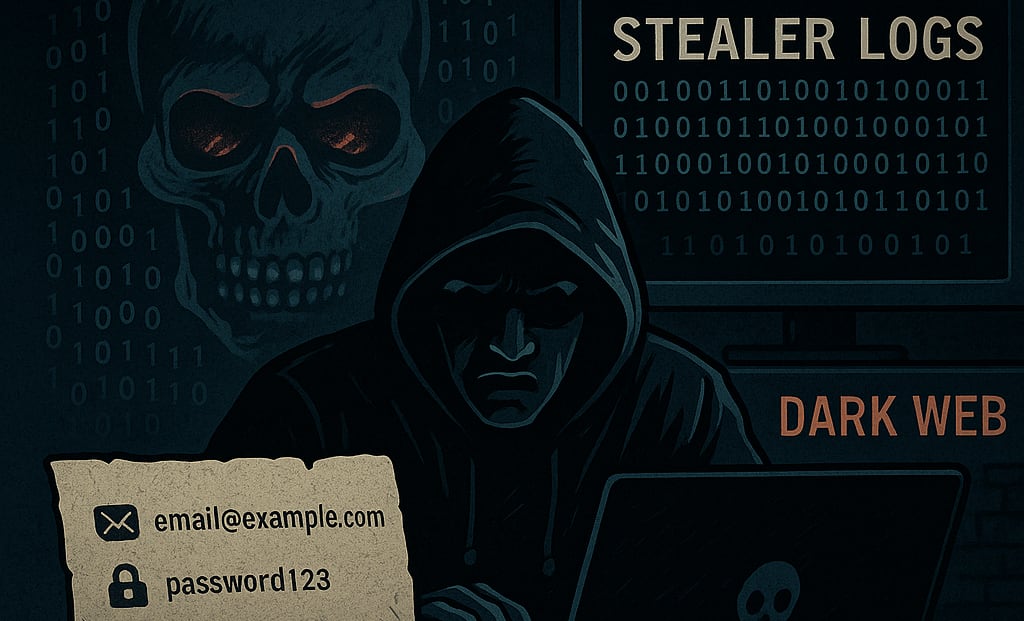
Imagine waking up one morning to find that your email, social media, and even your bank accounts have all been accessed without your permission. Passwords are changed, devices are logged in remotely, and your digital identity is no longer your own. That’s exactly what happened to me a few months ago, and it was all because of something I had never heard of before: stealer logs.
What Are Stealer Logs?
Stealer logs are data files generated by malicious software known as information stealers—a category of malware designed to extract sensitive information from infected devices. This can include login credentials, browser cookies, saved credit cards, autofill data, cryptocurrency wallet keys, and even desktop files. Once harvested, this data is compiled into a “log” and uploaded to a command-and-control server operated by cybercriminals.
These logs are then sold or distributed in bulk on the dark web, often categorized and filtered by platform (e.g., “Google account log with cookie,” “Banking log,” or “Crypto wallet with login”). It’s a silent and invisible crime. Unlike ransomware, you don’t get a notification. You only find out once the damage has been done.
My Firsthand Encounter with Stealer Logs
I first noticed something was wrong when I received an email from my online trading platform notifying me of a login from Moscow. I live in Canada and haven’t traveled in years. Thinking it was a glitch, I changed my password. But the very next day, I was locked out of my email, my LinkedIn account was hijacked, and someone tried to reset my online banking password.
Panicking, I contacted support for each service. During a conversation with a cybersecurity expert, I was told to check whether my data had been involved in a stealer logs dark web breach. That’s when I was introduced to the concept of stealer malware, and how I’d likely unknowingly installed one via a cracked software download a few weeks earlier
How Hackers Use Stealer Logs on the Dark Web
Once a stealer log is generated, it becomes a high-value commodity in underground markets. Here's how it typically plays out:
1. Infection: The victim unknowingly installs malware through a malicious email attachment, fake browser plugin, pirated software, or phishing website.
2. Data Extraction: The malware scans browsers, apps, and local files for sensitive data, compiling it into a log.
3. Upload to Server: The log is uploaded to a centralized database controlled by the attacker.
4. Sale on Dark Web Markets: Cybercriminals browse these logs like shopping on Amazon searching for high-value targets like financial accounts, cryptocurrency wallets, or business logins.
5. Credential Abuse: The data is then used for identity theft, fraud, phishing, blackmail, or sold again in bulk.
What’s worse is that this process is automated and scalable. A single hacker can generate thousands of stealer logs a day using botnets and mass infections, making the threat very real for everyday users.
How I Took Control with Dark Web Monitoring
After the chaos, I turned to tools that could help me track my data exposure in real time. That’s when I came across PureVPN’s Dark Web Monitoring. It integrates directly with your online identity and continuously scans the dark web for any sign of your credentials appearing in stolen databases or stealer logs.
Within minutes of setting it up, PureVPN alerted me that my Gmail login, Instagram password, and even a work-related platform were all flagged in stealer logs circulating on forums. I immediately updated passwords, enabled two-factor authentication, and revoked all session access.
How You Can Protect Yourself from Stealer Log Attacks
Here’s what I learned (and now religiously follow) after being victimized:
- Avoid Cracked Software and Suspicious Downloads: Most stealer malware is hidden in pirated files, game cheats, or shady browser extensions.
- Use Reputable Antivirus and Anti-Malware Tools: Many stealers are evasive, but real-time protection helps detect known threats.
- Enable Two-Factor Authentication (2FA): Even if a password is leaked, an attacker can’t log in without your second factor.
- Use a Secure VPN and Encrypted Browsing: Avoid public Wi-Fi and use a VPN to protect network-level attacks.
- Activate Dark Web Monitoring Tools: Tools like Dark Web Monitoring help alert you when your credentials are found in stealer logs, allowing you to act before damage is done.
Final Thoughts
Stealer logs are one of the most dangerous and underreported tools in the cybercriminal arsenal. Unlike phishing or brute-force attacks, these operate in the background and provide attackers with everything they need in one go. I was lucky to catch it in time, but many don’t even know they’ve been compromised until their money is gone, their accounts hijacked, or their name used in fraud.
If you take one thing away from my story, let it be this: don’t wait until you’re compromised to care about your digital security. Monitor, secure, and stay informed, because on the dark web, your data might already be up for sale.
About the Creator
Ester Allenwood
A finance, savings, and trading enthusiast from Canada who’s passionate about exploring new destinations and unwinding with a good binge-watch session. Balancing smart investments with the joys of travel and entertainment!
Keep reading
More stories from Ester Allenwood and writers in Geeks and other communities.
How to Watch Sullivan’s Crossing Season 3 Online from Anywhere
Sullivan's Crossing, the much-loved drama series, is back for its highly anticipated third season on CTV. With Morgan Kohan, Chad Michael Murray, and Scott Patterson leading the cast, the show follows Maggie Sullivan as she deals with life, love, and family drama in a picturesque small town. Excited for Season 3, premiering April 27? If you're outside Canada, don't stress - we'll show you how to stream the new season from anywhere!
By Ester Allenwood10 months ago in Geeks
The Rachels - 2025
Much to my surprise, I have kept a list of the films I‘ve seen this year. I daresay it isn’t complete. There will be films that snuck in on a late night in front of the TV that I would’ve forgotten to note. Or others, that I went to watch at the cinema, but then had a red wine and promptly forgotten about. But it’s not a bad approximation of the films I’ve seen this year. In total, there are 53 films listed, so an average of one a week and one for good luck.
By Rachel Robbins20 days ago in Geeks


Comments
There are no comments for this story
Be the first to respond and start the conversation.