
Webtoon at Conventions: Part 1
Merchandise, freebies, photo booths, signings, panels, and more!

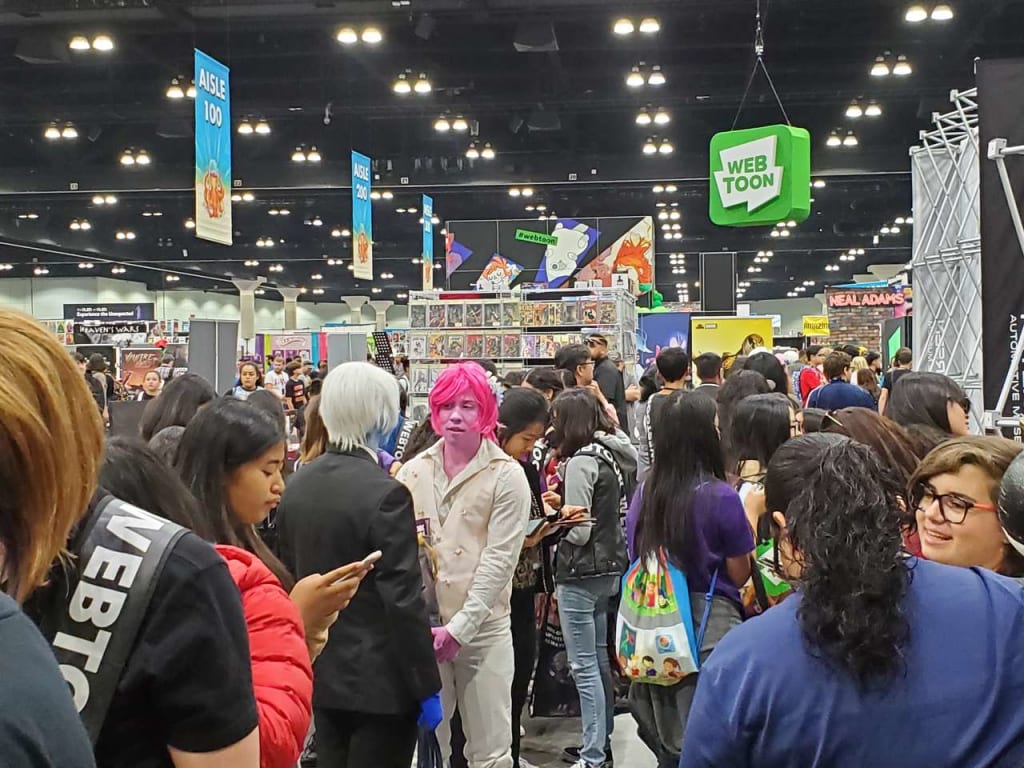
Line Webtoon is coming to a comic con near you! When visiting their booth you’ll meet creators, collect signed prints, buy exclusive merch, attend panels, and freak out over all things webtoon.
Preparing to visit the Webtoon booth for the first time, you realize you have no idea what to expect. What is the cost of the merchandise? Are the signed prints free? How long are the lines? Is attending a panel worth it? Get first-hand insight into the Webtoon booth and all it has to offer.
For specific info about Creator Signings and Panels check out "Webtoon at Conventions: Part 2!"
Merchandise
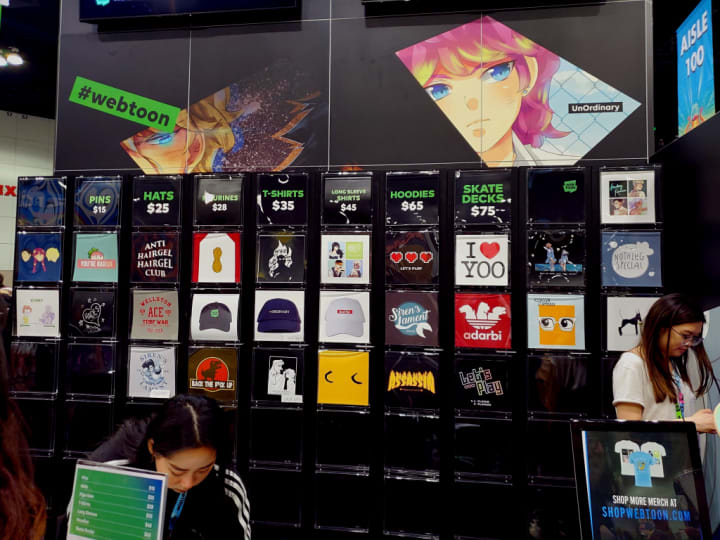
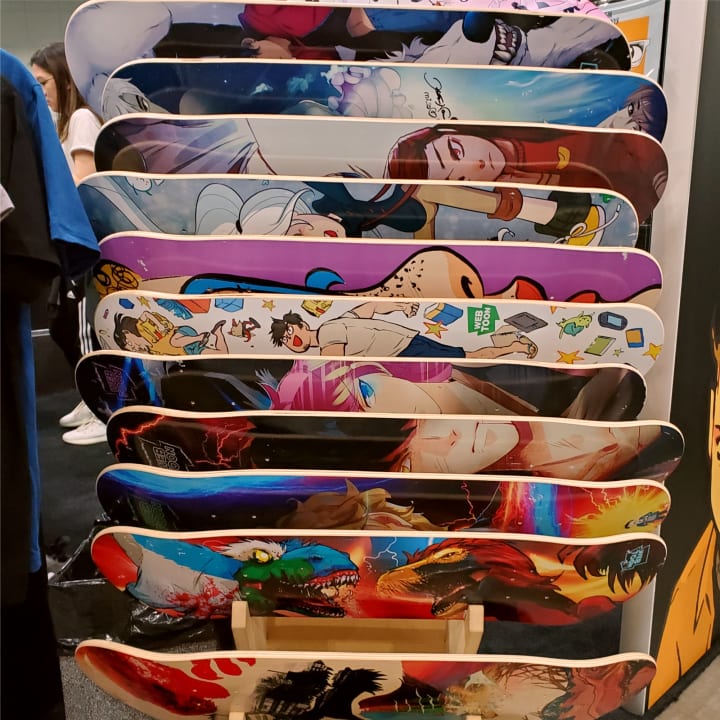
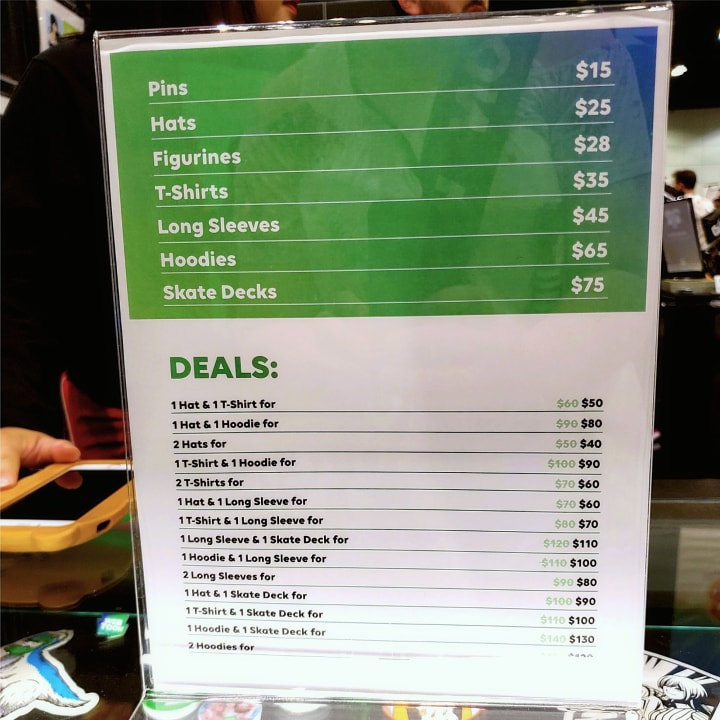
Webtoon offers pins, hats, figurines, t-shirts, long sleeve shirts, hoodies, and skate decks for sale at their booth. The prices of webtoon merchandise range from $15 to $75 an item, not including tax.
Along with flat prices, Webtoon also offers deals allowing you to mix and match different merch for a discounted price.
Most merch offered at the booth is exclusive only to conventions and cannot be found on the Webtoon Shop.
Freebies
Don’t worry if you are short on funds because Webtoon gives out freebies! Webtoon freebies include but are not limited to tote bags, pop sockets, postcards, signed posters, etc. Freebies are distributed throughout the day, either at random or at specific times. But don’t wait too long to grab them because they are limited and on a first-come basis.
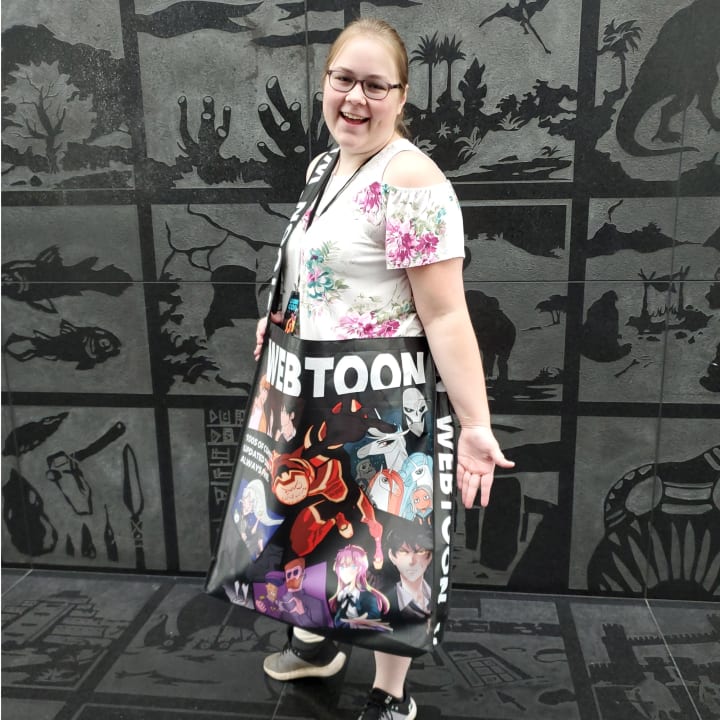
Scheduled freebies are given out during the listed Bag Giveaway and Blind Bag Giveaway. For the Bag Giveaway you are given a very large Webtoon tote bag, that will nearly take you out in the process when walking around the convention floor. You can find the tote bags in the front lobby of the convention and at the Webtoon booth (unless stated otherwise).
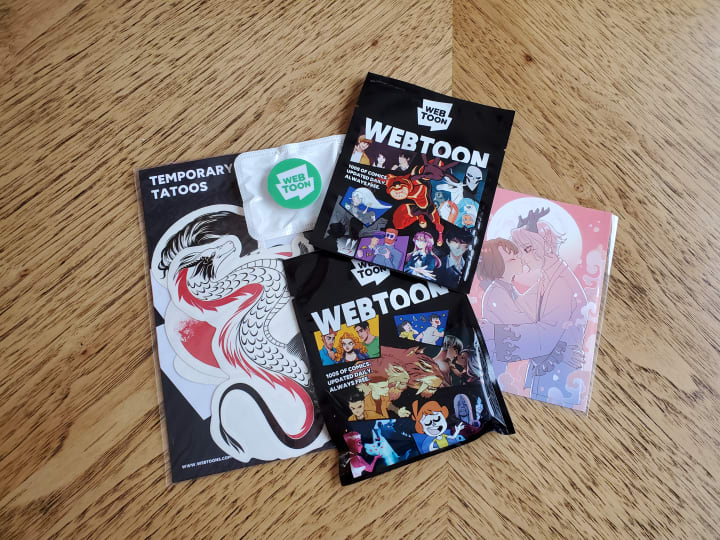
For the Blind Bag Giveaway you are given a number of goodies in the form of stickers, temporary tattoos, wrist bands, etc. You can get these freebies near the line where creators were greeting fans and signing prints (unless stated otherwise). Get in line early to guarantee your shot of grabbing some free merch.

To Continue Reading This Article Please Visit Our New Blog: The Webtoon Element!
About the Creator
Valeska
A young woman who enjoys writing about her hobbies, experiences, and insights. Let the randomness commence!
Spongebob Review
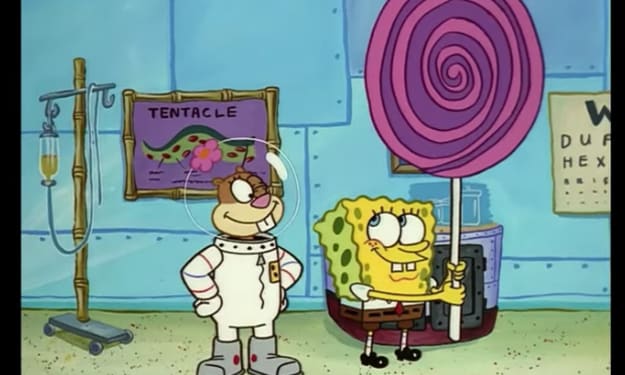
The episode “Suds” opens with a sun‑drenched morning in Bikini Bottom, the camera gliding lazily over the coral‑lined streets before settling on SpongeBob’s pineapple house, where the familiar, squeaky door hinges announce his cheerful entrance. The scene is rendered in vivid, pastel‑hued animation that captures the playful absurdity of the series, while a jaunty ukulele riff underscores the buoyant atmosphere. As SpongeBob rummages through his kitchen, he absent‑mindedly leaves the refrigerator door ajar, a small but pivotal lapse that sets the entire plot in motion. Tiny bubbles begin to drift from the open fridge, slowly coalescing into a frothy, luminous cloud that the show cleverly dubs “the Suds,” a mischievous entity that flickers like a living soap‑bubble, hinting at the whimsical chaos soon to erupt.
By Forest Green2 days ago in Geeks



Comments
There are no comments for this story
Be the first to respond and start the conversation.