
Victorian Psycho: Madness Behind Manners in a Gothic Age
A Gothic Descent Into Repression, Power, and Polite Cruelty

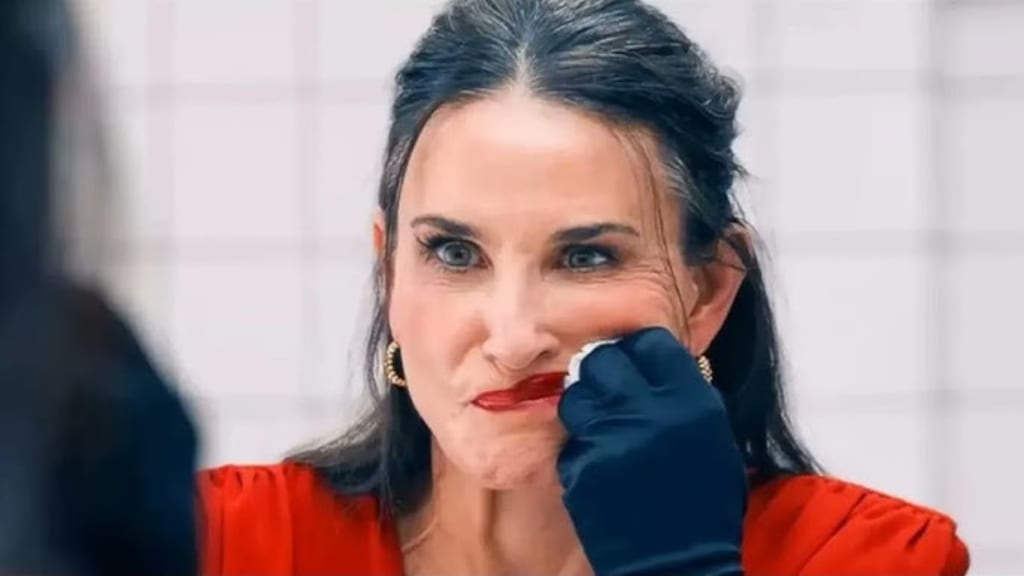
The Victorian era has long been romanticized on screen as a world of candlelit parlors, rigid etiquette, and moral absolutism. Yet beneath the corsets and curtsies, it was also an age haunted by repression, violence, and hypocrisy. Victorian Psycho, the film adaptation of Virginia Feito’s acclaimed novel, taps directly into that darkness, offering a chilling portrait of madness concealed beneath perfect manners. More than a period thriller, the film stands as a sharp critique of Victorian values and a disturbing meditation on power, identity, and female rage.
At its core, Victorian Psycho follows Winifred Notty, a governess hired to educate children in an isolated English manor. From the outside, Winifred appears to embody everything Victorian society prized in women: politeness, obedience, composure. But as the story unfolds, the audience is drawn into her fractured inner world, where cruelty, manipulation, and violence simmer just beneath the surface. The film’s brilliance lies not in shocking twists alone, but in how it weaponizes restraint—forcing viewers to confront the horror that thrives in silence.
The Gothic Revival Reimagined
Gothic storytelling has always been a natural fit for Victorian settings, but Victorian Psycho modernizes the tradition. Rather than relying on supernatural elements, the film roots its terror firmly in psychology. The manor is not haunted by ghosts, but by ideology—an environment where class hierarchy, gender expectations, and emotional repression suffocate everyone within its walls.
Visually, the film leans into muted palettes, shadow-heavy interiors, and carefully composed frames that mirror the rigidity of Victorian life. Every teacup, corridor, and lace-trimmed dress feels deliberately controlled. This aesthetic precision becomes unsettling in itself, reinforcing the sense that something is being held back—violence waiting for permission to exist.
A Female Antihero Without Apology
What sets Victorian Psycho apart from traditional thrillers is its refusal to soften or justify its protagonist. Winifred Notty is not presented as misunderstood or redeemable. She is intelligent, cruel, and disturbingly self-aware. The film does not ask the audience to sympathize with her actions, but it does demand that we acknowledge her agency.
This portrayal challenges long-standing cinematic tropes surrounding female villains. Historically, women who commit violence on screen are often explained away through trauma or madness that strips them of responsibility. Victorian Psycho resists this narrative. Winifred is a product of her society, but she is not merely a victim of it. Her brutality becomes a grotesque mirror of the cruelty embedded in Victorian power structures themselves.
Social Critique Beneath the Blood
While the film contains moments of shocking violence, its most cutting blows are ideological. Victorian Psycho exposes how the Victorian obsession with propriety enables abuse. Children are disciplined in the name of morality, servants are dehumanized by class hierarchy, and women are valued only insofar as they remain useful and silent.
Winifred thrives in this environment precisely because it refuses to look too closely. Her position as a governess places her in a liminal space—educated but powerless, respected but disposable. The film uses this tension to explore how institutions designed to enforce “order” often protect the most dangerous individuals within them.
In this sense, Victorian Psycho feels strikingly contemporary. Its critique of systems that prioritize appearances over accountability resonates far beyond its 19th-century setting. The film suggests that evil rarely announces itself loudly; more often, it blends in, follows the rules, and smiles politely.
Horror Without Excess
Unlike many modern horror films, Victorian Psycho avoids gratuitous spectacle. Its most disturbing moments are often implied rather than shown, relying on performance, sound design, and pacing to unsettle the viewer. This restraint makes the violence feel more personal and more disturbing, as the audience is forced to imagine what the film refuses to sensationalize.
This approach aligns perfectly with the story’s themes. Just as Victorian society represses emotion, the film represses its own excesses—only to let them surface at carefully chosen moments. The result is a slow-burning dread that lingers long after the screen fades to black.
Why Victorian Psycho Matters Now
Period films often function as escapism, allowing modern audiences to indulge in nostalgia. Victorian Psycho does the opposite. It uses the past to interrogate the present, reminding viewers that rigid social norms and unchecked authority remain fertile ground for harm.
In an era increasingly interested in morally complex narratives and unapologetic antiheroes, Victorian Psycho arrives as a bold statement. It refuses comfort, denies easy explanations, and challenges the audience to sit with discomfort. The film asks an unsettling question: what happens when society rewards silence more than truth?
Final Thoughts
Victorian Psycho is not an easy film to watch, nor is it meant to be. It is a meticulously crafted descent into psychological horror, anchored by a fearless central performance and a razor-sharp critique of social hypocrisy. By stripping away the romantic veneer of the Victorian era, the film reveals something far more unsettling than ghosts or monsters—human cruelty disguised as civility.
For viewers willing to engage with its darkness, Victorian Psycho offers a haunting, thought-provoking experience that lingers well beyond its final scene. It is a reminder that sometimes the most terrifying figures are not those who defy society, but those who understand it perfectly—and use it to their advantage.
About the Creator
Keep reading
More stories from David Cook and writers in Geeks and other communities.
Best VPN for Mac in 2026
Finding a good VPN for Mac which hide your IP address and route your web traffic through a more secure path. This allows you to protect your privacy, avoid being the victim of cybercrime, and access content that may be restricted in your local area.
By David Cook10 days ago in Geeks
Marvel Zombie
The last entry into our 2025 superhero projects catalogue is Marvel Zombies. This was a show that was anticipated by absolutely no one and it disappeared from the public consciousness as quickly as it was released. There was nothing special about the project that made it a must see, or a must remember. In fact if anything it's a must forget.
By Alexandrea Callaghan17 days ago in Geeks
Beloved Thor Franchise Actor Talks Avengers: Doomsday Return
A Marvel star addressed questions about a possible return in Avengers: Doomsday ahead of the film’s release. The Thor franchise star spoke about her connection to the character and her experience in the Marvel Cinematic Universe without confirming her involvement.
By Dena Falken Esq15 minutes ago in Geeks


Comments
There are no comments for this story
Be the first to respond and start the conversation.