
United Kingdom Leather Goods Market Size and Forecast 2026–2034
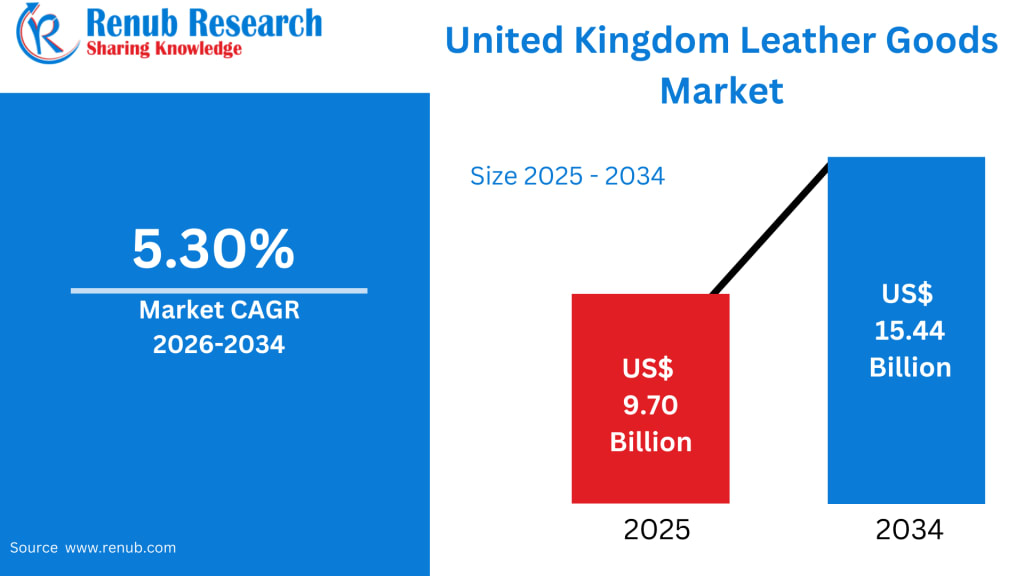
Luxury, e-commerce, and sustainability reshape a heritage industry as the UK market advances from US$ 9.70 billion in 2025 to US$ 15.44 billion by 2034

A Classic Industry in a Modern Makeover
The United Kingdom leather goods market stands at an interesting intersection of tradition and transformation. Long associated with craftsmanship, heritage brands, and luxury retail, the sector is now being reshaped by digital commerce, sustainability demands, and changing consumer tastes. According to Renub Research, the market is projected to expand from US$ 9.70 billion in 2025 to US$ 15.44 billion by 2034, advancing at a CAGR of 5.30% during 2026–2034. This steady growth reflects the enduring appeal of leather products—handbags, footwear, accessories, and travel goods—combined with evolving retail models and responsible production practices.
In a country where fashion is both an industry and a cultural identity, leather goods remain symbols of durability, sophistication, and long-term value. From London’s luxury districts to online storefronts serving consumers nationwide, leather continues to define style across price tiers, from premium designer collections to mass-market essentials.
Understanding the Market: What Are Leather Goods?
Leather goods encompass items made from tanned animal hide, valued for strength, flexibility, texture, and the distinctive patina they develop over time. The category includes handbags, wallets, belts, footwear, jackets, luggage, travel accessories, watch straps, and upholstery. Manufacturing processes—tanning, cutting, stitching, and finishing—can be artisanal or industrial, enabling brands to address both niche luxury and high-volume demand.
In the UK, leather enjoys strong cultural acceptance. British consumers associate it with craftsmanship, durability, and status. The country’s fashion heritage, global luxury brands, and tourism-driven retail underpin demand. At the same time, the market is being redefined by ethical sourcing, sustainable tanning, recycled packaging, and the emergence of vegan and bio-based alternatives, ensuring continued relevance in a values-driven consumer environment.
Growth Drivers Powering the UK Leather Goods Market
1) Fashion Culture, Luxury Demand, and Brand Heritage
The UK’s deep-rooted fashion culture is a primary growth engine. Globally recognized fashion houses and heritage brands anchor consumer trust in quality and design, while premium materials and timeless aesthetics sustain demand for handbags, wallets, footwear, and travel accessories. Tourism in major cities further boosts luxury sales, with visitors seeking iconic British craftsmanship.
Brand storytelling, seasonal fashion cycles, and celebrity endorsements continue to amplify interest. A notable example is Von Baer’s May 2025 launch of its UK website (vonbaer.co.uk), offering premium, full-grain, vegetable-tanned Italian leather bags and accessories to address demand for high-end, sustainable products.
2) Expansion of E-Commerce and Digital Retail
E-commerce is one of the fastest-growing forces in the market. Brand websites, fashion marketplaces, and luxury platforms offer convenience, price transparency, rich product information, and customer-friendly return policies—factors that elevate purchase confidence. Digital marketing, influencer campaigns, virtual try-ons, and social commerce increasingly shape buying decisions.
Direct-to-consumer (DTC) models reduce reliance on physical retail and enable smaller brands to scale. Mobile apps, personalization, and AI-driven recommendations drive repeat purchases. In November 2025, Lakeland Leather introduced a “Ship to Shop” option in partnership with HubBox, allowing customers to collect online orders from local points—demonstrating how logistics innovation supports omnichannel growth.
3) Premiumization, Sustainability, and Customization
Consumer preferences are shifting toward quality over quantity. Demand for full-grain leather, handcrafted goods, and premium collections is rising as shoppers seek long-lasting value. Simultaneously, sustainability is no longer optional. Brands are adopting chrome-free tanning, ethical sourcing, wastewater treatment, and recyclable packaging to meet regulatory standards and customer expectations.
Customization—monogramming, bespoke sizing, and personalized designs—adds emotional value, especially among younger buyers. In November 2024, UNCAGED Innovations unveiled ELEVATE, a luxury bio-based leather alternative developed with independent fashion brands worldwide, enabling sustainable materials for wallets, watch straps, and accessories.
Key Challenges Facing the Industry
Ethical, Environmental, and Regulatory Pressures
Traditional leather production involves chemical-intensive processes subject to increasing regulation around environmental impact and worker safety. Consumers are more sensitive to animal welfare, carbon footprints, and supply chain transparency. Compliance requires investment in cleaner tanning technologies, wastewater treatment, and traceability systems—raising production costs. Import regulations on hides and finished goods can also affect sourcing. For many brands, the central challenge is balancing profitability with environmental responsibility while protecting brand reputation.
Competition from Synthetic Alternatives and Price Sensitivity
Synthetic and vegan leathers—often cheaper, lightweight, and marketed as cruelty-free—are gaining traction, particularly among price-sensitive and ethically minded consumers. Fast-fashion brands aggressively promote low-cost alternatives, intensifying competition. Volatile raw material prices and rising labor costs compress margins for genuine leather producers. With consumers comparing prices across platforms, mid-range brands face pressure to defend their value proposition through craftsmanship, durability, and heritage.
Segment Insights: Where Growth Is Concentrated
United Kingdom Leather Footwear Market
Footwear remains a cornerstone of the sector, prized for durability, comfort, and premium appeal. Formal shoes, casual wear, boots, and designer styles perform well across corporate, educational, and lifestyle contexts. Sustainability trends are influencing eco-friendly tanning and recycled sole materials. Omnichannel retail and steady replacement cycles ensure footwear continues as a major revenue contributor.
United Kingdom Genuine Leather Goods Market
Genuine leather products—handbags, wallets, belts, briefcases, and travel accessories—retain strong demand due to their longevity and natural texture. Heritage brands benefit from trust in traditional craftsmanship, while corporate gifting and executive accessories provide additional volume. Despite competition from synthetics, many consumers favor genuine leather for its classic aesthetic and long-term utility, especially when paired with customization and limited editions.
United Kingdom Leather Premium Products Market
Luxury leather goods cater to high-income consumers seeking exclusivity and craftsmanship. Designer handbags, premium luggage, and high-end footwear are sold through flagship stores, boutiques, airport duty-free, and online luxury platforms. Tourism and gifting sustain demand, while younger affluent buyers are drawn to limited editions, artisanal production, and sustainable luxury narratives. This segment demonstrates resilience across economic cycles due to brand loyalty and aspirational purchasing.
United Kingdom Leather Goods Mass Products Market
Mass-market leather goods serve budget-conscious shoppers seeking style and function at accessible prices. Distribution through supermarkets, high-street retailers, and fast-fashion outlets emphasizes trend alignment and affordability. Products often use split leather or coated fabrics to control costs. While margins are thin and price sensitivity high, this segment delivers substantial volume and broad market penetration.
Distribution Channels: From Storefronts to Screens
Departmental Stores
Department stores remain influential by offering premium, mid-range, and mass brands under one roof. They enable tactile inspection, personalized service, and seasonal promotions, making them key launch platforms for new collections and collaborations. Click-and-collect and hybrid retail strategies preserve relevance in an increasingly digital landscape.
Online Stores
E-commerce is the fastest-growing channel, driven by convenience, extensive choice, and transparent pricing. Features such as 360-degree product views, virtual fitting, AI recommendations, and social media integration enhance engagement. Easy returns and mobile shopping promote impulse and repeat purchases. For international brands, online platforms simplify entry into the UK, intensifying competition while expanding consumer options.
City-Level Dynamics: Regional Hubs of Demand
London
As a global fashion and luxury capital, London dominates the UK leather goods market. High-end boutiques, department stores, airport retail, and strong tourism drive sales of premium handbags, footwear, and travel goods. Fashion weeks, flagship launches, and sustainability-led design trends shape national consumption patterns.
Manchester
Manchester’s youthful demographics, expanding retail infrastructure, and creative scene support both premium and mass segments. Shopping centers, high-street outlets, and strong online adoption fuel demand for handbags, footwear, and accessories, while local designers bolster the artisanal segment.
Liverpool
Tourism, port-linked trade, and urban regeneration underpin Liverpool’s leather goods market. Waterfront developments and outlet malls attract visitors, boosting sales of travel accessories, handbags, and footwear. Efficient logistics strengthen e-commerce distribution.
Edinburgh
Edinburgh’s market is characterized by tourism, heritage retail, and premium craftsmanship. Boutique stores and department outlets cater to visitors seeking quality leather souvenirs and gifts, while affluent residents sustain demand for high-end footwear and office accessories. Seasonal festivals significantly lift sales, reinforcing the city’s high-value, quality-focused profile.
Market Segmentation Snapshot
By Product: Footwear, Luggage, Accessories
By Material: Genuine Leather, Synthetic Leather
By Price: Premium Products, Mass Products
By Distribution: Clothing & Sportswear Retailers, Departmental Stores, Supermarkets & Hypermarkets, Online Stores, Others
By Cities: London, Manchester, Birmingham, Leeds, Liverpool, Edinburgh, Glasgow, Tyneside, Bristol, Rest of UK
Company Analysis (5 Viewpoints): Overview, Key Person, Recent Developments, SWOT, Revenue Analysis
Key Players: Adidas AG; American Leather Holdings LLC; Capri Holdings Limited; Hermès International S.A.; Kering S.A.; LVMH; Puma SE; Tapestry Inc.; VIP Industries (Piramal Group); Woodland (Aero Group)
Strategic Outlook: What Will Shape 2026–2034?
The UK leather goods market’s projected growth to US$ 15.44 billion by 2034 reflects a sector that is modernizing without abandoning its roots. Three forces will define the next decade:
Digital-First Retail: E-commerce, omnichannel logistics, and DTC models will continue to expand reach, improve margins, and intensify competition.
Sustainable Innovation: Ethical sourcing, cleaner tanning, recycled materials, and bio-based alternatives will shift from niche to norm, influencing purchasing decisions and regulatory compliance.
Premiumization and Personalization: As consumers prioritize longevity and identity, high-quality materials, craftsmanship, and customization will command higher value.
Brands that align heritage with innovation—combining craftsmanship, responsible production, and seamless digital experiences—will be best positioned to capture growth.
Final Thoughts
The United Kingdom leather goods market is not merely growing; it is evolving. Anchored by a rich fashion legacy and propelled by e-commerce, sustainability, and premiumization, the sector is set for consistent expansion through 2034. Renub Research’s forecast underscores a future where traditional craftsmanship coexists with digital retail and ethical innovation. For consumers, it means greater choice, transparency, and quality. For brands, success will depend on how effectively they balance heritage with progress in a market that values both timeless style and modern responsibility.
About the Creator
Keep reading
More stories from Aaina Oberoi and writers in Geeks and other communities.
Global IV Bags Market Size and Forecast (2025–2033)
Global IV Bags Market Overview The Global IV Bags Market is witnessing steady and resilient expansion as intravenous therapy remains a cornerstone of modern medical care. According to Renub Research, the market is expected to grow from US$ 1.98 billion in 2024 to US$ 4.14 billion by 2033, registering a compound annual growth rate (CAGR) of 8.55% during 2025–2033.
By Aaina Oberoi24 days ago in Geeks
Global Hypermarket Market Size and Forecast 2025–2033
Global Hypermarket Market Outlook The global hypermarket market continues to hold a vital position in the modern retail ecosystem, driven by its ability to combine convenience, affordability, and variety under one expansive roof. According to Renub Research, the Global Hypermarket Market is expected to expand from US$ 776.56 billion in 2024 to US$ 998.28 billion by 2033, registering a compound annual growth rate (CAGR) of 2.83% from 2025 to 2033.
By jaiklin Fanandish4 days ago in Geeks



Comments
There are no comments for this story
Be the first to respond and start the conversation.