
Top 5 Industries That Will Be Disrupted by AI This Year
AI VS HUMAN?
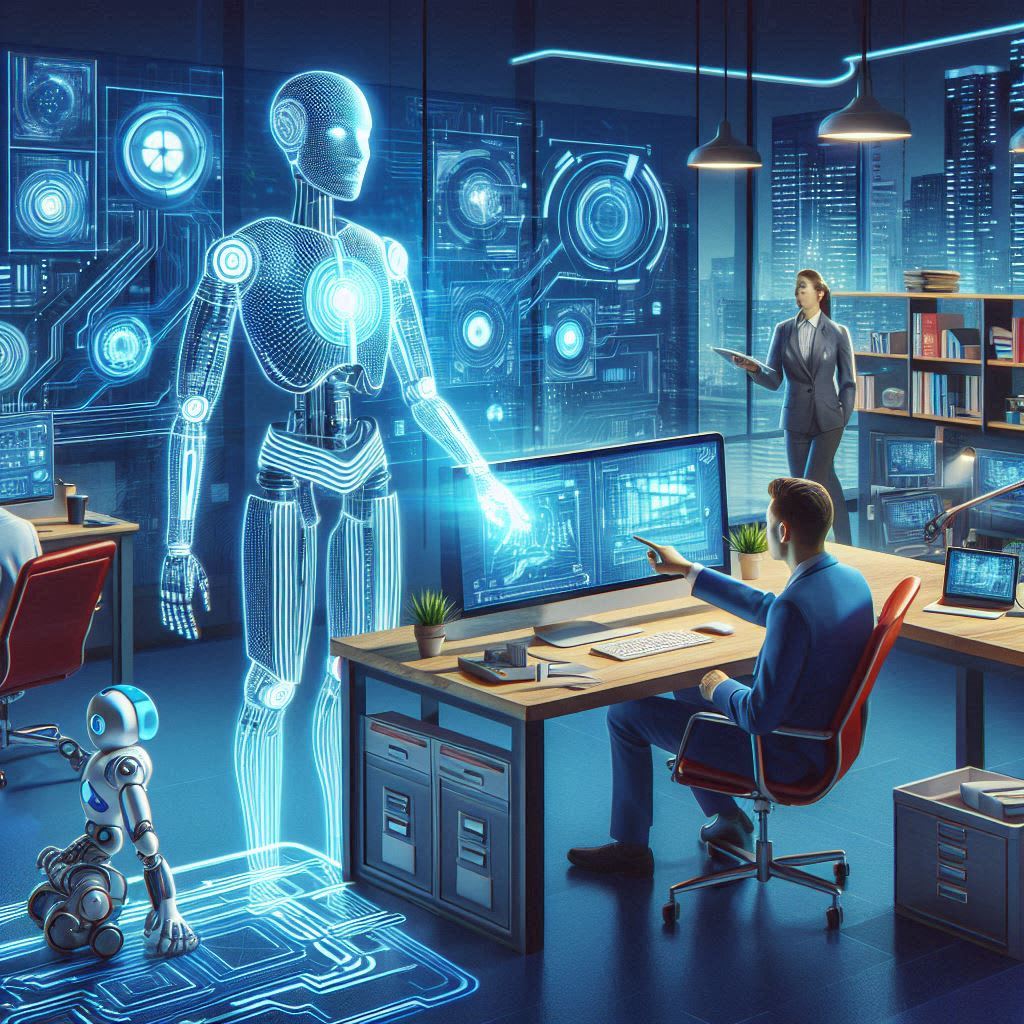
In 2025, artificial intelligence (AI) continues to evolve at an unprecedented pace, transforming industries, markets, and economies in ways that were once unimaginable. While AI has been steadily influencing sectors like finance, healthcare, and retail, this year marks a turning point where AI isn’t just an accessory to business models – it’s fundamentally altering how industries operate. From streamlining operations to unlocking entirely new possibilities, AI is pushing boundaries and challenging the traditional ways of doing business.
Let’s explore the top 5 industries that are set to experience the most disruption by AI in 2025.
1. Healthcare: AI-Powered Diagnostics and Treatment
Healthcare is one of the industries most ripe for disruption by AI, and 2025 is poised to be a game-changing year. While AI has already made strides in improving diagnostics and personalized treatment plans, advancements in machine learning and deep learning technologies will revolutionize healthcare even further.
AI in diagnostics is becoming remarkably accurate, especially in fields like radiology, pathology, and genomics. AI systems can now analyze medical images faster and more precisely than human doctors. For instance, AI-powered tools such as IBM Watson have been used to assist in cancer diagnosis by analyzing vast datasets of medical records, detecting patterns that might be missed by human eyes.
AI is also enabling personalized medicine, tailoring treatments to individuals based on their genetic profiles. This trend will only accelerate in 2025 as more health providers adopt AI-powered platforms to predict and prevent diseases before they even occur.
Impact: The rise of AI in healthcare will lead to faster diagnoses, more targeted treatments, and lower healthcare costs. However, it will also challenge healthcare workers to adapt to new technologies and possibly rethink their roles in the patient care process.
2. Finance: AI-Driven Trading and Risk Management
The financial sector has always been at the forefront of technology adoption, but AI is pushing its boundaries even further in 2025. Algorithmic trading has been around for years, but AI systems are now capable of learning from vast amounts of market data and adjusting their strategies in real-time.
Machine learning algorithms can detect patterns in financial markets, predicting shifts in stock prices, currency fluctuations, and commodities. These AI systems are far faster and more efficient than traditional trading methods, enabling hedge funds and financial institutions to outperform human traders.
AI-driven risk management is also taking center stage. By analyzing a vast array of data, AI models can predict potential risks and provide real-time insights, allowing financial institutions to act quickly. This will be critical in protecting investments and maintaining market stability in a year where economic uncertainty is expected to persist.
Impact: AI will redefine how investments are made, with the potential to reduce human error, increase returns, and mitigate risks. However, as AI takes over trading and financial decision-making, there could be concerns about job losses for traders and analysts.
3. Retail: AI-Powered Customer Experience and Logistics
Retail is another sector that will see immense disruption in 2025, driven by AI. The rise of AI-powered recommendation engines will change how consumers shop online and in-store. Companies like Amazon and Netflix have already shown the power of AI in predicting customer preferences, but in 2025, this technology will become even more refined.
AI in customer service is another area where retail will see transformation. Chatbots and virtual assistants powered by AI can provide round-the-clock customer support, handling inquiries, resolving issues, and even making personalized product recommendations.
AI is also transforming logistics and supply chain management. Using predictive analytics, AI can optimize inventory management, ensuring that products are available when customers need them without overstocking. For example, AI systems can predict which products will be in high demand based on factors like seasonality and consumer behavior, reducing waste and improving operational efficiency.
Impact: Retailers will be able to offer personalized shopping experiences at scale while improving operational efficiency. However, traditional brick-and-mortar stores may struggle to keep up with the fast-paced digital transformation, potentially leading to the closure of stores that fail to adopt these technologies.
4. Manufacturing: AI-Driven Automation and Predictive Maintenance
Manufacturing is undergoing a massive transformation with the integration of AI-driven automation. In 2025, AI will play a key role in improving production efficiency by automating repetitive tasks and increasing output without sacrificing quality. Robots and AI-powered machines are becoming more capable of performing complex tasks, from assembly lines to quality control.
One of the most significant developments is in predictive maintenance. By using AI to analyze data from machinery and equipment, manufacturers can predict when a machine is likely to fail, allowing for timely repairs before a breakdown occurs. This will reduce downtime, improve productivity, and extend the lifespan of manufacturing equipment.
Impact: While AI-driven automation will increase productivity and reduce labor costs, it will also lead to job displacement for factory workers. The rise of AI in manufacturing will require workers to adapt to new roles, such as overseeing AI systems or managing robotic machinery.
5. Transportation and Logistics: Self-Driving Cars and AI-Powered Delivery
Transportation and logistics have been transformed by AI over the past few years, and 2025 will bring even more changes. Self-driving cars and AI-powered delivery systems are already in testing stages, but 2025 is the year when these technologies will be fully integrated into the transportation ecosystem.
AI will enable autonomous vehicles to navigate roads safely, reducing the need for human drivers in industries such as trucking and ride-sharing. With AI-powered drones and robots, delivery times will be drastically reduced, improving the efficiency of last-mile delivery systems.
Additionally, AI in route optimization will help logistics companies reduce fuel costs, delivery times, and emissions by calculating the most efficient routes in real-time.
Impact: The transportation sector will experience significant changes, including job displacement for drivers but also a reduction in accidents caused by human error. Consumers will benefit from faster, more efficient deliveries, but the transition to AI-powered transportation will require infrastructure updates and regulatory changes.
Conclusion
AI is no longer just a buzzword—it’s a powerful tool that is disrupting industries across the board. In 2025, healthcare, finance, retail, manufacturing, and transportation are among the top sectors being reshaped by this transformative technology. While these changes bring exciting opportunities for efficiency, cost savings, and innovation, they also raise questions about the future of work, job displacement, and ethical concerns.
The challenge for businesses, governments, and workers alike will be to adapt to this rapidly changing landscape. Those who embrace AI and integrate it into their operations will thrive, while those who fail to keep up may find themselves left behind.
About the Creator
Keep reading
More stories from THE INSPIRER and writers in Geeks and other communities.
How Vietnam is Becoming the Silicon Valley of Southeast Asia
When people think of bustling tech hubs, names like Silicon Valley, Tel Aviv, or Shenzhen immediately come to mind. But look a little further east, and you'll find a rising star that's been quietly but rapidly making its mark: Vietnam.
By THE INSPIRER10 months ago in Geeks
A Knight of the Seven Kingdoms Series Review (Season 1)
As one of the biggest properties in fantasy, A Song of Ice and Fire remains immensely popular with audiences. After reaching far into the past with House of the Dragon, a second spin-off was on the cards. A Knight of the Seven Kingdoms serves up a bite-sized slice of action and drama, but it still claims a spot among the best small-screen titles.
By Robert Cain7 days ago in Geeks
Monsterverse Power Rankings
The world of the MonsterVerse isn’t about humanity being in control — it’s about ancient Titans reminding the planet who truly rules it. Cities fall, governments scramble, and entire ecosystems shift whenever these colossal beings collide. Some monsters dominate through sheer size, others through speed, intelligence, or raw elemental power — but only a few stand at the absolute top of the food chain.
By Top Ranked4 days ago in Geeks


Comments